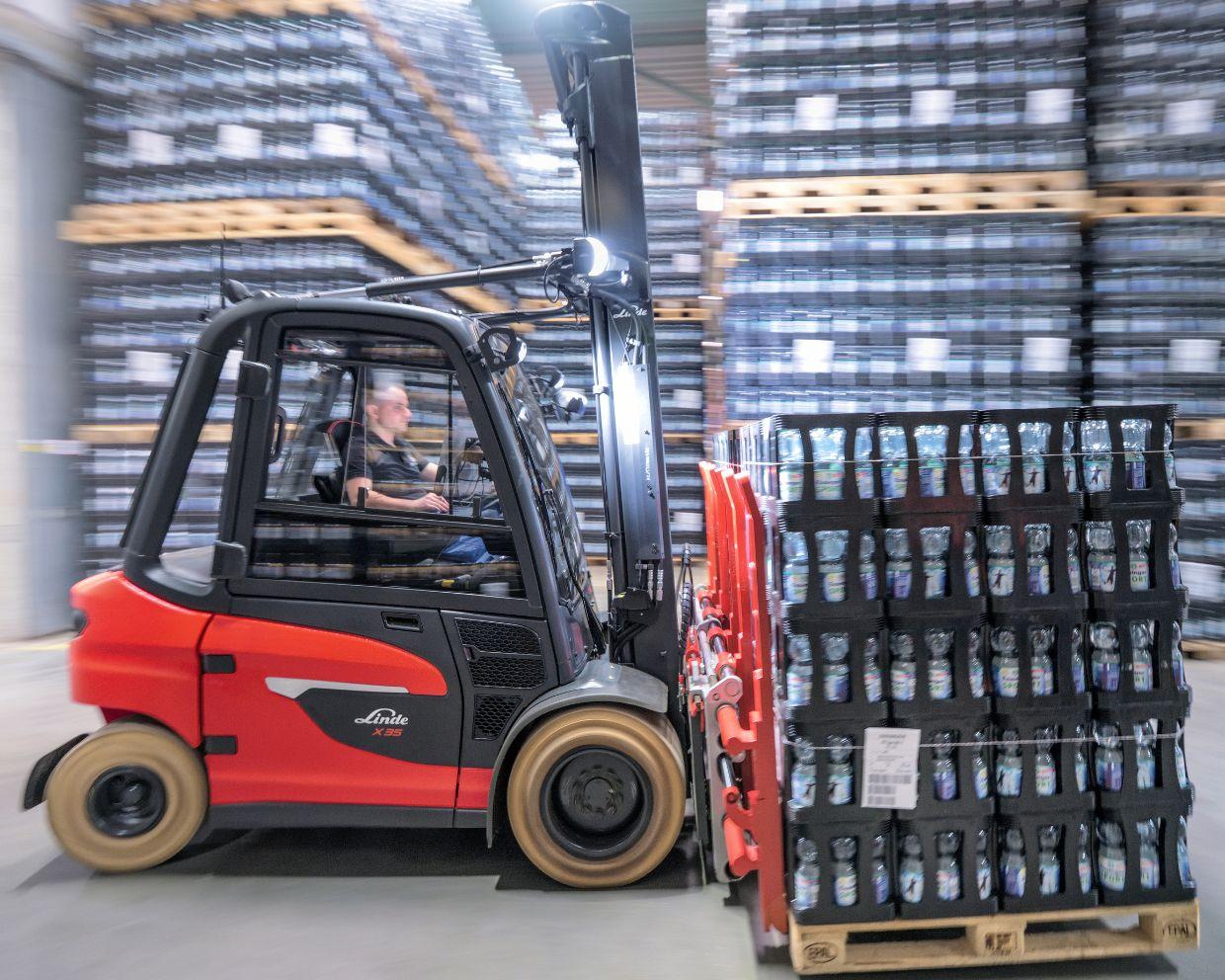
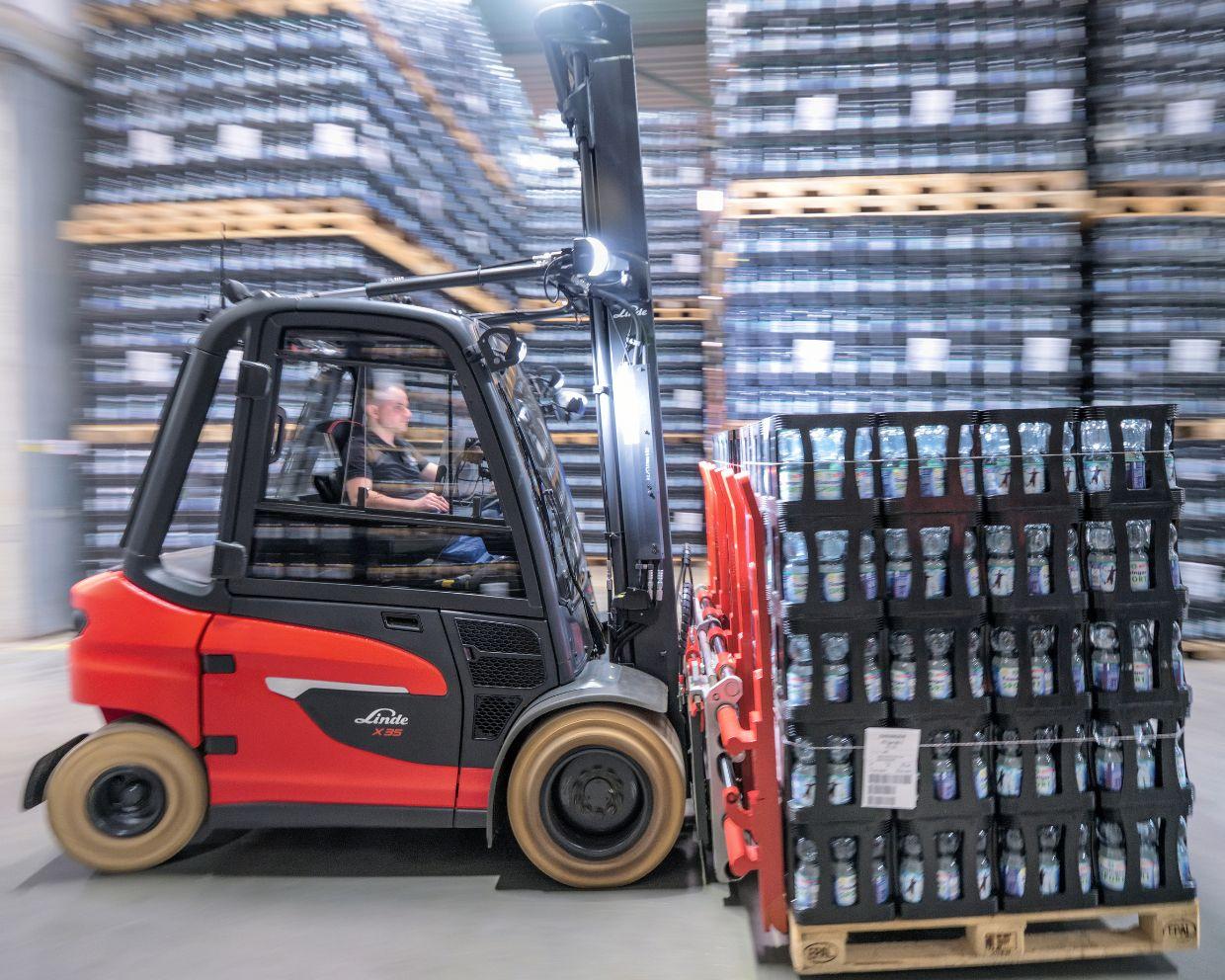
In a warehouse environment, balancing safety, stability, and productivity is critical. Operating a forklift too quickly can jeopardise both people and goods, while going too slow can hurt efficiency. Understanding what safe speed really means: legally, practically, and technically, is essential for any material-handling operation.
What Is the Legal and Recommended Speed Limit for Forklifts in Australia?
Legal Regulations vs Industry Best Practices
- In Australia, there is no single federal speed-limit regulation for forklifts; instead, speed limits are typically managed through workplace health and safety systems, traffic management plans, and risk assessments.
- SafeWork and similar regulators stress the importance of observing speed limits, using signage, and enforcing speed via operator training.
- From Linde Material Handling’s perspective, technological safety systems (like speed limiters and automated controls) play a key role in preventing excessive speed.
Typical Warehouse Speed Ranges
A common “best-practice” framework for forklift travel speeds in warehouses is:
- High traffic / pedestrian-dense zones: ~ 6 km/h (walking pace)
- Moderate traffic zones: ~ 10 km/h
- Low or no traffic, open warehouse aisles: up to ~ 20 km/h
These are guidelines: actual speed limits should be set based on site-specific risk assessments, floor condition, visibility, and other factors.
Factors Influencing Speed Limit Enforcement
Speed limits in warehouses should consider:
- Congested areas or pedestrian interaction
- Intersections, blind corners, and doorways
- Surface quality (smooth concrete vs uneven or rough floor)
- Load height and stability
- Slope or gradient (inclines)
- Type of forklift and braking system
How Does Load Weight Affect Forklift Speed and Stability?
Loaded vs Unloaded Forklifts
- A loaded forklift travels more slowly and takes longer to stop. The heavier the load, the longer the braking distance, and the more risk there is of tip-over.
- When loaded, the forklift’s braking efficiency is reduced. The load might shift, slide, or even come off the forks if braking is too aggressive.
High Lifts vs Low Lifts
- A raised load increases the centre of gravity, making the forklift less stable. Turning or braking at higher mast heights must be done at reduced speeds.
- Keeping loads as low as practical during travel helps maintain stability.
Counterbalance and Tipping Risk
- Counterbalance forklifts (the typical sit-down variety) rely on the rear counterweight to stay stable. Sudden braking or cornering can lead to forward tipping.
- Training and systems that manage speed based on load and lift height (such as Linde’s Safety Pilot) can greatly reduce tipping risk.
How Do Different Types of Forklifts Influence Safe Speed?
Electric vs Diesel / LPG
- Electric forklifts: Quiet, responsive, frequently used indoors. Their smooth acceleration may tempt operators to speed, so speed-limiting systems are vital. Linde equips its electric counterbalance trucks with speed limiting when the mast is raised.
- Diesel / LPG forklifts: Often used outdoors or on rougher terrain. The engine braking and mechanical systems differ, which can influence stopping distance.
Fuel type itself doesn’t dictate safe speed, but the environment and forklift design do.
Indoor Smooth Surfaces vs Rough Outdoor Surfaces
- On smooth concrete warehouse floors, higher speeds (within reason) can be acceptable, but only if stopping distances and visibility allow.
- Rough or uneven surfaces call for more conservative speed: potholes, transitions, or ramps can destabilise a load.
Mast Height and Load Capacity Effects
- As mentioned, higher masts raise the centre of gravity; systems like Linde Curve Assist can reduce speed automatically in corners.
- When the forklift is near its maximum load capacity, safety assistance systems can intervene (e.g., Linde’s Safety Pilot reduces travel speed based on load weight and lift height).
What Are the Best Practices for Maintaining Safe Forklift Speeds?
- Map out forklift travel paths: Designate and clearly mark high-traffic zones, pedestrian crossings, and low-speed areas.
- Use speed-limiting devices: Equip forklifts with adjustable speed limiters; Linde’s Safety Pilot system allows programming of indoor/outdoor speed zones.
- Install signage and visual reminders: Speed limit signs at key points (like intersections and entry to busy zones) help reinforce safe driving.
- Implement GPS / RFID-zoned speed control: Advanced systems can detect location and adjust speed automatically within defined zones, helping reduce accidents in congested or sensitive areas. Linde’s Safety Guard system supports this level of control.
- Train operators: Make sure staff understand why speed limits exist, how braking distance works, and how to respond to warning systems.
How Far Does a Forklift Travel Before it Can Stop Safely?
Understanding stopping or braking distance is vital for safe forklift operation.
Here’s a summary table based on typical conditions (dry, level surface, alert operator):
| Speed (km/h) | Approx. Reaction Distance (~1.5 sec) | Total Emergency Stopping Distance |
|---|---|---|
| 6 km/h | ~2.5 m | ~2.9–3.2 m |
| 12 km/h | ~5 m | ~7–8 m |
| 14 km/h | ~5.8 m | ~8–10 m |
| 16 km/h | ~6.7 m | ~9.5–12 m |
| 18 km/h | ~7.5 m | ~11–14 m |
| 20 km/h | ~8.3 m | ~13–16.5 m |
Factors that influence braking distance include:
- Load weight (heavily loaded = longer stopping distance)
- Tyre condition and type
- Surface condition (slippery, uneven, slope)
- Mechanical condition of brakes and hydraulic systems
How Can Operators Adjust and Maintain Forklift Brakes for Safety?
- Brake Adjustment & Testing
- Begin with a pre-start check: test foot and park brakes before operation.
- Adjust brake pedal play according to manufacturer specifications.
- Perform a controlled brake test. Drive forward, apply the service brake, then park brake, to check responsiveness.
- If hydraulic, inspect brake fluid levels, look for leaks, and verify operation.
- Regular Maintenance Tips
- Inspect tyre condition: worn or underinflated tyres reduce braking performance.
- Check hydraulic brake systems, brake discs or drums, and pads/pistons for wear.
- Lubricate and service brake linkages and components as per manufacturer schedule.
- Maintain a robust maintenance log to catch trends (e.g., increased stopping distance over time).
- Training & Operator Awareness
- Train operators on how braking performance can degrade (e.g., with load, when tyres wear).
- Emphasise safe braking technique: avoid harsh, sudden braking (risking load shift or tip-over).
- Reinforce the importance of stopping within the visible distance ahead or within the zone marked in your warehouse plan.
What Are the Common Forklift Speed and Braking Mistakes to Avoid?
- Driving too fast in high-traffic or pedestrian areas
- Turning too sharply or too quickly while carrying a load
- Ignoring braking distances (assuming forklift can stop as quickly as a car)
- Operating with poorly maintained brakes or tyres, increasing stopping distances
- Failing to lower forks before travel, making tipping more likely when braking
How Can Warehouse Managers Improve Overall Forklift Safety?
- Create pedestrian exclusion zones: Mark and enforce areas where forklifts and workers do not mix.
- Install speedometers and warning alarms on forklifts: To remind operators of their speed.
- Foster a safety culture: Use signage, regular training, and feedback to ensure that operators prioritise safety.
- Use technology: Equip forklifts with Linde’s Safety Pilot, Speed Assist, or Curve Assist to automatically limit speed and adapt to lifting conditions.
- Monitor and review: Track near misses, accidents, and operator behaviour; refine your traffic management plan accordingly.
FAQs About Forklift Speed and Braking
Can I drive a forklift faster if it’s unloaded? While unloaded forklifts are more stable, you should still adhere to your site’s speed limits. Safe speed depends on visibility, path conditions, and braking capacity, not just load.
What’s the maximum speed for an electric forklift indoors? It depends on your warehouse layout and safety plan. Many best-practice guidelines set limits around 10 km/h in moderate zones and up to 20 km/h in open, low-traffic areas, but you should assess risk locally.
How often should brakes be adjusted? Regular checks on how to adjust forklift brakes should be part of daily pre-start inspections. More thorough brake maintenance (fluid checks, wear inspection) should be done per the manufacturer’s schedule or more frequently if you notice degraded performance.
Does forklift type affect safe stopping distance? Yes, load type, weight, mast height, and power source can influence braking behaviour. Heavier or higher-lift loads increase stopping distance.
Are speed-limiting devices mandatory in Australia? Not universally mandated, but they are strongly recommended by safety regulators and are part of best practice; many workplaces install them as part of risk management and traffic control systems.
How to Ensure Forklift Operators Stay Safe in the Warehouse
To sum up, here’s how you can keep your trucks out of harm’s way:
- Set appropriate speed limits based on risk, traffic, and physical layout.
- Use speed-limiting technology and safety assistance systems like Linde Safety Pilot and Curve Assist.
- Regularly maintain brakes and tyres, and train operators on safe braking practices.
- Understand and plan for stopping distances, especially when loads are heavy or raised.
- Build a safety-first culture, including signage, training, and designated pedestrian paths.
For tailored forklift safety solutions, speed-limiting systems, or operator assistance technology, contact Linde Australia today. Our experts can help you design a safer, more efficient warehouse operation. Alternatively, explore our safety solutions in the link below.