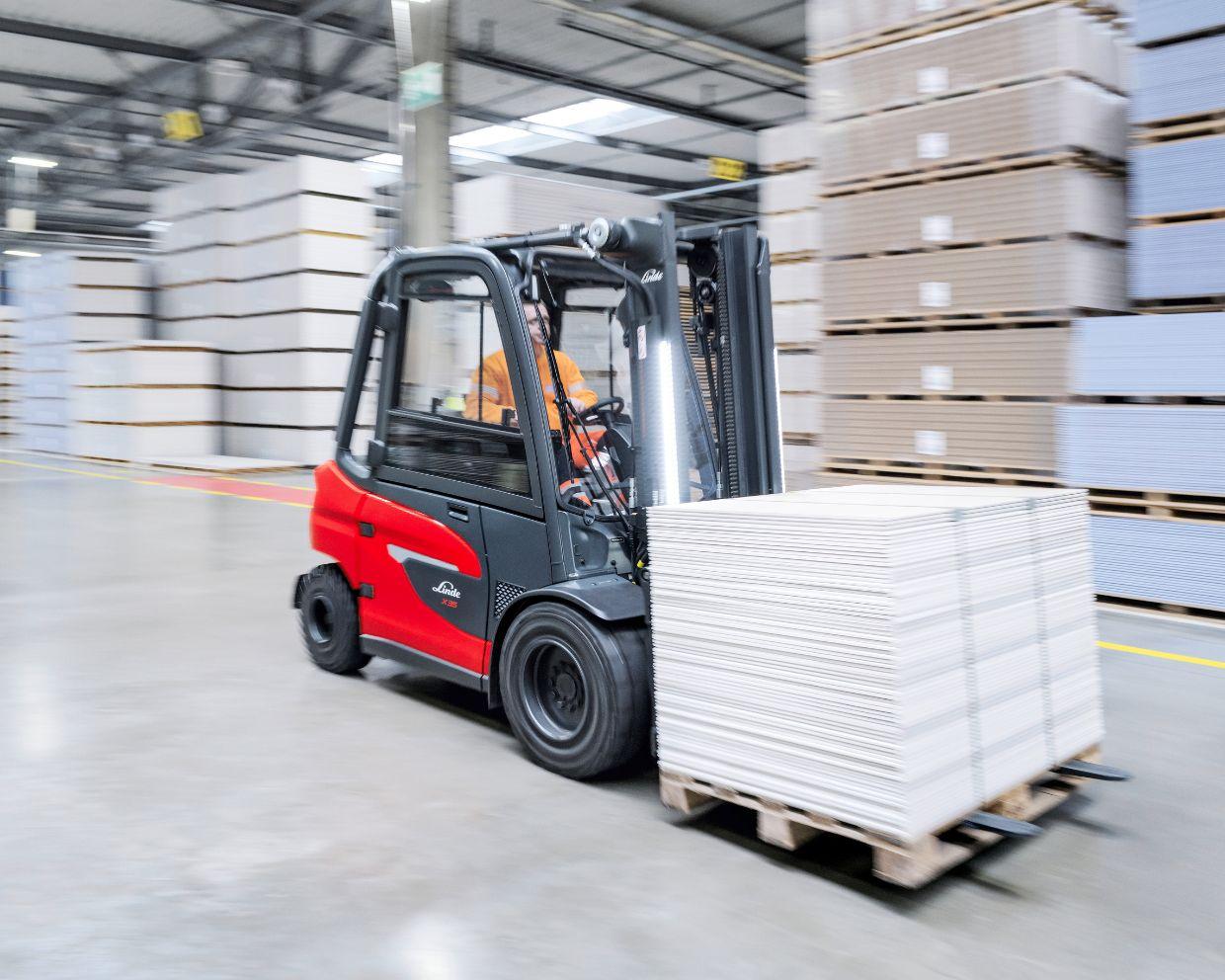
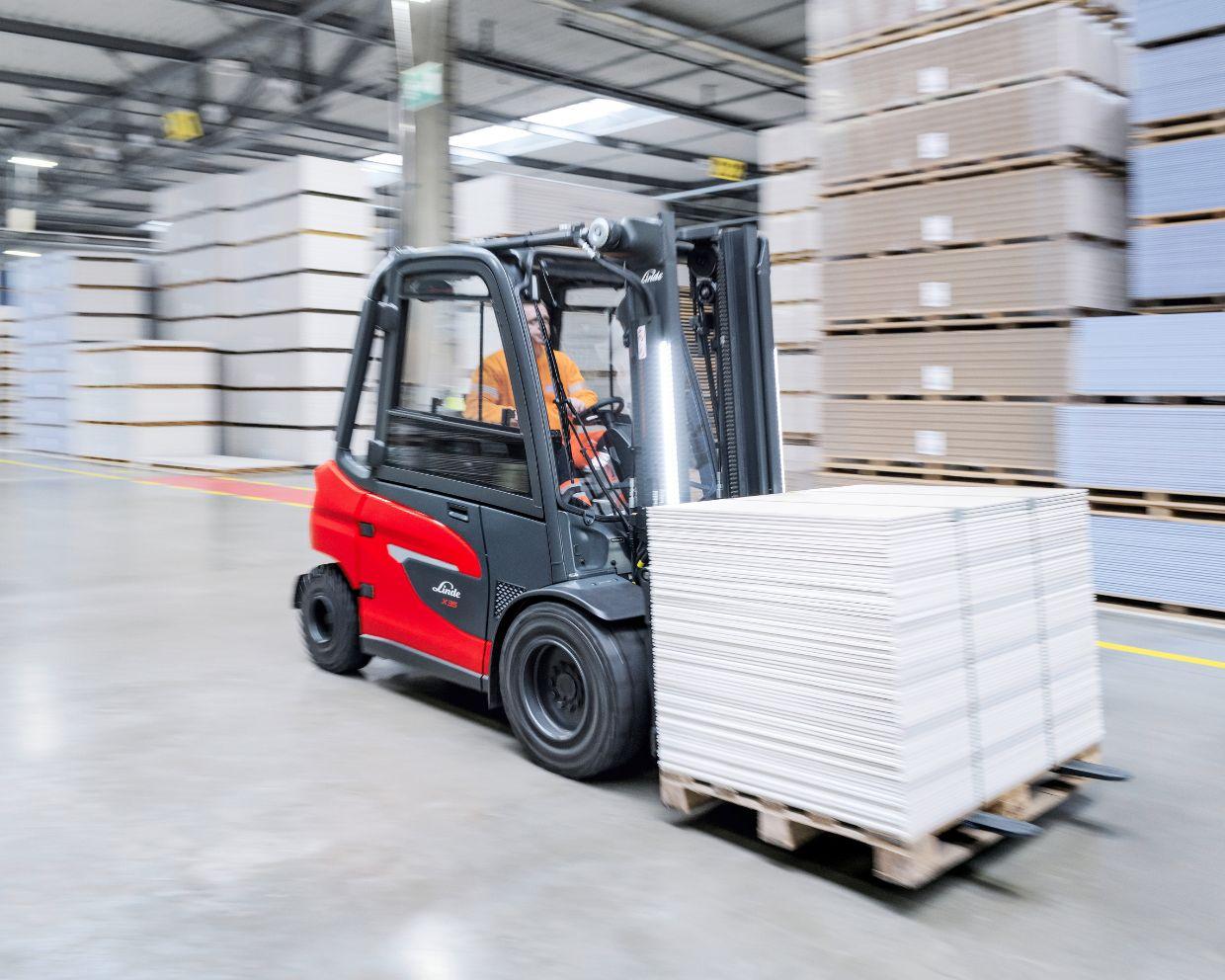
The term forklift load centre refers to the distance between the vertical face of the forklift’s forks and the load’s centre of gravity. Understanding load centre is crucial for safe lifting and operational efficiency. At Linde Material Handling Australia, we believe that mastering load centre is foundational to safe, reliable forklift operations, which is why our forklift design and safety systems prioritise stability, visibility and load-management.
What Is a Forklift Load Centre?
In simple terms, the forklift load centre is the horizontal distance from the front edge of the forks (or fork carriage) to the point where the load’s weight is evenly balanced, its centre of gravity.
- For example, if a pallet is 1,200 mm deep and the load is evenly distributed, the load centre is typically 600 mm.
- If the load is longer or heavier at one end, the centre of gravity shifts, increasing the load centre. That change affects how the forklift performs.
- With a larger load centre, the forklift must work harder to balance the load, reducing its effective lifting capacity and affecting stability.
For Linde forklifts, correct load centre placement ensures the weight is supported properly, contributing to safer and more stable material handling.
Why Does the Forklift Load Centre Matter for Safety?
The load centre matters because it directly impacts the stability of the forklift. If the load’s centre of gravity is too far from the fork face, the forklift becomes prone to tipping, especially when lifting or turning.
Using a correct load centre helps to:
- Maintain stability and keep the combined centre of gravity within the forklift’s “stability triangle” (front wheels + rear axle pivot).
- Prevent accidental tip-overs, falling loads or structural strain on the forklift.
- Reduce risk of damage to inventory, infrastructure and injury to operators or nearby personnel.
Practical Safety Tips for Operators
- Always check the load capacity plate (data plate) on the forklift for the rated load centre and capacity.
- Place loads as close to the backrest as possible and ensure even weight distribution across both forks.
- Avoid overhanging or uneven loads that shift the load’s centre of gravity forward.
- Consider using advanced safety solutions. Many Linde forklifts are equipped with systems like Linde Safety Pilot, which monitors load centre, lift height and weight and can alert or intervene if unsafe conditions arise.
How Does Load Centre Affect Forklift Lifting Capacity?
The rated lifting capacity of a forklift is valid only for a specific load centre. If the load centre increases, the effective lifting capacity decreases.
For example:
- A forklift may be rated to lift a certain weight at a 500 mm or 600 mm load centre. This is shown on the data plate.
- If the load centre shifts forward (say due to a long pallet or uneven load), the leverage effect increases, making the forklift more likely to tip. To compensate, the safe load weight must be reduced.
Linde forklifts are engineered with robust counterweights, well-designed mast geometry and optional safety systems to help manage the load safely even when load centre and lift height vary.
How Do You Work Out the Forklift Load Centre?
Here is a step-by-step guide on how to work out forklift load centre:
- Measure the depth (front to back) of the load. For example, the length of the pallet or item placed on the forks.
- If the load is evenly distributed, divide that depth by 2. That gives you the load centre (distance from fork face to centre of gravity).
- Example: if a pallet is 1,200 mm deep, the load centre is 1,200 ÷ 2 = 600 mm.
- Compare this measured load centre against the value specified on the forklift’s data plate. If your load centre exceeds the rated value, you must reduce the load’s weight accordingly or reposition the load.
- Account for variations such as attachments, uneven loads, overhanging items. These can shift the effective load centre forward. Always re-assess the centre of gravity under those conditions.
This approach ensures operators correctly evaluate load stability and comply with rated capacities.
What Factors Influence Forklift Load Centre in Daily Operations?
Several factors can influence the effective load centre in real-world use:
- Load shape and size: Long or uneven loads may shift the centre of gravity forward.
- Pallet size and stacking pattern: Non-standard pallets, overhangs or uneven stacking can alter the load centre.
- Use of attachments: Fork extensions, side-shifters, clamps or other attachments change the geometry and may increase effective load centre.
- Load placement on forks: Loads not placed flush against the carriage backrest can shift the load centre forward.
Practical advice for operators
Always check load geometry, verify pallet size, place loads close to the backrest, and use attachments only when you’ve adjusted load capacity accordingly.
At Linde, engineering solutions such as stable fork carriage design, balanced counterweights, and assistance systems help mitigate risks associated with load centre changes.
How Can Proper Load Centre Management Improve Efficiency and Productivity?
Managing load centre properly does more than enhance safety, it benefits operations by:
- Ensuring smoother, more stable handling of loads, reducing the risk of tip-overs or dropped goods.
- Minimising downtime due to accidents or load-related incidents.
- Extending the lifespan of the forklift by preventing excess stress on mast, hydraulics and tyres. Overloading or incorrect load centre placement can accelerate wear and cause premature mechanical issues.
- Improving operator confidence and efficiency, especially when using advanced Linde systems like Load Management and Safety Pilot that support precise load-weight, height and stability monitoring.
At Linde Australia, we design forklifts that offer reliability, safety and performance, equipping you with the tools to manage your forklift’s load centre effectively, and boost productivity. Click on the link below to browse our forklift range.