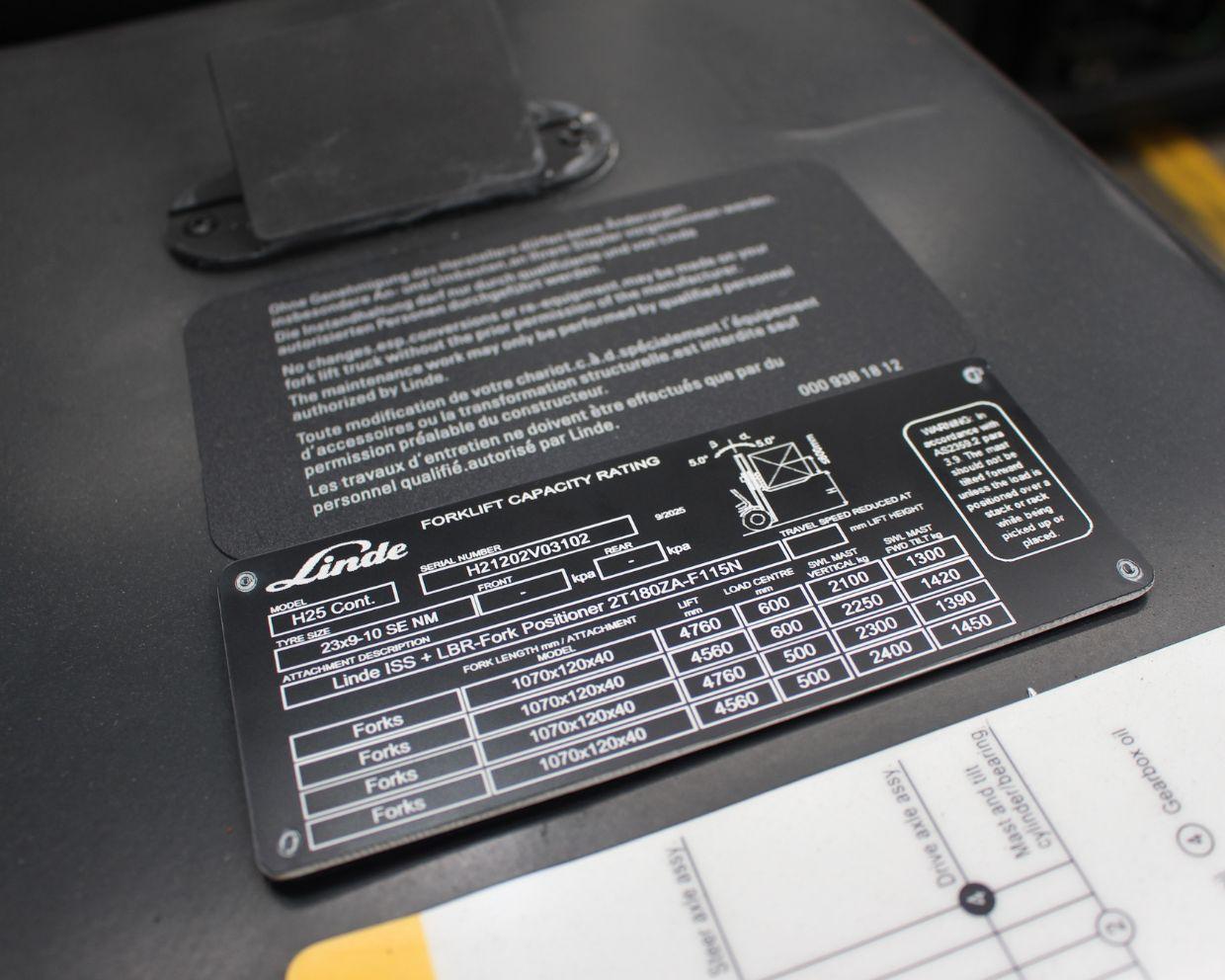
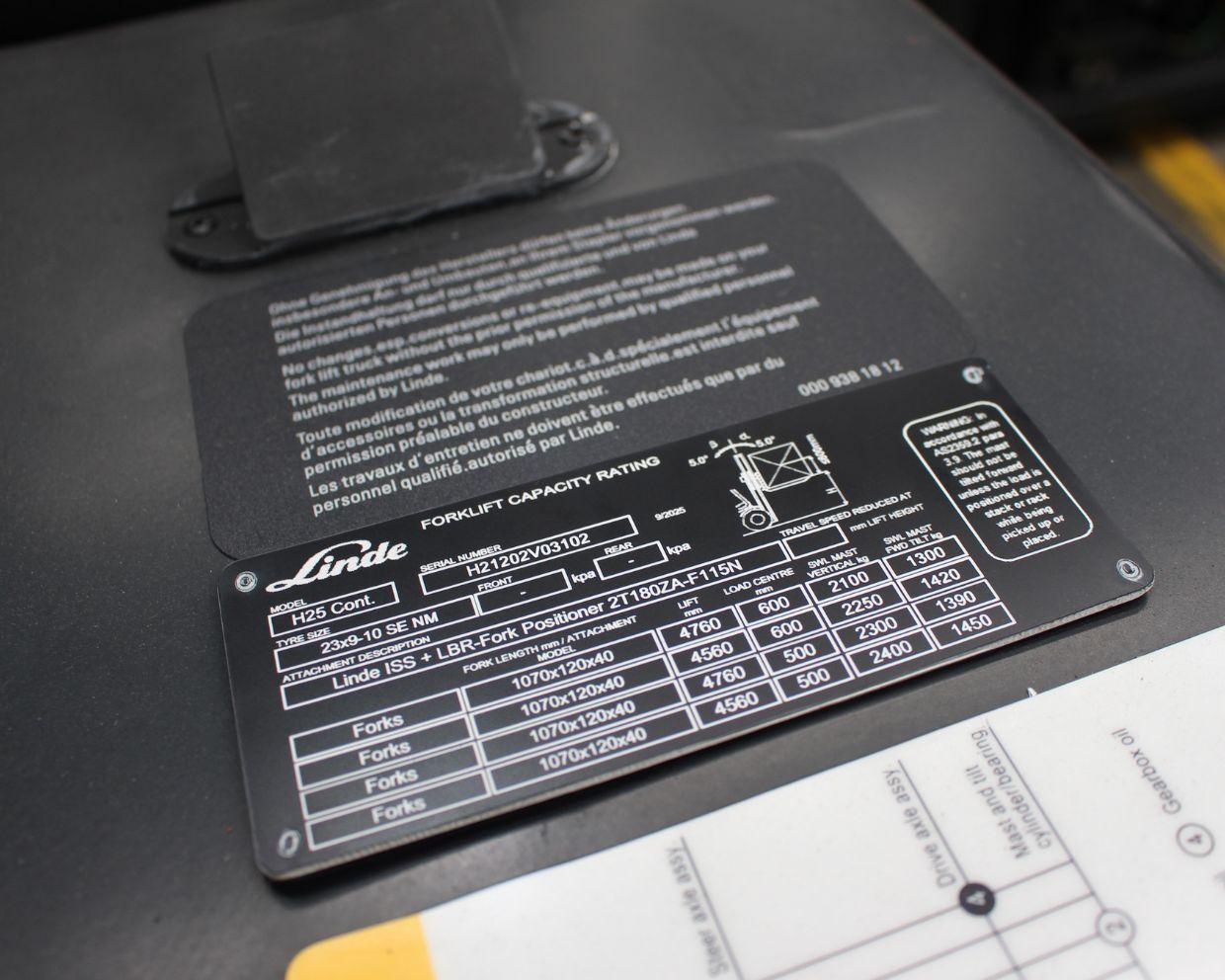
Reading and understanding how to read a forklift data plate is fundamental for safe, efficient and compliant forklift operation. Every operator must know how to interpret the data plate before lifting any load. This guide from Linde Material Handling Australia shows you exactly what to look for and why it matters.
What Is a Forklift Data Plate and What Information Does It Contain?
A forklift data plate (also known as a nameplate or capacity plate) is a permanent label affixed to the forklift by the manufacturer. It is the authoritative source of truth for a forklift’s technical specifications and operational limits.
Typical information on a data plate includes:
- Manufacturer name, model number, and serial number for unit identification.
- Rated lifting capacity at defined load-centre distances (e.g. kilograms at a certain mm or inches).
- Load-centre distances used in the capacity calculation.
- Maximum lift height (mast height) and sometimes mast or carriage type.
- Forklift weight / truck weight (unloaded).
- Fuel or battery type (electric vs internal combustion), especially for electric forklifts, may include battery voltage/weight or engine type.
- Tyre information (size, type) or fuel/battery type, as they affect stability, performance and capacity.
- Attachments (if fitted) such as clamps, side-shifters, extensions and their impact on rated capacity.
Understanding forklift data plate information is essential to ensure that it is used within safe limits, that loads are stable, and attachments are compatible, safeguarding operator and workplace safety, and avoiding misuse or overloading.
Where On the Forklift Should You Look for the Data Plate?
The location of the data plate can vary depending on the forklift model, but common placements are:
- Near the operator’s seat, often on the dashboard or instrument panel (cowl) where the operator has easy access.
- On the mast or frame. Some models may have the plate near the mast base or engine hood next to the seat.
Operators should always verify that the data plate is legible before using the forklift. If it is missing, damaged or unreadable, do not proceed with operation. That is a breach of standard safety practice.
How Do You Read the Rated Capacity and Load Centre from the Data Plate?
- On the data plate you will often find a load capacity chart or table. This lists the forklift’s maximum safe lifting capacity at specific load-centre distances. For example: “5000 kg at 600 mm load centre”.
- The “load centre” refers to the horizontal distance from the face of the forks to the centre of gravity of the load. As load centre increases (e.g. when lifting large pallets or long items), the stability decreases, meaning the rated capacity must reduce accordingly.
- Lift height can also affect capacity: many capacity charts show safe lifting limits at different mast heights. If lifting to full mast height, the allowable load might be lower.
- If attachments are fitted (e.g. side shifter, clamp), you must cross-check the data plate (or supplementary plate) because these alter the load centre or the overall stability, often requiring reduced capacities.
Neglecting the load-centre or attachment effects, or misreading the chart, can result in overload, instability, or tip-over. That’s why correct interpretation matters.
What Other Specifications on the Data Plate Should Operators Understand Before Use?
Beyond rated capacity and load‐centre, other important items to note:
- Mast and carriage type: This affects maximum lift height, tilt limits and stability when moving loads. Knowing mast type ensures you don’t exceed safe lift or tilt.
- Tyre type or fuel / battery info: For cushion vs pneumatic tyres, or for electric forklifts with batteries. These influence stability, weight distribution and appropriate load handling. Incorrect tyres or battery spec can affect load capacity.
- Attachments information: If forks are replaced with special attachments (e.g. side-shifter, clamp, fork extensions), the data plate should reflect the change. Using attachments without verifying rated capacities can be unsafe.
- Maximum lift height / mast height / tilt or lifting limits: To avoid over-extending beyond what’s safe for the forklift’s design.
Understanding these specs ensures the forklift is operated safely, appropriately for the load, and within manufacturer limits.
When and Why Should Operators Consult the Data Plate?
Operators should always consult the data plate:
- Before each shift especially in workplaces where different forklifts are used, or when operators rotate.
- Before handling any load particularly when loads are heavy, bulky, long, or have an uneven centre of gravity.
- When using attachments or modified configurations, attachments can change load centre, weight distribution, and safe capacity.
Reasons why this is critical:
- Prevents overloading or instability that can cause tipping or accidents.
- Avoids mechanical strain, excessive wear, or damage to the forklift’s mast, hydraulics, tyres, or frame.
- Keeps operations safe, efficient, and compliant with workplace safety standards. Operators ignoring data-plate specs risk serious safety hazards.
How Does Understanding the Data Plate Support Maintenance, Repairs, and Spare Parts Ordering?
The data plate’s model and serial number are fundamental when ordering spare parts or booking service appointments. Using incorrect parts or components incompatible with the specific forklift configuration can compromise safety and performance.
Knowing detailed specs: like mast type, attachments, tyre/battery type, and rated capacity can help technicians assess load-handling history, ensure the forklift remains within design limits, and plan maintenance or repairs accordingly. This promotes longevity, reliability, and adherence to manufacturer standards.
As a provider of forklifts and servicing, Linde emphasises correct configuration, authentic parts and precise documentation, making the data plate a key component of best-practice maintenance and service workflows.
What Should You Do If the Data Plate Is Missing, Damaged or Hard to Read?
- Do not operate the forklift. A missing or illegible data plate means you cannot verify safe load capacities or specifications. Operating it is unsafe and may breach safety regulations.
- Isolate and tag out the forklift so no one else uses it. Record the issue in the maintenance log or report it as per workplace procedure.
- Contact an authorised service provider (such as Linde) to supply a replacement plate, or to re-certify the forklift, especially if modifications or attachments have changed its original configuration.
- Ensure the replacement plate is correct and legible before returning the forklift to service.
Maintaining a legible, accurate data plate is part of compliance and safe operation, reflecting commitment to safety and quality.
Why Properly Reading the Forklift Data Plate Matters for Safe, Efficient Operations
Understanding how to read a forklift data plate safeguards operators, loads, and equipment. It enables correct load handling, ensures stability, prevents overload, and supports compliance with safety standards. It also underpins efficient maintenance and accurate spare parts ordering.
At Linde, we advocate for responsible forklift operation, proper maintenance, and strict adherence to the data plate as the reliable source of machine specifications.
Looking to find the best-suited forklift for your operation? Click on the link below to get started.