Forklift truck hire is one of the first decisions procurement teams face when building or expanding a fleet. Buy too early and you tie up capital in depreciating assets. Hire without a clear strategy and you risk paying a premium for flexibility you may not need. Neither outcome is great for the bottom line.
The question of hire vs ownership has no universal answer. It depends on your business model, cash flow position, contract pipeline, and how predictable your operational demand actually is. What we do know, having worked with businesses across Australia's logistics, manufacturing, retail, and cold storage sectors, is that the businesses making the best fleet decisions are the ones asking the right questions before they commit.
This article is designed to help procurement and fleet managers think through those questions clearly.
How Does Forklift Truck Hire Support Flexible Fleet Procurement Strategies?
When you hire a forklift, you are not just accessing a piece of equipment. You are accessing a capacity lever. That distinction matters when you are planning fleet procurement at scale.
For procurement teams managing fluctuating demand, the ability to hire a forklift on short notice, and return it just as quickly, changes the way you think about fleet sizing. Instead of calculating peak capacity and buying accordingly, you can maintain a core owned fleet sized to baseline demand and scale up through hire when conditions require it.
That model works well across several common procurement scenarios:
- Seasonal demand cycles: Retail distribution centres and agricultural processors routinely face 30 to 50 per cent volume spikes over peak periods. Owning enough equipment to cover peak demand means assets sitting idle for months at a time. Hiring to cover the gap keeps utilisation rates on owned assets healthier.
- Project-based scaling: When a new warehousing contract comes in, procurement teams often need to lift capacity within weeks, not months. Hire agreements can typically be activated faster than a capital purchase can be approved and fulfilled.
- Cash flow management: Hire costs sit in operating expenditure rather than capital expenditure. For businesses managing tight CaPex budgets or working through a growth phase, that accounting treatment gives procurement teams more flexibility without requiring board-level approval for every fleet addition.
- Operational trials: Before committing to a specific truck model or configuration, hire gives your team a real-world test environment. If a narrow-aisle reach truck turns out to be the wrong fit for your racking layout, you find out before you own ten of them.
The practical value of hire in fleet procurement is not about avoiding ownership forever. It is about having the right assets in place at the right time, without locking your business into a capital structure that cannot bend.
What Business Scenarios Make Forklifts for Hire the Smarter Choice?
There are moments in a business's lifecycle when buying simply does not make sense. Identifying those moments early is what separates reactive fleet management from strategic procurement.
Forklifts for hire tend to be the more rational choice in several specific situations:
Rapid warehouse expansion
When a business wins a major new distribution contract or opens a new facility, the ramp-up timeline is often tight. The procurement process for capital equipment can take weeks, and delivery lead times on new forklifts can stretch further depending on specification and availability. Hire agreements fill that gap, keeping operations moving while longer-term fleet planning catches up.
Short-term or fixed-term contracts
Not every warehousing arrangement is permanent. If your business has taken on a three- or six-month fulfilment contract, buying assets to support it creates a disposal problem at the end of the term. The residual value of the equipment rarely justifies the capital outlay for a short engagement. In these cases, short term forklift hire provides a flexible solution for temporary operational needs, while long term forklift hire is better suited for extended contracts where businesses still want to avoid upfront capital investment.
Testing new workflows before capital investment
Warehouse layouts change. Racking configurations are updated. New handling processes are trialled. Before committing owned assets to a workflow that may change again in twelve months, hire gives operations teams the room to test and refine without the weight of a capital decision behind every adjustment.
Bridging gaps during equipment downtime
When an owned asset goes in for scheduled maintenance or an unplanned repair, hired equipment keeps the operation running. It is a simpler solution than building redundancy into your owned fleet.
Business uncertainty
In periods where forward revenue is unclear, whether due to contract uncertainty, market shifts, or broader economic conditions, keeping capital invested in depreciating physical assets carries more risk than it might in stable conditions. Hire shifts the risk profile without stopping the operation.
The thread running through all of these scenarios is the same: hire reduces exposure when business conditions are in flux.
How Do Forklift Hire Prices Influence Total Cost of Ownership Decisions?
Cost is usually the first thing procurement teams compare when weighing hire against ownership. It is also the comparison that most often gets done incorrectly.
The mistake is comparing a weekly hire rate to a purchase price and stopping there. That comparison misses most of what determines the real cost of owning a forklift over its working life.
The true cost of ownership goes beyond the purchase price
When you buy a forklift, the capital outlay is the beginning. Over a typical ownership period of five to seven years, a business also absorbs:
- Depreciation: A new counterbalance forklift will lose a significant portion of its value in the first three years. That loss in residual value is a real cost even if it does not appear on a weekly P&L.
- Scheduled maintenance: Tyres, brake systems, hydraulics, and battery or engine servicing all require regular expenditure. These costs are predictable, but they are real, and they fall entirely on the owner.
- Unplanned repairs: Mechanical failures happen. When they do, the cost and the downtime land on the asset owner. There is no contract clause to call.
- Technology obsolescence: Forklifts held for a long time can become operationally outdated relative to newer equipment, particularly as lithium-ion technology, operator assistance systems, and telematics capabilities advance.
- Residual value risk: At disposal, you get whatever the second-hand market offers. That value is influenced by equipment condition, market timing, and factors outside your control.
Forklift hire prices, by contrast, are a known, fixed operating cost. The hire agreement typically includes maintenance and support, which converts unpredictable ownership costs into a predictable line item. For procurement teams working to minimise total cost of ownership, that predictability has real value.
The right comparison is not "weekly hire rate vs purchase price." It is "total hire cost over the required period vs total ownership cost including all associated expenses." When you build that comparison accurately, hire is more competitive than headline rates suggest, particularly for equipment that will be needed for three years or less.
What Factors Should Procurement Teams Consider When Reviewing Forklift Hire Rates?
Hire rate comparisons can be misleading if you are only looking at the headline number. Two hire agreements at the same weekly rate can represent very different total costs depending on what each one actually includes.
When reviewing forklift hire rates, procurement teams should be working through the following considerations:
Contract duration
Short-term hire agreements typically carry a higher weekly rate than medium or long-term arrangements. If your requirement is known in advance, committing to a longer contract term usually produces better rates. The trade-off is reduced flexibility if your needs change mid-contract.
Fleet size and consolidation
Hiring a single unit and hiring a fleet of fifteen units are different commercial conversations. Larger fleet requirements generally give procurement teams more negotiating leverage. There can also be efficiency benefits in consolidating hire through a single supplier rather than managing multiple vendor relationships.
Equipment specification
A standard sit-down counterbalance forklift and a narrow-aisle reach truck with advanced operator assistance systems will attract different hire rates. Be clear about the specification you actually need for the application, not just the lowest-cost unit in the range.
What is included in the rate
This is where hire agreements vary most. Some agreements include:
- Scheduled maintenance and servicing
- Tyre replacement
- Breakdown response and loan equipment
- Operator training support
- Telematics or fleet reporting
Others include none of the above, and each add-on comes at an additional cost. When benchmarking forklift hire rates across suppliers, the only fair comparison is an all-in cost for an equivalent scope of service.
Replacement guarantees
If equipment goes down, how quickly will a replacement arrive? For operations running multiple shifts, equipment downtime is an operational risk, not just an inconvenience. A hire agreement that includes a guaranteed replacement response time is worth paying more for if uptime is critical to your business.
The procurement mindset here is the same one you would apply to any significant services contract: the headline rate is a starting point, not the whole story.
What Equipment Can You Hire from Linde?
Equipment specification shapes your hire rate, and knowing what is available helps procurement teams match the right unit to the application from the outset. Linde's hire range covers the full spectrum of material handling equipment, so there is no need to spread hire arrangements across multiple suppliers.
- IC (Internal Combustion) Forklifts: LPG and diesel counterbalance forklifts suited to outdoor yards, loading docks, and applications where battery charging infrastructure is limited.
- Electric Counterbalance Forklifts: Battery-powered sit-down forklifts for indoor and mixed-use environments. Linde's electric range includes both lead-acid and lithium-ion options, with lithium-ion particularly suited to multi-shift operations that benefit from opportunity charging.
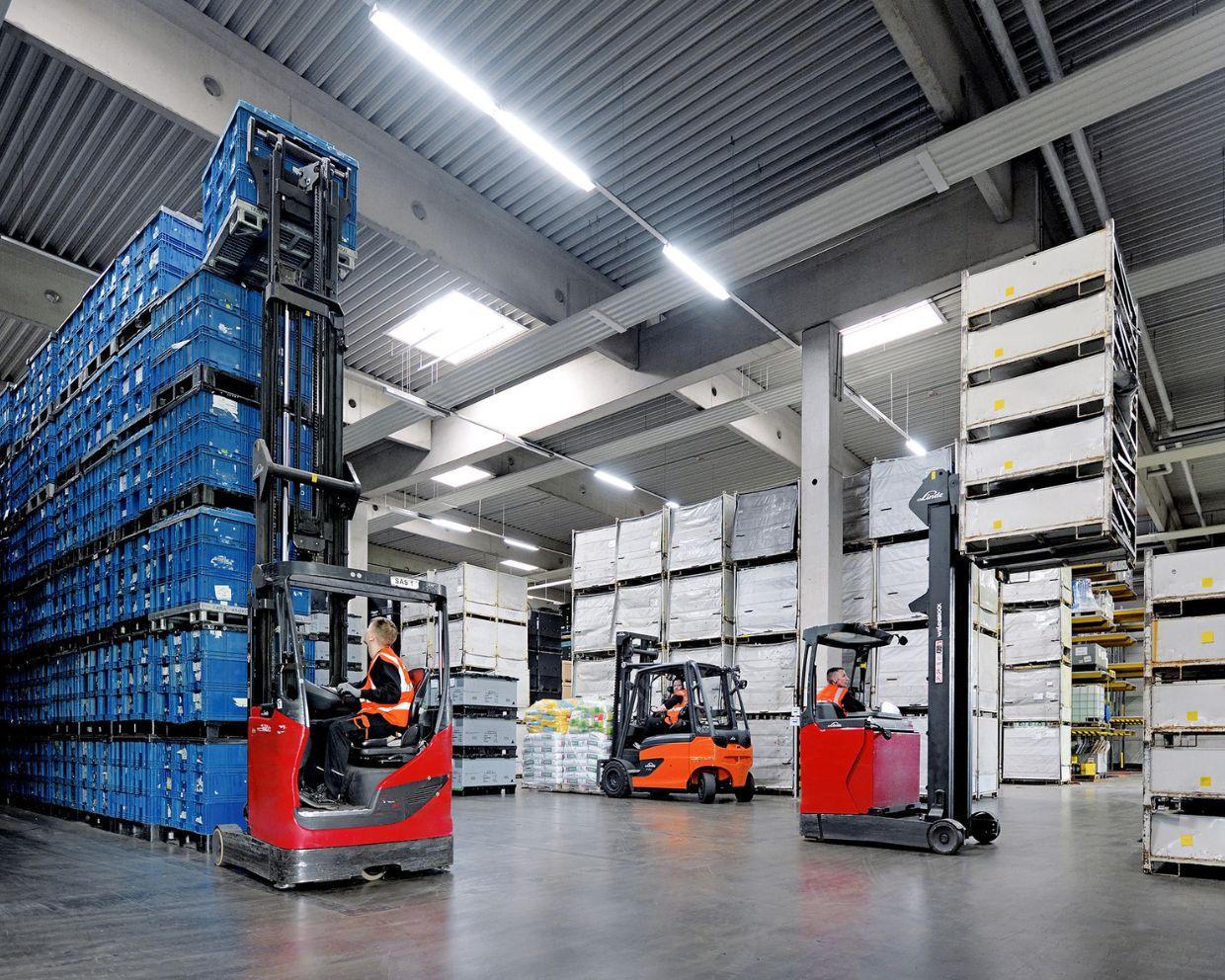
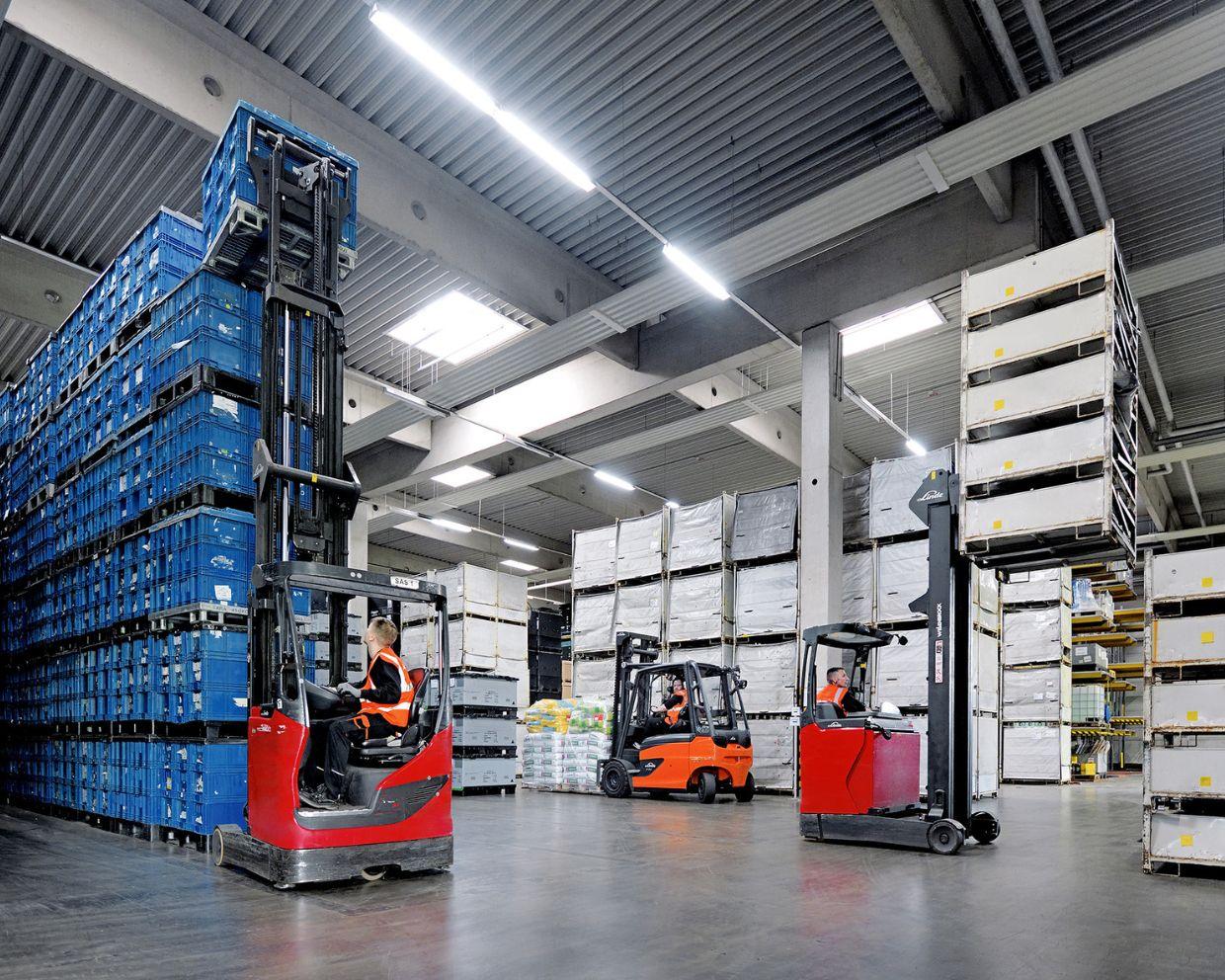
- Reach Trucks: Designed for high-bay racking environments where aisles are tight and lift heights exceed what a counterbalance truck can reliably handle. A practical hire option when trialling new racking configurations or scaling up warehouse storage density.
- Pallet Trucks: Powered and manual pallet trucks for ground-level transport in receiving, despatch, and cross-dock environments. Often the first hire requirement for businesses managing short-term volume spikes at the loading dock level.
- Pallet Stackers: For low-to-medium height stacking in warehouses where a full reach truck is more than the application needs. Useful as bridging equipment when a primary unit is undergoing maintenance.
- Very Narrow Aisle (VNA) Trucks: For specialised high-density storage environments. These carry a higher specification and hire rate, and the requirement for a compatible aisle width and floor standard should be confirmed before committing to a hire agreement.
- Order Pickers: Used in pick-and-pack operations where operators need to travel at height to access racking locations. Hire availability supports businesses running temporary fulfilment contracts or testing new order picking workflows.
How Can Businesses Build a Hybrid Fleet Strategy Using Hire and Owned Forklifts?
Most of the businesses with well-managed material handling fleets are not operating an entirely owned fleet or an entirely hired fleet. They are running a blended model, and for good reason.
A hybrid fleet strategy means owning the assets that cover your consistent, predictable base workload and hiring the assets that cover variable or peak demand. It is not a complicated concept, but getting the balance right requires some discipline in how you analyse your own utilisation data.
The logic works like this: if you own assets that sit idle for four months of the year, the capital tied up in those assets is working against you. If you own assets that run at 100 per cent utilisation year-round, you are probably undersupplied and losing productivity. The hybrid model is about finding the utilisation curve that makes both owned and hired assets earn their place in the fleet.
For large logistics operations with national or multi-site footprints, the hybrid model also provides operational resilience. If an owned asset fails at a critical time, hired equipment can be deployed quickly without waiting on a capital approval process. That responsiveness has real operational value, particularly during peak trading periods where every day of lost throughput affects service commitments.
The benefits of a hybrid approach are typically:
- Cost optimisation: Owned assets covering high-utilisation base demand are generally the lowest cost-per-hour option. Hired assets covering peaks are a variable cost that rises and falls with business activity rather than sitting as fixed overhead.
- Scalability: As the business grows, the hire component of the fleet can expand to bridge capacity while longer-term capital planning catches up.
- Risk reduction: Spread across owned and hired assets, your exposure to technology obsolescence, residual value risk, and unexpected repair costs is lower than in a fully owned fleet.
The businesses that run hybrid fleets well are the ones that review the balance annually and adjust it as their operational profile changes. Explore Linde’s forklift hire options.
Why Do Leading Enterprises Prefer Linde MH for Fleet Procurement Decisions?
At Linde Material Handling Australia, we work with some of the country's most operationally demanding businesses. Cold storage facilities running triple shifts. National retailers with tight distribution windows. Industrial manufacturers where equipment downtime directly impacts production output. What those businesses have in common is that they need a material handling partner who understands fleet strategy, not just equipment specifications.
Our fleet solutions cover both ends of the hire vs ownership spectrum. For businesses looking at short-term hire, we offer flexible arrangements that can be activated quickly and scaled without bureaucracy. For businesses committed to ownership, we offer access to Linde's full range of counterbalance, reach, and warehouse equipment, with the service and support infrastructure to back it up across Australia.
What we find is that the most valuable conversations we have with procurement teams are not about individual transactions. They are about understanding the business's trajectory, where demand is heading, what the fleet needs to look like in two or three years, and how to get there in a way that does not create unnecessary financial risk in the short term.
That is the consultation that separates a genuine fleet partner from a forklift vendor. We have the range, the national service network, and the operational experience to help businesses build fleet strategies that hold up as conditions change.
Make a Smarter Fleet Investment Decision with Linde Forklift Solutions
Whether you are weighing up hire vs buying for the first time or reviewing an established fleet strategy that no longer fits your operation, the decision deserves more than a quick rate comparison.
The right fleet model is one that matches your financial position, supports your operational requirements, and can adapt as your business changes. Getting that balance right takes honest analysis and, in our experience, is usually better with a specialist involved early rather than after the commitments are already made.
Speak with Linde specialists today to design a cost-efficient and scalable forklift fleet strategy. Our team works with procurement and operations leaders across Australia to evaluate hire and ownership options, build hybrid fleet models, and make sure the right equipment is in place for what the business actually needs.
Contact Linde Material Handling Australia
FAQs
What is forklift truck hire and how does it support fleet planning?
Forklift truck hire is an arrangement where a business accesses material handling equipment under a hire agreement rather than purchasing it outright. In fleet planning terms, it functions as a capacity tool. Businesses can bring hired equipment in during demand peaks, project expansions, or operational transitions without adding permanently to owned assets. It also allows procurement teams to test equipment specifications and warehouse configurations before making capital commitments.
Is it more cost-effective to hire a forklift or buy one?
The answer depends on how long you need the equipment and what your utilisation rate looks like. For short-term or variable requirements, hire is generally more cost-effective because it avoids capital outlay and includes maintenance in the rate. For equipment running at high utilisation on a long-term basis, ownership often produces a lower total cost per hour. The most reliable way to compare the two is to calculate total cost of ownership across the full period, including depreciation, maintenance, and residual value, against the total hire cost for the same period.
How do forklift hire prices compare to ownership costs over time?
Hire rates look higher on a weekly basis than the equivalent ownership cost might suggest. However, ownership carries additional costs that do not appear in that comparison: scheduled servicing, unplanned repairs, tyre replacement, depreciation, and residual value loss at disposal. When those costs are factored in, hire is frequently competitive for equipment needed for three years or less, and in some cases for longer depending on the specification and application.
What industries benefit most from forklifts for hire?
Any industry with variable demand or short-term project requirements tends to get strong value from hire arrangements. In Australia, this includes retail distribution (particularly around seasonal peaks), cold storage and food processing, construction and infrastructure logistics, manufacturing facilities managing project ramp-ups, and event or exhibition logistics. Businesses going through rapid expansion, facility relocation, or operational restructuring also commonly rely on hire to maintain continuity while permanent fleet decisions are finalised.
Can businesses combine hired and owned forklifts in one fleet strategy?
Yes, and many of Australia's larger logistics and warehousing operations do exactly that. A hybrid fleet model means owning the equipment that covers consistent, high-utilisation base demand, and hiring to cover peaks, gaps, or new capacity requirements that have not yet been confirmed as long-term. It gives businesses the cost efficiency of ownership for their core fleet and the flexibility of hire for everything else. The balance between owned and hired assets should be reviewed regularly as the business's operational profile evolves.
Ready to make a crucial decision on whether to hire or buy your forklifts? Talk to us today by clicking the button below.