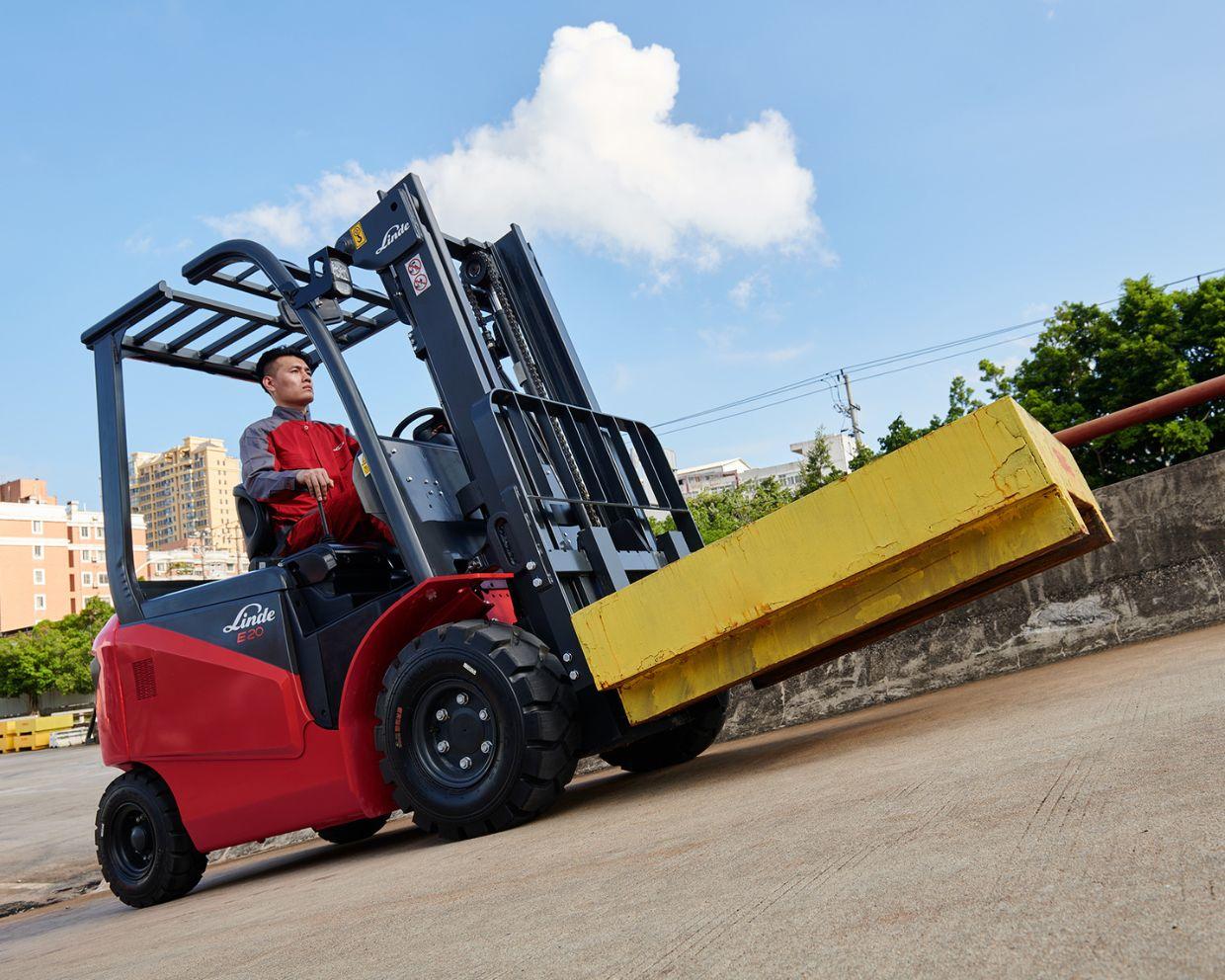
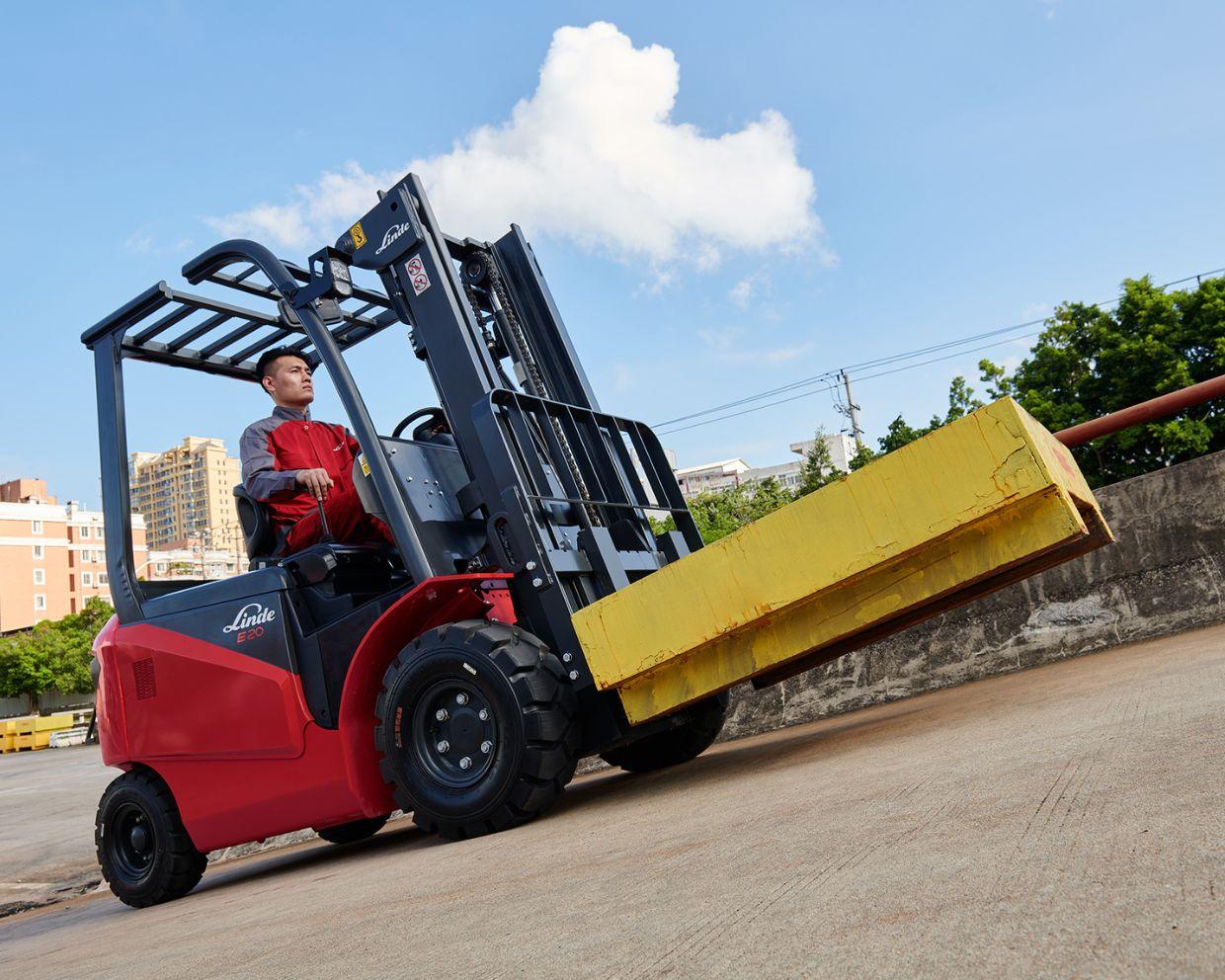
In the world of warehouse and logistics operations, the forklift load backrest, also called a forklift load guard, is one of the most overlooked yet vital forklift safety features. It’s a simple but crucial part of the forklift’s design that directly impacts load stability and operator protection.
In this guide from Linde Material Handling Australia, we’ll break down what a load backrest is, what it does, and how it supports overall forklift attachment safety.
What Is a Forklift Load Backrest?
A forklift load backrest, or load guard, is a rigid metal grid mounted on the carriage of a forklift, directly above the tynes. Typically made from high-grade powder-coated steel, it’s engineered to resist impact, corrosion and bending.
Its purpose:
- Supports and stabilises loads by keeping them flush against the carriage.
- Works with the mast and carriage to form a unified structure that enhances load stability.
- Acts as a protective barrier between the operator and the load.
In simple terms, it’s a built-in safeguard that complements other forklift safety features, such as overhead guards and tilt mechanisms, ensuring each lift is controlled and secure.
What Does a Load Backrest Do on a Forklift?
The primary role of the load backrest is to prevent materials from falling backward toward the operator. However, it also contributes to a broader set of forklift attachment safety principles.
Its main functions include:
- Providing a support surface that stops tall or stacked loads from leaning or sliding back.
- Maintaining the forklift’s load centre within the stability triangle, improving load stability when lifting or tilting.
- Reducing the risk of injury by preventing loads from hitting the operator or overhead guard.
- Acting as part of the forklift’s integrated safety features that protect both workers and equipment.
Without it, even a slight shift in balance could cause the load to slide off the forks, creating serious hazards in busy warehouse environments.
How Does a Load Backrest Improve Forklift Safety and Stability?
When it comes to forklift attachment safety, the load backrest is a front-line defender. It plays a major role in preventing tipping, shifting, and falling loads.
- Load shifting: The backrest keeps stacked goods upright when the mast tilts or when the forklift drives over uneven ground.
- Top-heavy loads: It helps stabilise tall or unbalanced items, preventing them from rocking backward.
- Operator protection: By acting as a load guard, it blocks pallets or boxes from sliding toward the operator cab.
- Enhanced forklift safety features: It complements the overhead guard, tilt cylinders, and fork positioners, creating a safer overall system.
A properly fitted backrest is therefore essential for maintaining load stability and compliance with forklift attachment safety standards.
Are Forklift Load Backrests Required by Australian Safety Standards?
In Australia, forklift safety requirements are guided by Safe Work Australia’s workplace health and safety framework, along with the AS 2359 Industrial Lift-Truck Standard, which sets out design, operation and safety expectations for powered industrial trucks. While not every forklift is delivered with a backrest installed, using one is often a best-practice requirement for maintaining load stability and preventing load-related accidents.
Key points:
- A forklift load guard or backrest is strongly recommended when handling tall, unstable or irregular loads.
- Many Linde forklifts list the load backrest as an optional safety feature, because safety is never one-size-fits-all.
- WHS obligations require that employers assess the risk of load shift and implement engineering controls like load guards where needed.
Safety Tip: If your operation handles stacked or top-heavy goods, installing a compliant load backrest or load guard is not just recommended, it’s essential for forklift attachment safety.
What Are the Different Types of Forklift Load Backrests?
Forklift backrests come in several designs to suit various lifting environments:
- Standard welded steel backrests: Common on most Linde forklifts; ideal for general warehouse use.
- Extended or high backrests: Offer greater load stability for tall loads.
- Custom backrests: Tailored to unique load shapes or materials.
- Foldable or removable load guards: Useful when space or flexibility is a concern.
These options ensure that every operator can maintain forklift attachment safety regardless of load size or height. Linde offers a full range of compatible backrests designed to match specific carriage configurations and models.
When Should You Use a Forklift Load Backrest?
You should always use a load backrest or load guard when:
- Handling tall, unstable, or stacked goods.
- Working in high-lift warehouse or racking environments.
- Transporting materials that could roll, slide, or fall backward.
- Operating in industries like warehousing, manufacturing, logistics, and cold storage, where load stability is critical.
If there’s any chance of the load becoming unbalanced or tilting, a backrest is a must for safe, compliant operation.
How Do You Choose the Right Load Backrest for Your Forklift?
The right backrest depends on your forklift’s configuration and your operating conditions. Using the best-suited forklift load guard, as recommended by the OEM, guarantees compliance, durability and integration with your truck’s existing safety features.
Checklist for selection:
| Factor | Why it matters |
|---|---|
| Forklift model & carriage type | Ensures correct mounting and fit. |
| Load height & weight | Determines the required backrest height. |
| Working conditions | Choose corrosion-resistant coatings for outdoor or cold-store operations. |
| Material & design | High-grade steel for maximum load stability. |
| Compatibility | Linde experts can confirmif the attachment meets forklift attachment safety standards. |
How Do You Install and Maintain a Forklift Load Backrest?
Safety note: Always use a qualified technician or your Linde service partner for installation.
Installation steps:
- Park the forklift securely on flat ground.
- Attach the backrest to the carriage using the manufacturer’s bolt pattern.
- Confirm alignment and secure all fasteners.
- Conduct a test lift to ensure proper load contact.
Maintenance guide:
- Inspect daily for cracks, bent frames or loose bolts.
- Check monthly for corrosion, wear or paint damage.
- Clean and repaint as needed to prevent rust.
- Replace immediately if deformed or no longer aligns correctly.
Keeping your load backrest in top condition is essential to sustaining load stability and forklift attachment safety.
What Are Common Mistakes to Avoid with Forklift Load Backrests?
Avoid these frequent errors that compromise forklift safety:
- Operating without a load guard when needed.
- Using an undersized or misaligned backrest.
- Ignoring inspections or corrosion damage.
- Overloading the forklift and relying solely on the backrest.
- Using non-genuine parts that do not meet Linde or AS 2359 standards (when it comes to Linde forklifts).
Each of these can increase the risk of dropped loads, injuries, or costly downtime.
What Real-World Incidents Show the Importance of a Load Backrest?
Imagine a warehouse operator lifting stacked boxes to a high rack. One box begins to shift backward, but the forklift load guard catches it before it can fall. Without that backrest, the load could have struck the operator’s overhead guard or fallen to the floor.
That moment perfectly illustrates how simple forklift safety features like the load backrest, can prevent serious injury and property damage.
Frequently Asked Questions About Forklift Load Backrests
Q: Can I drive a forklift without a load backrest? A: Only if your loads pose no backward-falling risk. Otherwise, a forklift load guard is strongly recommended for compliance and load stability.
Q: How high should a load backrest be? A: It should extend above the tallest load to provide support. The height is relative to the forklift: for counterbalance forklifts, the load backrests often range between 900mm-1,200mm above the carriage, while for reach trucks, they go up to 1,800mm. For instance, if your forklift lifts pallets that reach above 1.2m, you need to have a backrest at around 1.3 metres above it.
Q: Does a backrest affect forklift capacity? A: Not significantly, but ensure any added attachment maintains rated capacity and centre of gravity.
Q: Can I retrofit a load guard to my forklift? A: Yes. Linde provides optional and retrofit backrests compatible with most models. We strongly urge our clients to always use Linde approved parts, and consult with our experts with branches all over the country for their proper installation.
Q: What’s the best material for a forklift load backrest? A: High-grade steel with a durable powder-coated finish for long-term strength and corrosion resistance.
Why Is a Forklift Load Backrest Essential for Every Operation?
The forklift load backrest is more than just an accessory; it’s a core forklift safety feature that improves load stability, protects operators, and ensures compliance with forklift attachment safety standards.
Whether you’re in warehousing, manufacturing or logistics, a strong, well-maintained load guard keeps every lift safer and smoother.
For expert advice, parts, and safety inspections, contact Linde Australia today. Our team can help you find the perfect forklift load backrest for your fleet and ensure every lift meets the highest safety standards.