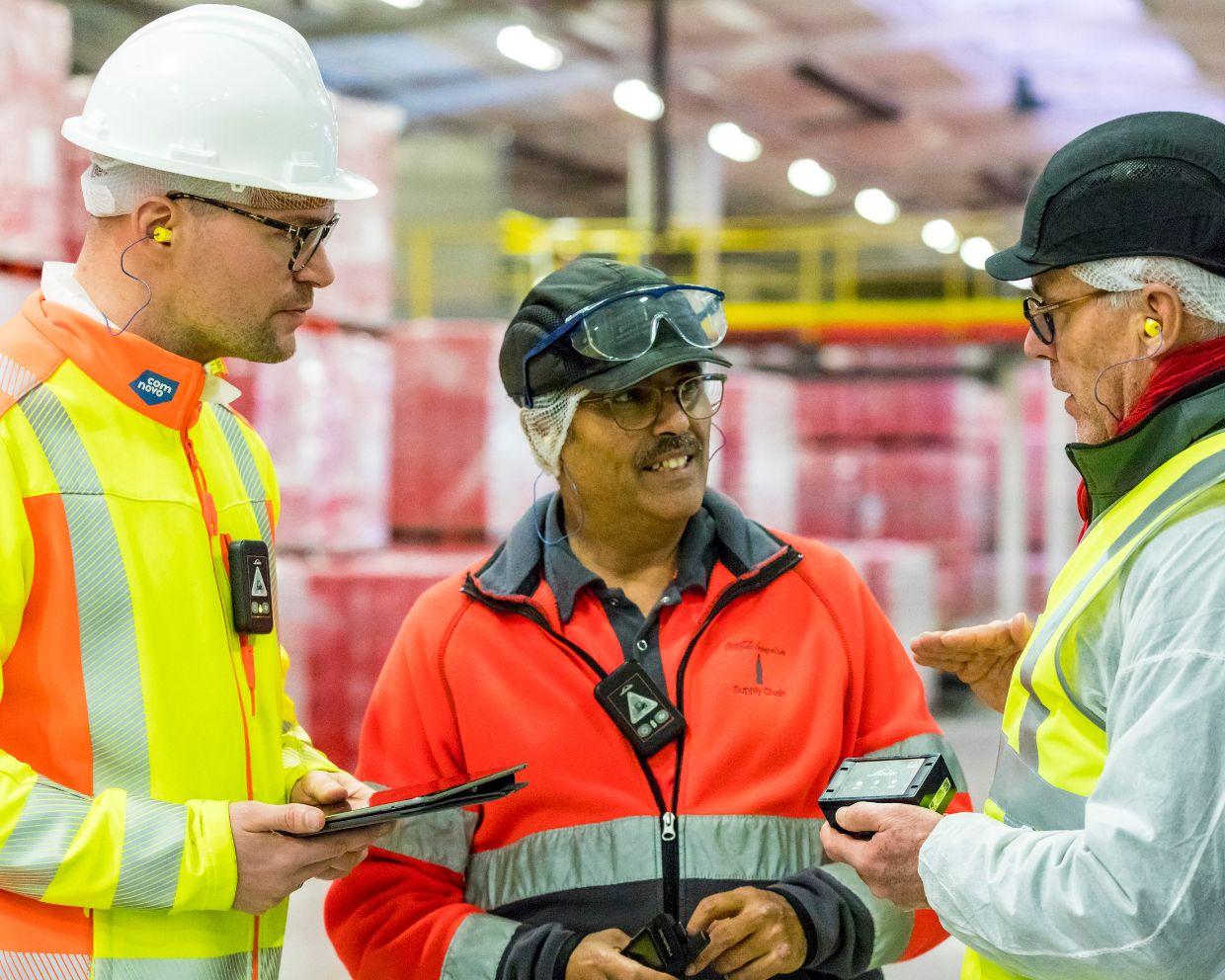
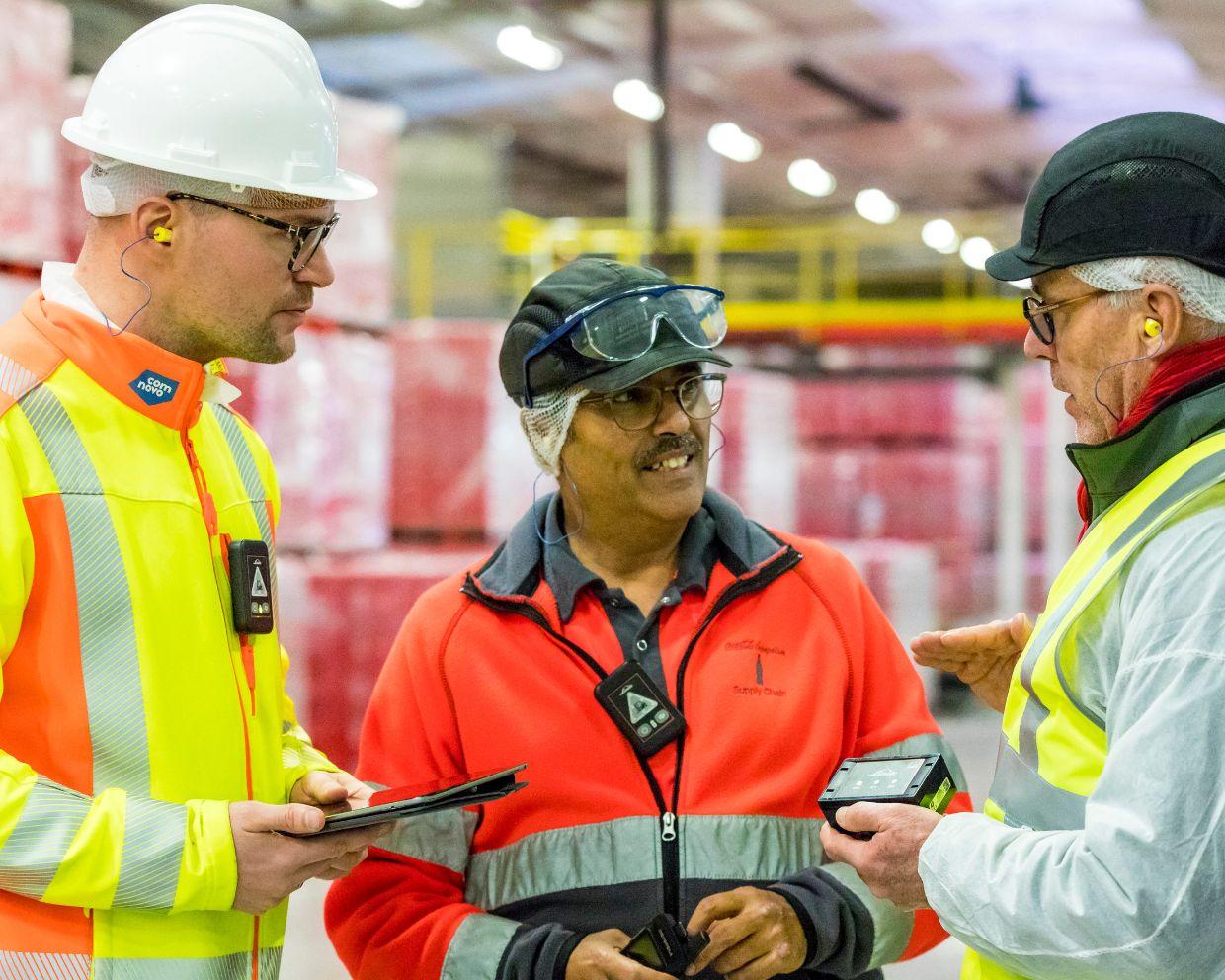
Warehouse environments are the backdrop for constant forklift activity: loading, unloading, stacking, moving etc. While forklifts are essential for productivity, their noise can take a hidden toll. Prolonged exposure to engine rumble, reversing beeps and mechanical hum can contribute to noise-induced hearing loss – a serious but preventable occupational hazard. Protecting workers’ hearing isn’t just about compliance; it’s about long-term health, safety, and well-being.
What Is Noise-Induced Hearing Loss and Why Is It a Concern for Forklift Operators?
Noise-induced hearing loss, or NIHL, is hearing damage resulting from exposure to loud sounds over time or from a sudden intense sound. It arises when delicate hair cells in the inner ear are damaged by sound energy.
Symptoms and long-term effects
- Gradual loss of hearing clarity, especially in high frequencies
- Tinnitus (ringing in the ears)
- Difficulty hearing conversations, alarms, or warnings
Other long-term impacts may include reduced concentration, social withdrawal, fatigue, and increased risk of workplace accidents. Over time, NIHL can be permanent and may worsen with ongoing exposure.
Can noise-induced hearing loss be cured?
Unfortunately, NIHL is largely irreversible. Once inner-ear hair cells are damaged, they do not regenerate. While medical treatments such as hearing aids or cochlear implants may help, they do not restore hearing to its original state. Prevention is therefore critical.
Prevalence and concern
- According to Hearing Australia, 11 per cent of Australians report hearing damage from workplace noise.
- More than 1.1 million workers in Australia are exposed to harmful levels of noise in their daily work.
- NIHL is recognised by Safe Work Australia as a major occupational health risk.
How Much Noise Do Forklifts Produce in Warehouse Environments?
Estimating precise noise levels for forklifts can vary depending on type, load and operation. Noise levels vary with:
- Load weight: Heavier loads can increase engine effort and noise.
- Speed: Higher speeds generate more mechanical and drive-train noise.
- Surface: Rough or uneven surfaces lead to more vibration and noise.
What Are the Standards for Occupational Noise Exposure?
In Australia, noise exposure is regulated to protect worker hearing:
- The Model Work Health and Safety (WHS) Regulations set an exposure standard of LAeq,8h = 85 dB(A) as an average over an 8-hour workday.
- For sudden peak noises, the limit is LC, peak = 140 dB(C).
- These limits align with the Model Code of Practice: Managing Noise and Preventing Hearing Loss at Work.
Safe exposure times
- As noise levels rise, permissible exposure time falls. For example, increasing from 85 dB to 88 dB(A) roughly halves safe exposure time.
- Employers must follow the hierarchy of control to reduce noise: eliminate, substitute, engineer, administer, and provide personal protective equipment (PPE).
Responsibilities of employers
- Conduct noise assessments to identify hazards.
- Implement suitable control measures, including engineering and administrative controls.
- Provide PPE (e.g. earplugs or earmuffs) and, where hearing protection is required, offer audiometric testing for workers.
- Review and monitor control measures regularly.
How Can Forklift Operators Reduce Their Risk of Hearing Loss?
Personal Protective Equipment (PPE)
- Earplugs: Inexpensive, effective if worn correctly.
- Earmuffs: Provide more consistent protection, especially in very noisy environments.
- Dual protection: In extremely loud settings, use both earplugs and earmuffs.
Proper use and maintenance
- Ensure PPE is correctly fitted. Ill-fitting ear protection greatly reduces effectiveness.
- Replace earplugs or earmuffs regularly, especially if they are worn out or degraded.
Training and awareness
- Provide hearing safety education as part of forklift operator training.
- Help staff recognise risk, for instance, if they must raise their voice to be heard one metre away, noise might already be too loud.
- Encourage reporting of symptoms like ringing in the ears (tinnitus) or difficulty hearing alarms.
How Can Employers Minimise Noise Exposure in Warehouses?
Engineering controls
- Choose low-noise forklifts: Linde’s engine forklifts use high-torque, low-revving engines that help minimise noise output during operation.
- Use electric trucks, such as the Linde X20–X35 Series 1252, which are notably quieter.
Administrative controls
- Rotate shifts so that no single operator is exposed to high noise continuously.
- Limit how long workers operate loud machinery in a single session.
- Create rest periods in quieter areas to reduce cumulative noise exposure.
Workplace layout
- Design warehouse traffic flows to maximise distance between noisy vehicles and pedestrian zones.
- Use barriers, enclosures or acoustic panels to isolate noisy zones.
- Designate isolation zones where forklifts idle, or turn, reducing noise in main working areas.
What Are the Best Practices for Forklift Cab Design to Reduce Noise?
When designing or selecting forklifts with operator comfort and hearing protection in mind, key cab features include:
- Soundproofing materials in the cabin structure.
- Vibration isolation, e.g. elastomer mountings or suspension systems.
- Ergonomic seating with cushioning to reduce resonance.
- Air conditioning or climate control to allow windows to remain closed, blocking external noise.
Linde’s ergonomic design philosophy emphasises smooth, low-vibration drives (e.g. hydrostatic drive systems) that also help reduce operator fatigue and noise.
How Often Should Noise Levels Be Monitored in the Warehouse?
- Conduct regular decibel checks using calibrated sound level meters.
- Use noise dosimeters to measure individual worker exposure over their shift.
- Reassess noise whenever there are changes: new forklift models, layout changes, shift patterns, or different loading tasks.
- Maintain records of measurements and review control measures if exposure approaches or exceeds limits.
- Provide audiometric testing at least every two years (or more frequently if risk is high) for workers who wear hearing protection.
What Are the Warning Signs That a Worker Might Be Experiencing NIHL?
Be alert for early indicators of hearing damage:
- Raising voice to speak to someone at conversational distance (~1 m).
- Complaints of tinnitus (ringing in the ears).
- Difficulty hearing safety alarms, beepers, or spoken instructions.
- Social withdrawal, miscommunication, or reduced alertness on shift.
Action steps:
- Encourage prompt reporting.
- Refer workers for audiometric testing if symptoms appear.
- Review noise controls and exposure limits; adjust PPE or rotation as needed.
Can Noise-Induced Hearing Loss Be Cured or Reversed?
- From a medical perspective, NIHL is generally irreversible.
- Treatments can help manage symptoms:
- Hearing aids can amplify sounds but do not restore natural hearing.
- For severe cases, cochlear implants may be considered, though they involve surgery and long-term management.
- Given the limited options for reversal, prevention remains the most effective strategy.
How to Protect Workers from Noise-Induced Hearing Loss in Forklift Operations
- Understand the risk: Forklift noise is a real contributor to hearing loss.
- Comply with Australian standards: Ensure exposure stays below 85 dB(A) over an 8-hour shift and 140 dB(C) for peaks.
- Implement control measures:
- Use low-noise or electric forklifts.
- Apply administrative controls (shift rotation, rest breaks).
- Provide and maintain quality PPE (earplugs, earmuffs).
- Train your team: Raise awareness, provide hearing safety training, and encourage reporting.
- Monitor and test: Regularly measure noise levels, perform audiometric testing, and adjust policies.
- Take early action: If hearing symptoms arise, intervene promptly.
At Linde, we design forklifts with operator comfort, noise efficiency, and safety in mind. Speak with our sales or safety team today to explore low-noise forklift models. Click on the link below to learn more.