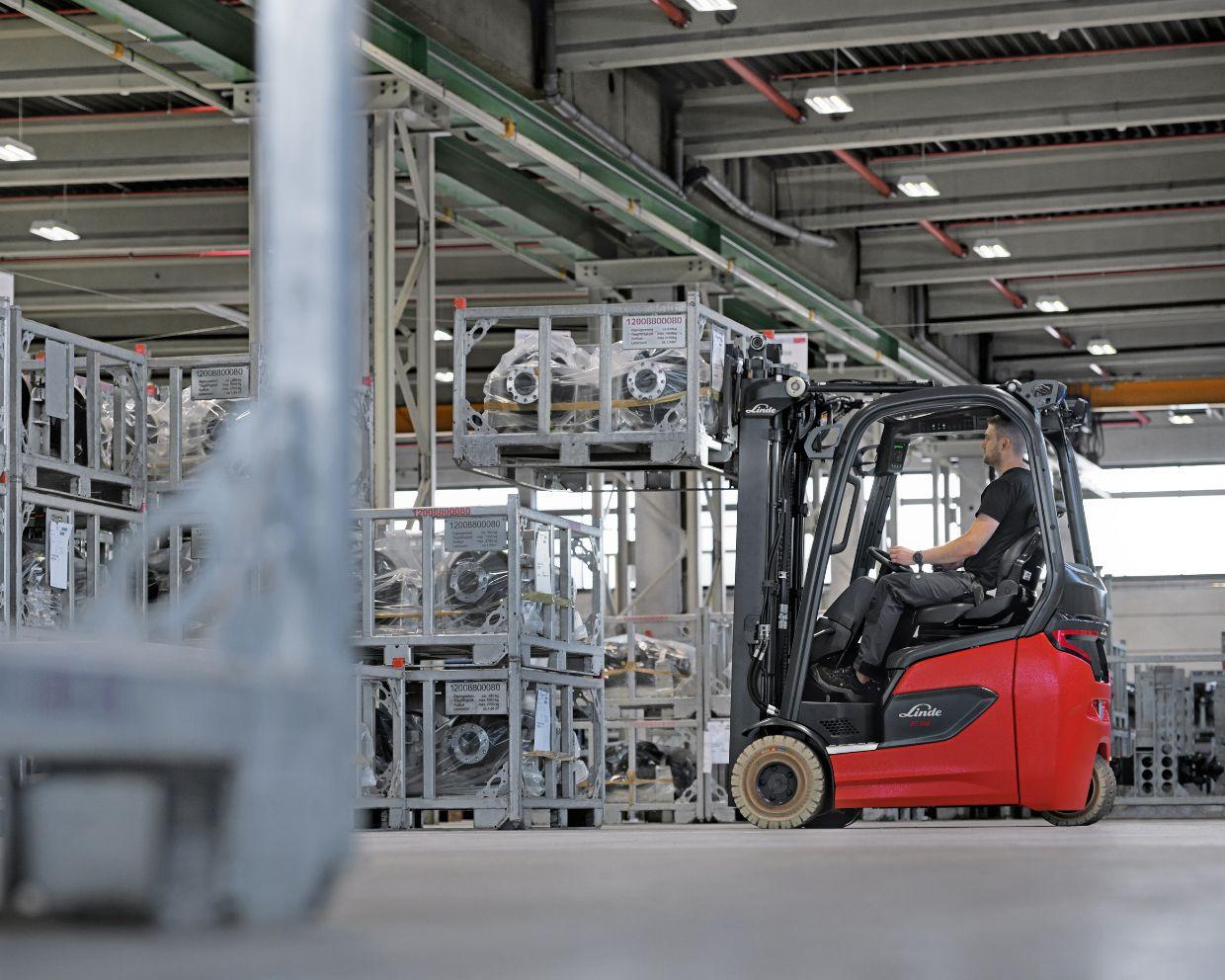
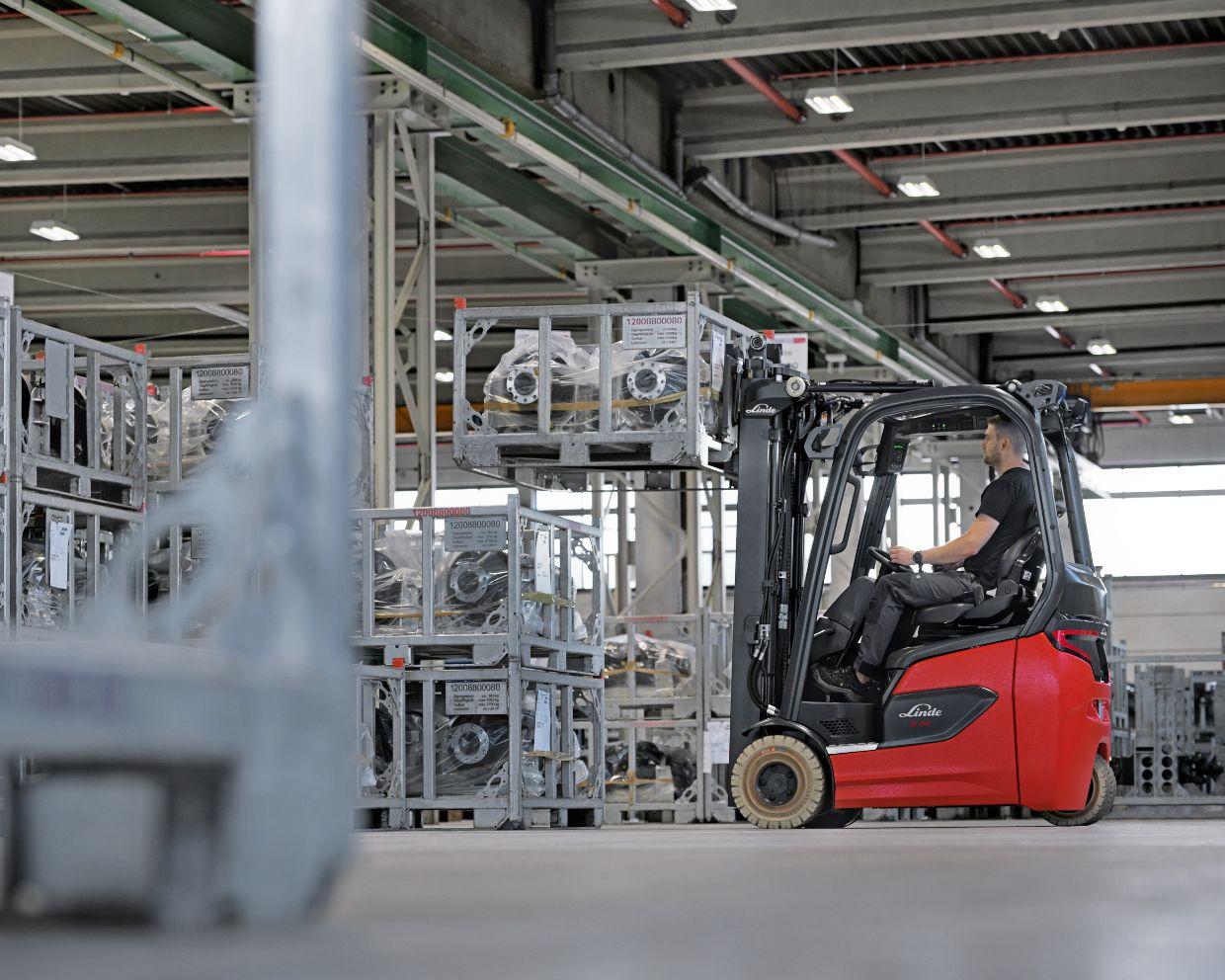
Understanding how much electricity an electric forklift uses is key to controlling your operational costs and maximising efficiency. For businesses in Australia using electric trucks, knowing the hourly energy consumption helps with budgeting, choosing the right battery system and reducing downtime. With the range of trucks available at Linde Australia, it’s essential to get clear on how battery type, usage patterns and operating conditions impact power draw.
How Much Electricity Does an Electric Forklift Actually Use?
As specific hourly consumption figures may be hard to find, it’s best to base estimations off battery sizes, for example, a 48 V electric forklift may consume ≈ 4–15 kWh per hour depending on load, usage and battery type.
Typical consumption for 1.5-3.5 Tonne Forklifts
For a truck in the 1.5-3.5 tonne lift capacity range (common in warehouse and logistics applications), a ball-park figure might be:
- Idle/little load: ~3-6 kWh/h
- Moderate load, typical use: ~6-10 kWh/h
- Heavy duty, large lift cycles or multi-shift: possibly 10-15 kWh/h or more
Important: Since exact model-specific kWh/h are rarely quoted, these should be used for estimation and validated via your own fleet data.
Lithium-ION vs Lead-acid battery systems
The battery type affects how much of the stored energy is usable and the efficiency of charge/discharge. For example, lithium-ION systems can achieve efficiencies of ~95% compared to ~80-85% for lead-acid. Thus, even if the nominal battery capacity is the same, the effective hourly consumption and usable hours differ.
What Factors Affect an Electric Forklift’s Power Consumption?
Various operational and environmental factors influence how much power an electric forklift consumes per hour:
- Load weight and lift height: Heavier loads and higher lift heights increase motor effort, hydraulic work and thereby energy draw.
- Duration of operation per shift: Continuous use vs intermittent use changes how the battery is cycled, heat build-up and efficiency.
- Battery type, age and condition: Older or degraded batteries have reduced capacity and may draw more current to maintain output. Battery type (lead-acid vs lithium-ION) also impacts usable energy and losses.
- Temperature and environmental factors: Extreme cold or heat reduces battery efficiency, increases energy losses, and may require additional cooling or heating systems.
- Driving style and duty cycle: Frequent accelerations, ramp climbs, and idle times all add variably to consumption.
- Maintenance status: Poorly maintained hydraulics, tyres, or drive systems increase inefficiencies and energy draw.
How Does Battery Type Influence Forklift Energy Use?
Lead-acid vs Lithium-ION forklifts
Charging efficiency, cycle life and cooling:
- Lithium-ION batteries: Higher charging efficiency (≈ 95%), faster charging, better tolerance of opportunity charging, less ventilation needed.
- Lead-acid batteries: Lower efficiency (≈ 80-85%), require full charge cycles, more maintenance (e.g., watering, equalisation), larger ventilation requirements.
- Cooling/heating: Lithium systems often maintain constant voltage and perform better under variable loads; lead-acid systems may experience voltage drop under heavy load, affecting energy draw.
Pros and cons in energy consumption:
- Lithium-ION: Lower losses, potentially lower kWh/h for equivalent task, suitable for multi-shift intensive use. Higher upfront cost.
- Lead-acid: Lower capital cost, proven technology for many years, but higher running cost per shift in terms of energy, maintenance and downtime.
- In the context of power consumption: a lithium-ION truck might draw fewer kWh to perform the same work as a lead-acid equivalent because of higher efficiency and less downtime.
How Can You Calculate Hourly Energy Consumption?
Here’s a step-by-step guide to estimate hourly energy consumption for your electric forklift.
Formula:
kWh = (Battery voltage × Current × Operation hours) ÷ 1000
Sample calculation
Assume a forklift with a 48 V battery system, drawing an average current of 80 A during operation, running for 1 hour:
- Voltage × Current = 48 V × 80 A = 3,840 W
- 3,840 W × 1 hour = 3,840 Wh = 3.84 kWh
If actual duty causes a current draw of 120 A for an hour:
- 48 V × 120 A = 5,760 W → ~5.76 kWh/h
Table example (estimated figures)
| Model class | Approximate lift capacity | Estimated kWh/h |
|---|---|---|
| Small indoor electric (1.5 t) | 1.5 tonne | ~4-6 kWh/h |
| Medium counterbalance (2.5 t) | 2.0-2.5 tonne | ~6-9 kWh/ |
| Larger electric (3.5 t) | 3.0-3.5 tonne | ~8-12 kWh/h |
Note: These are estimates for typical duty cycles; actual usage depends on the factors listed earlier.
What Are the Best Practices to Minimise Energy Consumption?
To optimise your fleet and reduce running costs, consider the following:
- Avoid overloading: Stay within rated capacity and minimise unnecessary lift height to reduce energy draw.
- Charge correctly and avoid under- or over-charging batteries: Especially for lead-acid systems, improper charging reduces usable capacity and increases losses.
- Allow batteries to cool between shifts: Thermal stress increases inefficiencies and shortens battery life.
- Regular maintenance: For lead-acid systems ensure watering, equalising, clean connections; check tyres, hydraulics, and drive systems. For all systems maintain drive motors, controllers and keep components in good order.
- Use modern battery management systems (BMS): These help manage charging, temperature, state-of-charge and extend battery life.
- Use appropriate power modes: Many modern trucks offer “eco” or lower-power settings for lighter duty to reduce energy draw.
- Schedule tasks: Shift heavy lifting to off-peak or lower-tariff periods if your energy contract allows.
How Can Temperature and Environmental Factors Affect Forklift Efficiency?
- High heat: Battery internal resistance rises, cooling systems may run more, energy losses increase.
- Cold conditions: Battery capacity reduces, lower voltage under load, more current draw to maintain performance.
- Indoor vs outdoor operations: Outdoor use can require additional lighting, heating/cooling of cab, affects duty cycle and energy draw.
- Tips for extreme conditions:
- Pre-condition batteries before use (warm up if cold, cool down if hot).
- Ensure adequate ventilation or temperature control for charging rooms.
- Monitor battery temperatures and adjust usage/timing to avoid peak thermal stress.
What Tools or Systems Can Help Monitor Forklift Power Usage?
- Battery management systems (BMS): Offer real-time state-of-charge, voltage, current, and temperature; can alert when maintenance is needed.
- Forklift telemetry and fleet management software like Linde’s FleetFOCUS: Allows you to track each truck’s usage hours, energy draw per hour, patterns of heavy use, idle time and maintenance intervals.
- Benefits:
- Extend battery life by avoiding abusive usage.
- Reduce downtime by predictive maintenance.
- Track electricity usage per truck or fleet to understand true energy cost and benchmark efficiency.
Frequently Asked Questions About Electric Forklift Power Consumption
Does lifting heavier loads use more electricity? Yes. Heavier loads increase hydraulic and motor output, which draws more current and thus more energy per hour.
How long does a full charge last for an electric forklift? It depends on battery capacity, duty cycle, battery type and usage pattern. For moderate use it may last a full 8-hour shift; for intensive uptime or multi-shift use you may require battery swap or opportunity charging.
Can opportunity charging reduce energy costs? Yes, especially with lithium-ION systems which tolerate short top-up charges without damaging battery life. This can reduce downtime and spread use more evenly.
How does battery age affect power consumption? Older batteries typically have reduced capacity, higher internal resistance, increased losses and may draw more current to deliver the same output, raising kWh/h.
Are lithium-ION forklifts more energy-efficient than lead-acid? Generally yes, due to higher charging/discharging efficiencies, faster charging, less maintenance downtime and better performance in intensive or multi-shift applications.
How to Optimise Electric Forklift Efficiency and Reduce Running Costs
In summary:
- To estimate hourly consumption, use the formula and consider duty cycle, battery type and load.
- Hourly energy usage for a typical 1.5-3.5 tonne electric forklift is likely in the 4-12 kWh/h range depending on conditions.
- Key levers to reduce running costs include choosing the right battery system (lithium-ION vs lead-acid), monitoring usage, applying best-practice charging and maintenance, avoiding operating under sub-optimal environmental conditions, and using telemetry to track real energy use.
Contact us today for expert guidance on electric forklift solutions, battery technology options and helping you optimise running costs and energy efficiency.