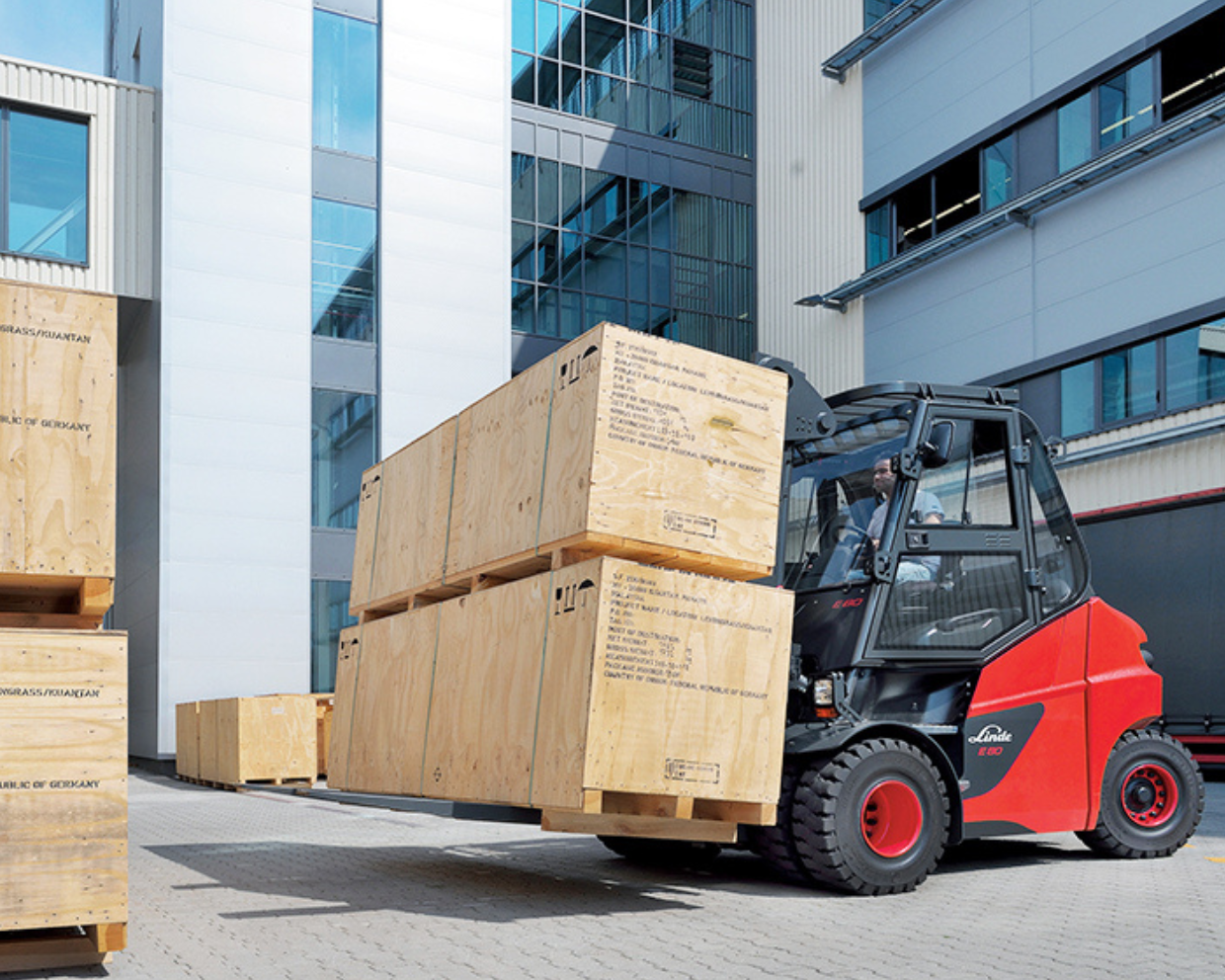
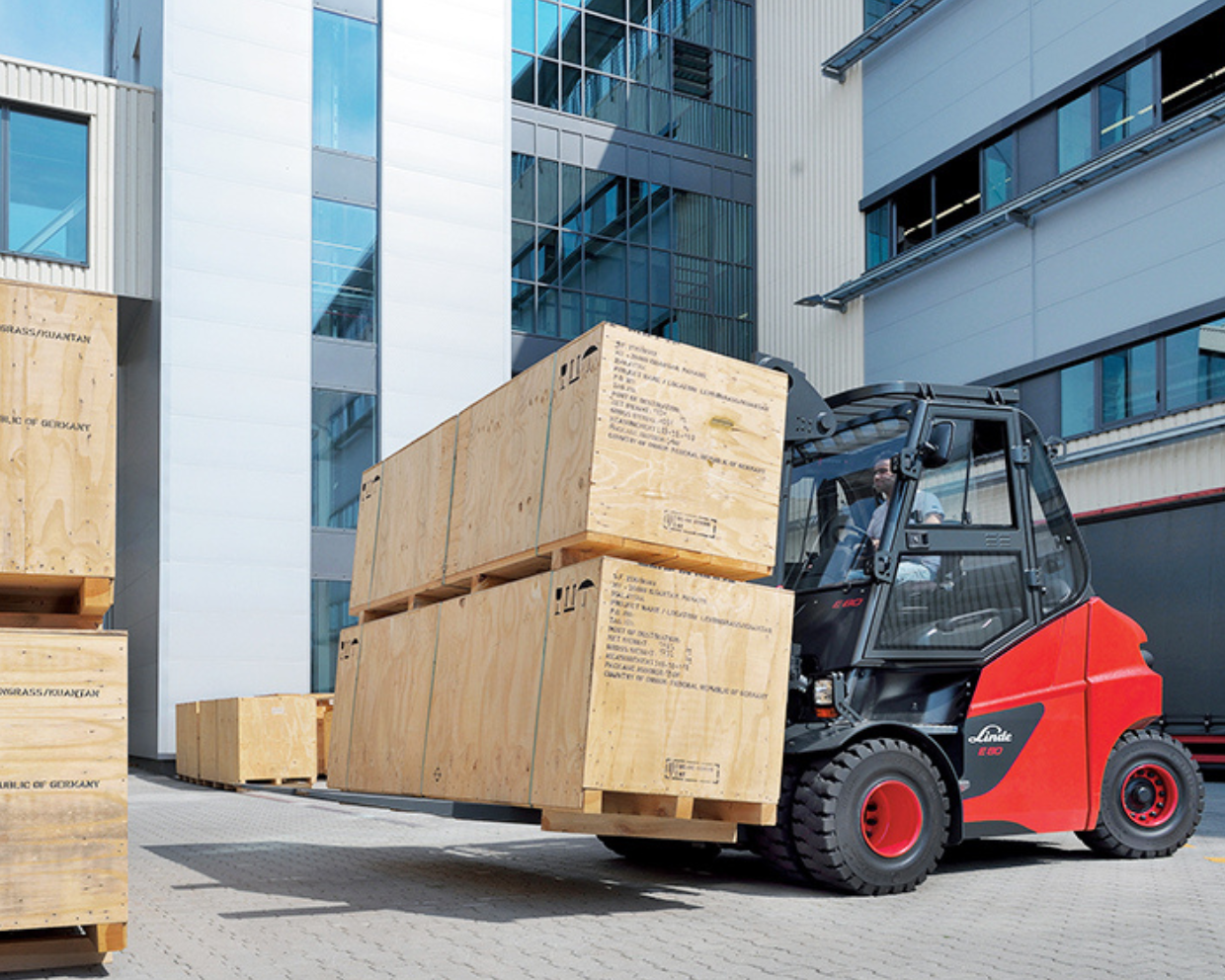
Understanding how much your forklift can safely lift is critical for both safety and efficiency. Exceeding the rated capacity can lead to tip-overs, damage to equipment and loads, and serious injury. This guide from Linde Australia helps you understand your forklift’s lift limits, including how to read a load chart, account for attachments, and calculate safe lifting weight.
What Is Forklift Lift Capacity and Why Does It Matter?
What is forklift lift capacity: Forklift lift capacity is the maximum weight a forklift is designed to safely lift under specified conditions (including a defined load centre, mast height, attachments, etc.). It’s usually provided by the manufacturer and shown on the forklift’s data plate or load chart.
Why it matters:
- Exceeding the maximum lift weight increases the risk of instability and tip-overs.
- It can compromise operator safety, damage the load and even the equipment.
- Loads that appear within “capacity” but are loaded incorrectly (off-centre, at wrong height, with attachments) still pose serious risk.
- For business operations safe lifting supports productivity, reduces downtime and avoids costly incidents.
How Is a Forklift’s Maximum Lift Weight Determined?
When you see a rating like “3.5 tonne lift capacity” on a forklift from Linde Australia, this rating is the result of several factors working together:
- Load centre: The horizontal distance from the fork face to the centre of gravity of the load; a larger distance reduces capacity.
- Counterbalance: The weight of the forklift’s own counterbalance affects how much additional weight it can safely manage.
- Mast height / lift height: As height increases there’s more of a tipping risk, so capacity may be reduced.
- Attachments: Fork extensions, clamps, and rotators can change the centre of gravity, affecting the load centre and possibly reducing the safe capacity.
Safety factors included in rating:
- Manufacturers include a margin of safety in design, and the capacity is valid only under the defined standard conditions.
- Deviations, such as a higher mast, longer forks, off-centre load, etc. may reduce the safe lifting capacity, and the operator must account for that.
How Do You Read a Forklift Load Chart Correctly?
To properly interpret the load chart of a forklift (or the data plate), follow these steps:
Step-by-step guide:
- Locate the data plate on the forklift. This shows the rated capacity at the standard load centre and mast configuration.
- Identify the specified load centre (e.g. 600 mm or other).
- Check any notes about the mast height or fork length used in the rating.
- If your actual load has a different centre, or you are using attachments or a higher lift height, find the adjusted safe capacity on the chart.
- Confirm the dimension of your load and how it sits on the forks, and compare it to the chart.
- If you are above what the chart allows for your actual configuration, you must reduce load weight or change the configuration (smaller load centre, shorter forks, etc).
Differences between standard and modified forklifts:
- Standard forklift: Uses standard mast, standard fork length, no extra attachments, and the quoted capacity is valid.
- Modified forklift: Extended mast, longer forks, attachments like clamps, tyre handlers, etc, which means the capacity is likely reduced and must be verified.
What Is the Load Centre and How Does It Affect Forklift Capacity?
The load centre is the horizontal distance between the vertical face of the forks (the fork heel) and the load’s centre of gravity, typically shown in millimetres (mm). A forklift’s rated capacity applies only for the stated load centre. If the load centre increases (because the load is deeper, longer or placed further out), the truck’s effective lifting capacity decreases.
Example — 600 mm standard load centre:
If a forklift’s data plate says “3,000kg at 600mm load centre”, this means the forklift can safely lift 3,000kg only when the load’s centre of gravity is 600mm from the fork face. If the load is deeper or positioned further forward, for example at an 800mm load centre, the forklift’s safe lifting capacity will be less than 3,000 kg because the load is carried further out from the front axle, reducing stability.
How off-centre loads reduce maximum lift weight:
- The further forward the load is positioned, the greater the risk of the forklift tipping forward.
- Uneven or off-centre loads shift the centre of gravity sideways, forward or backward, which increases instability.
Therefore, the correct placement of the load is just as important as the raw weight.
How Do Attachments Affect Forklift Maximum Lift Weight?
Adding attachments such as clamps, rotators or fork extensions reduces lifting capacity because they add weight and move the load further forward.
Common attachments and their effect:
- Clamp for drums or bales: Adds weight and moves the load’s centre further out, decreasing capacity.
- Fork extensions: Extend the load centre further out, and the rated capacity at standard fork length is no longer valid.
- Rotators or side shifts: Add weight to the carriage and move the centre of gravity, reducing capacity.
Adjusted capacity calculations:
For safe lifting, subtract the attachment’s own weight from the forklift’s rated capacity. Then review the load centre change. If the load centre moves further out due to the attachment, refer to the load chart for the reduced capacity, or apply a proportionate calculation.
Why attachments must be considered in safety planning:
- Without proper adjustment, the forklift may tip forward or sideways.
- Insurance, workplace WHS and internal safety protocols may require that attachment effects are documented.
- Operators must be trained and aware that capacity is reduced when attachments are fitted.
How Can You Calculate Your Forklift’s Safe Lift Weight?
Introduce a forklift lifting capacity calculator, for example:
- Start with the forklift rated capacity at standard load centre
- Subtract the attachment weight
- Adjust for the actual load centre (if larger, reduce the capacity proportionally or use the manufacturer chart)
- Adjust for mast height if higher than standard
The result is maximum safe load weight for your configuration.
Step-by-step example: Let’s assume a forklift is rated at 4,000kg at 600mm load centre. You fit a clamp weighing 150kg, and your load has a centre of 700mm.
- Rated capacity: 4,000kg at 600mm
- Subtract the attachment’s weight: 4,000kg – 150kg = 3,850kg
- Load centre is 700mm (not 600mm) — capacity reduces, let’s say by 10% (consult chart for exact numbers): 3,850kg × 0.90 = ~3,465kg
- If the mast height is higher than standard for the data plate, maybe reduce with a further (say another 5%): 3,465kg × 0.95 = ~3,291kg
So a safe lift weight in this configuration example would be ~3.29 tonnes. However, it is important to note that if you are unsure, always refer to the forklift’s data plate and capacity charts or contact your OEM for advice.
What Are Best Practices to Avoid Overloading a Forklift?
- Always check the weight of the load before lifting. Use scales if available.
- Confirm load dimensions and calculate the actual load centre.
- Keep the load balanced, secured and as close to the forks/backrest as possible.
- Never exceed the rated lift capacity of the forklift for the current configuration (mast height, attachment, load centre).
- Use the proper forks and attachments specified for the load type.
- Ensure operators are trained, certified and familiar with reading load charts and understanding capacity limits.
- Regularly inspect the forklift, its data plate and attachments for wear or modifications that may impact capacity.
What Are the Risks of Exceeding a Forklift’s Lift Capacity?
- Tip-overs and instability: This is the most severe risk, especially when lifting at height or in narrow aisles.
- Damage to forklift components: The mast, tyres, frame, or hydraulics may be overstressed.
- Damage to warehouse infrastructure: Shelving, racks, and floor slabs may be impacted by a tipped load or fork damage.
- Injury to operators or nearby personnel: From falling loads or unexpected movement.
- Loss or damage to the load itself: Increased cost, downtime, and potential liability.
- Compliance risk: Failure to adhere to standards such as AS 2359 may expose a business to legal or insurance issues.
How Can Australian Businesses Ensure Safe Forklift Operations?
Australian businesses can implement robust safety systems to ensure forklift operations stay within safe limits by:
- Adhering to workplace safety standards such as WorkSafe guidelines and Australian Standard AS 2359 for industrial lift trucks.
- Scheduling regular inspections and maintenance of forklifts and attachments to ensure data plates, capacity charts and load‐handling systems are intact.
- Using weight scales, or forklift telemetry systems that monitor load weight and centre of gravity.
- Maintaining operator checklists: Pre-shift checks, ensuring correct configuration, verifying attachments, reading the load chart.
- Providing training and refresher courses for operators on load charts, attachments and safe lifting practices.
- When hiring or leasing forklift equipment (available through Linde Australia), ensuring correct specification for your load types and working conditions.
Frequently Asked Questions About Forklift Lifting Capacity
Can a forklift lift its maximum weight at full height? Not always. The rated capacity is typically given at a standard lift height and load centre. If the mast is extended significantly or the lift height is greater than standard, safe capacity may be reduced.
How does load shape affect lifting capacity? Load shape affects the position of the centre of gravity. A long or uneven load may move the load centre further out or sideways (off-centre), reducing safe capacity even if weight remains the same.
What if my forklift has an attachment? You must subtract the weight of the attachment and adjust for how it changes the load centre and stability. Always refer to the manufacturer’s load chart for the attachment configuration.
Can you estimate safe lift weights without a load chart? You can make a conservative estimate using calculations (rated capacity minus attachment weight minus load centre adjustment), but this is less reliable than using a specified load chart. It is best practice to refer to the manufacturer data.
How often should lift capacity checks be done? Every time the forklift’s configuration changes (attachments fitted, longer forks, different mast). Also at regular intervals (daily operator checks, periodic inspector reviews) to ensure the data plate and chart are still valid and unmodified.
How to Lift Safely and Optimise Forklift Performance
Safe and efficient forklift operations depend on:
- Understanding the rated lift capacity and how it was determined.
- Recognising the importance of load centre attachments, mast height and actual configuration.
- Reading the load chart accurately and applying the correct deductions for your scenario.
- Following best practice: Pre-lift checks, operator training, use of correct attachments, and balancing the load correctly.
- Avoiding the risks of overloading: Tip-overs, damage, injury and liability.
- Implementing a proactive safety system in your Australian business, compliant with AS 2359 and WorkSafe guidelines, and using tools such as weight scales or telemetry.
If your organisation is ready to take forklift safety and material-handling performance to the next level, contact Linde Australia for expert guidance on forklift selection, attachments, training and maintenance. We’re here to power your productivity.