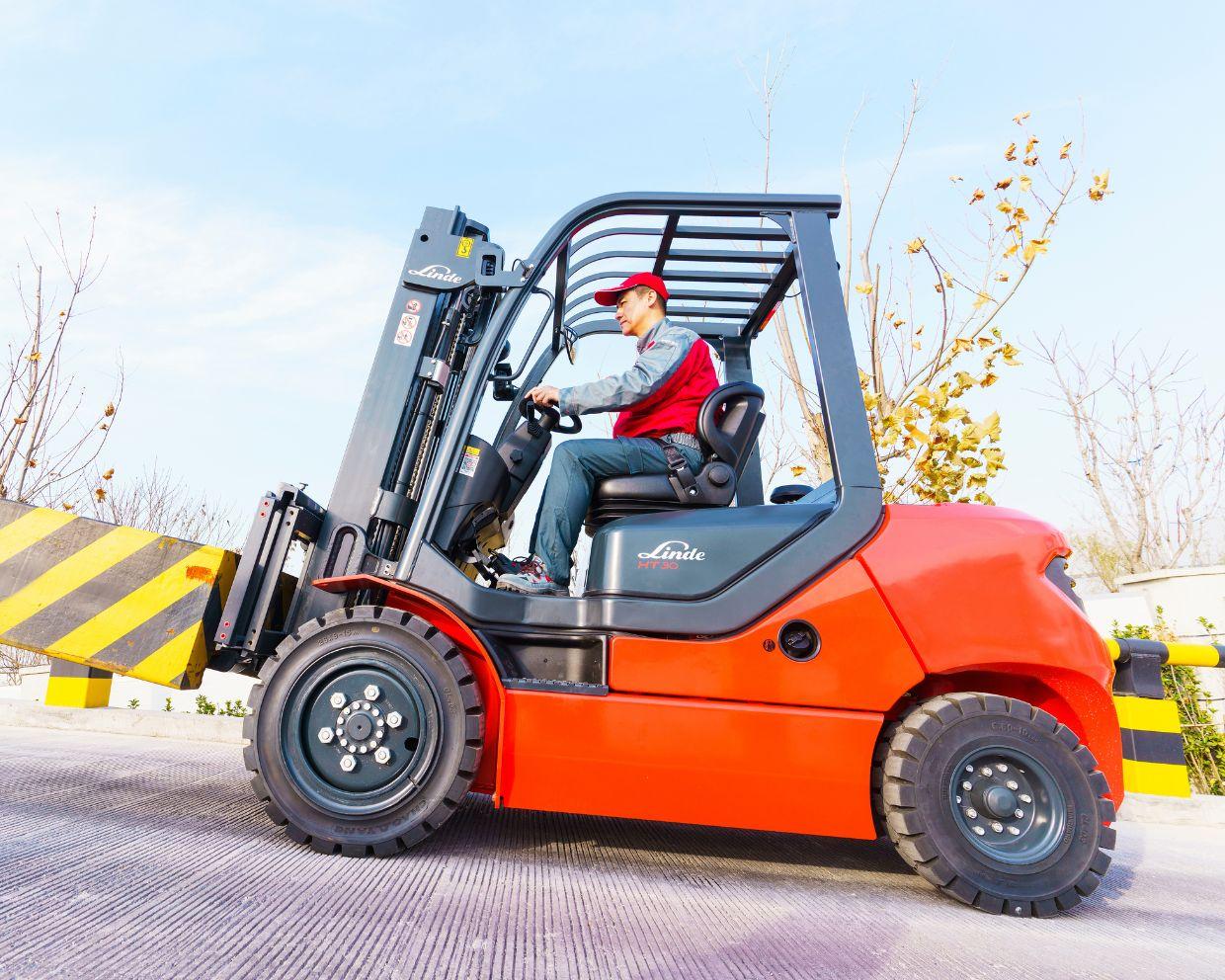
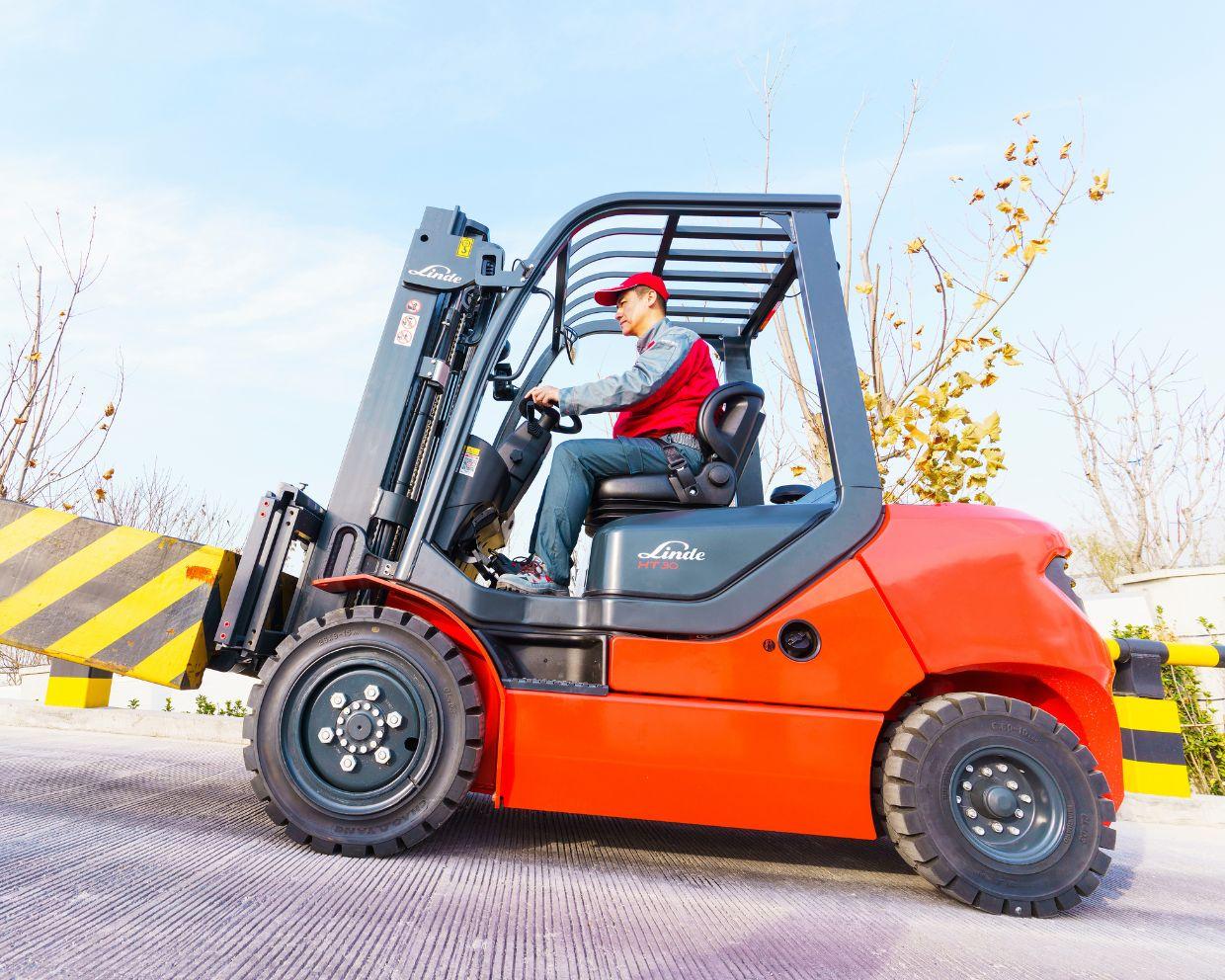
Operating a forklift on a sloped surface introduces serious risks such as load shifting, tip-overs, loss of control, and danger to both the operator and nearby pedestrians. Whether driving up a ramp with a heavy pallet or driving down a yard incline with a light load, slope driving demands precision, care, and clear procedures.
In this article, we draw on expert insights and best practices from Linde Material Handling Australia to guide safe forklift operation on inclines, protecting your load, your team, and your bottom line.
Why Is Forklift Safety on Slopes Critical in Warehouses?
Forklifts driving on slopes can significantly raise the risk of instability, and tipping over is one of the biggest dangers for forklift users, especially on slopes or ramps.
Some of the key risks include:
- Tipping or overturning: Braking, accelerating, or turning on an incline can destabilise the forklift.
- Load shifting: On a slope, the centre of gravity shifts, increasing the chance of loads sliding or tilting off the forks.
- Operator injury: Sudden tip-overs may lead to crushing or ejection if seat belts are not used.
- Pedestrian safety: Forklifts operating on ramps intersecting with pedestrian areas pose high collision risk. WorkSafe NSW found inadequate traffic management and pedestrian-mobile-plant separation to be common contributing factors in forklift incidents.
Flat vs. Slope Operation
On flat surfaces, stability is relatively predictable. The centre of gravity remains within the stability triangle, and dynamic forces from movement are more easily managed.
On slopes, gravity alters the distribution of forces: travelling cross-slope, turning, or braking abruptly can push the centre of gravity outside the safe stability envelope.
Should I Drive a Forklift Uphill with a Load?
Driving uphill while carrying a load calls for special care to maintain stability and control.
- Position forks uphill for load stability: Always approach the incline so that the load (forks) is facing the uphill direction. This helps keep the centre of gravity safely within the stability envelope.
- Travel slowly and steadily: Maintain a constant, modest speed and avoid sudden acceleration. Smooth power application helps prevent loss of traction.
- Tilt forks to secure load: Tilt the mast slightly back to lean the load uphill, reducing the risk of it sliding off.
- Keep load close to the mast: Minimising the distance between the load and the mast lowers the centre of gravity and improves control.
Should I Drive a Forklift Downhill with a Load?
Descending a slope with a load is often more hazardous than ascending. Use these strategies:
- Always reverse downhill with forks facing uphill: This keeps the load uphill, improving stability and reducing the forward tipping risk.
- Maintain controlled speed: Don’t let gravity make your forklift accelerate. Use a low, constant speed.
- Apply gradual braking: Avoid hard or sudden braking. Use engine braking if possible, or modulate the brake pedal gently.
- Avoid sharp turns or sudden stops: Any lateral force (from turning) plus the gradient can easily destabilise the truck.
How Should I Drive a Forklift Uphill or Downhill Without a Load?
Even when unloaded, slope driving requires discipline:
- Forks face downhill: Position the counterweight (the heavy rear) uphill to maintain rear-wheel contact and stability.
- Adjust tilt to clear ground: Tilt the forks slightly so they don’t drag or snag.
- Keep speed controlled: Even without a load, a descent can lead to loss of control if travel isn’t kept at a slow and steady pace.
What Are the Do’s and Don’ts of Forklift Operation on Slopes?
Here is a handy list of practical do’s and don’ts when dealing with slopes:
Do’s:
- Travel slowly and predictably
- Use wheel chocks if parked on a slope in an emergency
- Maintain the load close to the mast
- Tilt forks appropriately to secure load
- Always face the heavy end (load or counterweight) uphill during slope travel
Don’ts:
- Never turn the forklift on a slope; turning lateralises forces and destabilises
- Never park on a slope unless in emergency; and only with chocks in place
- Avoid carrying loads across the slope (sideways)
- Avoid sudden acceleration or braking
How Do Forklift Tilt and Load Position Affect Stability on Slopes?
Forklift stability on an incline depends heavily on both tilt and how the load is positioned:
- Mast tilt (forward/back):
- Tilt backward when carrying a load uphill or downhill as it helps lean the load towards the rear and maintain stability.
- Tilt forward only when placing or picking up load, but avoid high tilt during travel.
- Centre of gravity:
- Keep the load’s centre of gravity as low as possible. The higher it is, the more unstable the forklift.
- Spread the load evenly across the forks; uneven loads may shift more easily on a slope.
- Load distribution:
- Heavier, compact loads are safer because their centre of gravity is tighter and more predictable.
- Large or irregular loads should be carefully assessed for how they will shift when tilted or when the forklift is inclined.
This table details safe tilt angles for different slope gradients (example):
| Slope Gradient | Recommended Tilt |
|---|---|
| Up to 5% | Slight back tilt (5-10°) |
| 5–10% | Moderate back tilt (10–15°) and load very close to mast |
| >10% (if permitted by manufacturer) | Minimal lift height, tight load compaction, maximum rear tilt, very slow speed, and strict braking protocols |
What Are the Safe Braking Practices for Forklifts on Slopes?
Effective braking is essential on an incline. Here are best practices:
- Gradual braking techniques:
- Don’t rely on quick, hard stops. Instead, use a smooth, incremental brake application.
- Use engine or regenerative braking:
- For internal-combustion forklifts, use engine braking (if available).
- For electric forklifts, use regenerative braking where possible to slow down safely while recovering energy.
- Safe stopping distances uphill vs downhill:
- Downhill: Requires more stopping distance, because gravity accelerates the forklift.
- Uphill: Momentum is lower, but be cautious of rolling back, especially when starting from a stop.
- Consider influencing factors:
- Load weight: Heavier loads demand more braking distance.
- Slope angle: Steeper slopes require earlier braking.
- Surface type: Wet, oily, or uneven surfaces reduce tyre traction and braking effectiveness.
How Can Warehouse Managers Ensure Forklift Safety on Slopes?
We strongly recommend that warehouse managers adopt a comprehensive slope safety strategy:
- Implement speed limits for slopes: Set stricter speed caps (e.g., 5 km/h) on inclines, regardless of gradient.
- Use warning signage and slope markers: Clearly mark ramp entry/exit zones, gradient, and slope direction.
- Conduct operator training on slopes: Provide specialised training on incline operation, load stability, braking, and tilt management.
- Use pedestrian exclusion zones on ramps: Restrict pedestrian access where forklifts use ramps to avoid collisions.
- Regular forklift and brake maintenance:
- Inspect brakes frequently (especially hydraulic lines, pads/discs).
- Check tyres, steering components, and tilt systems to ensure reliable control.
- Risk assessment and slope mapping:
- Measure slope gradients across the facility.
- Document maximum safe slope for each forklift model based on manufacturer specs and operational risk.
FAQs About Forklift Operation on Slopes
Can I turn a forklift on a slope safely? No. Turning on a slope introduces lateral forces that destabilise the forklift. Operators should always ascend or descend in a straight line, then turn on level ground.
How steep can a forklift safely go? It depends on the make and model. Many safety guides recommend limiting standard forklift slope operations to under 10% gradient, unless the forklift is specifically rated for more.
How do I park a forklift on a slope in an emergency? Use wheel chocks. Lower the forks, tilt slightly, and apply the parking brake. Only use slope parking in emergencies.
Do electric forklifts handle slopes differently than diesel? Yes, electric forklifts often use regenerative braking, which helps control descent. However, they may have different traction and motor characteristics, so always consult the manufacturer’s slope-rating documentation.
How to Operate a Forklift Safely on Sloped Surfaces
Operating forklifts on slopes demands more than just technical skill, it requires a disciplined approach, proper orientation, and consistent risk management. Key take-home points:
- Always travel slowly and predictably
- Keep the heavy end (load or counterweight) uphill
- Tilt the mast appropriately to maintain load stability
- Use gradual braking, and leverage engine or regenerative braking where available
- Avoid turning, sudden braking or acceleration, or parking on a slope except in emergencies
- Train operators, maintain equipment, mark slopes, and enforce safety protocols
For expert advice on safe forklift operation in your facility, particularly if you do have a lot of slopes to navigate, . Our team of specialists can help you enhance your forklift safety management and reduce risks for your team and your business.