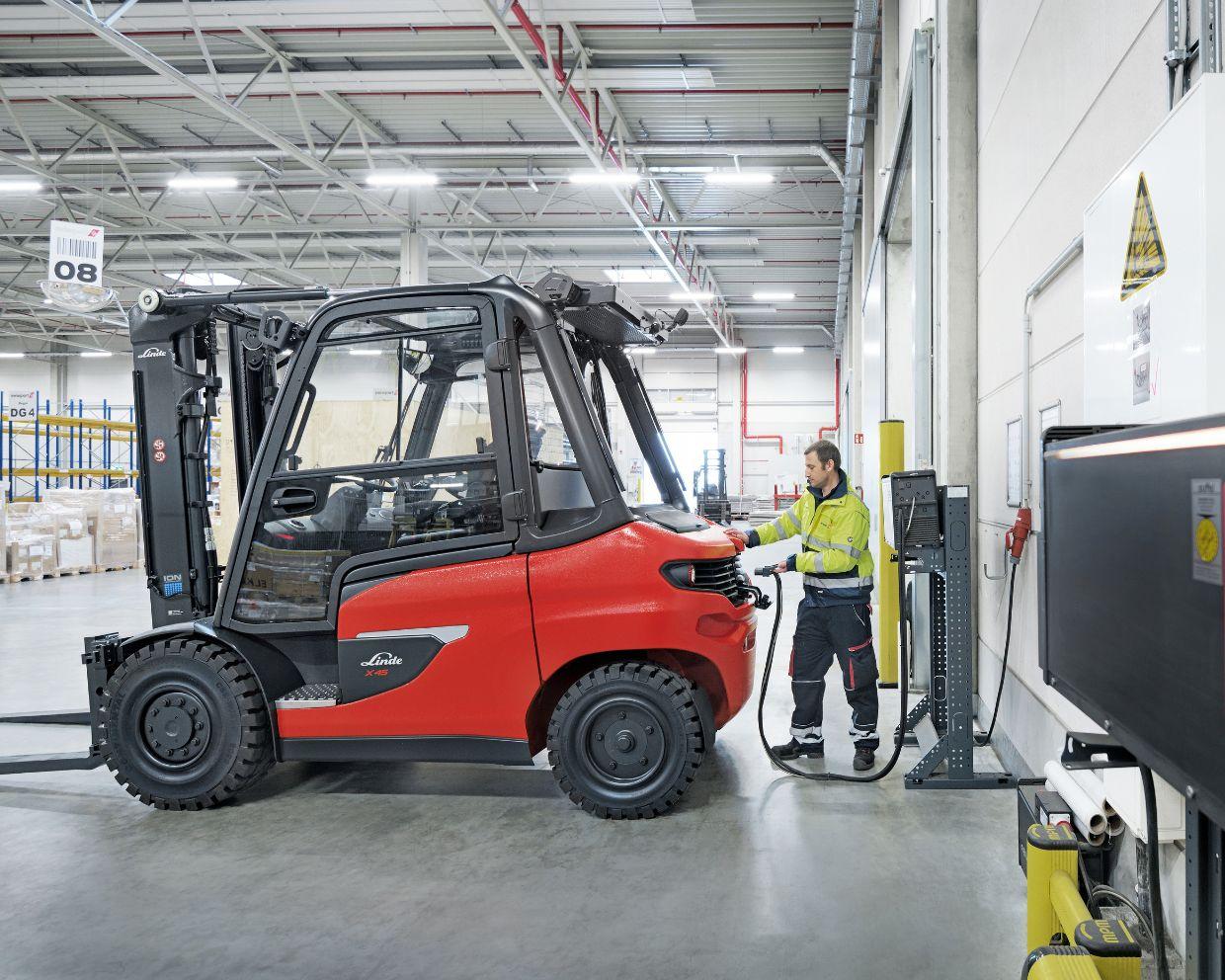
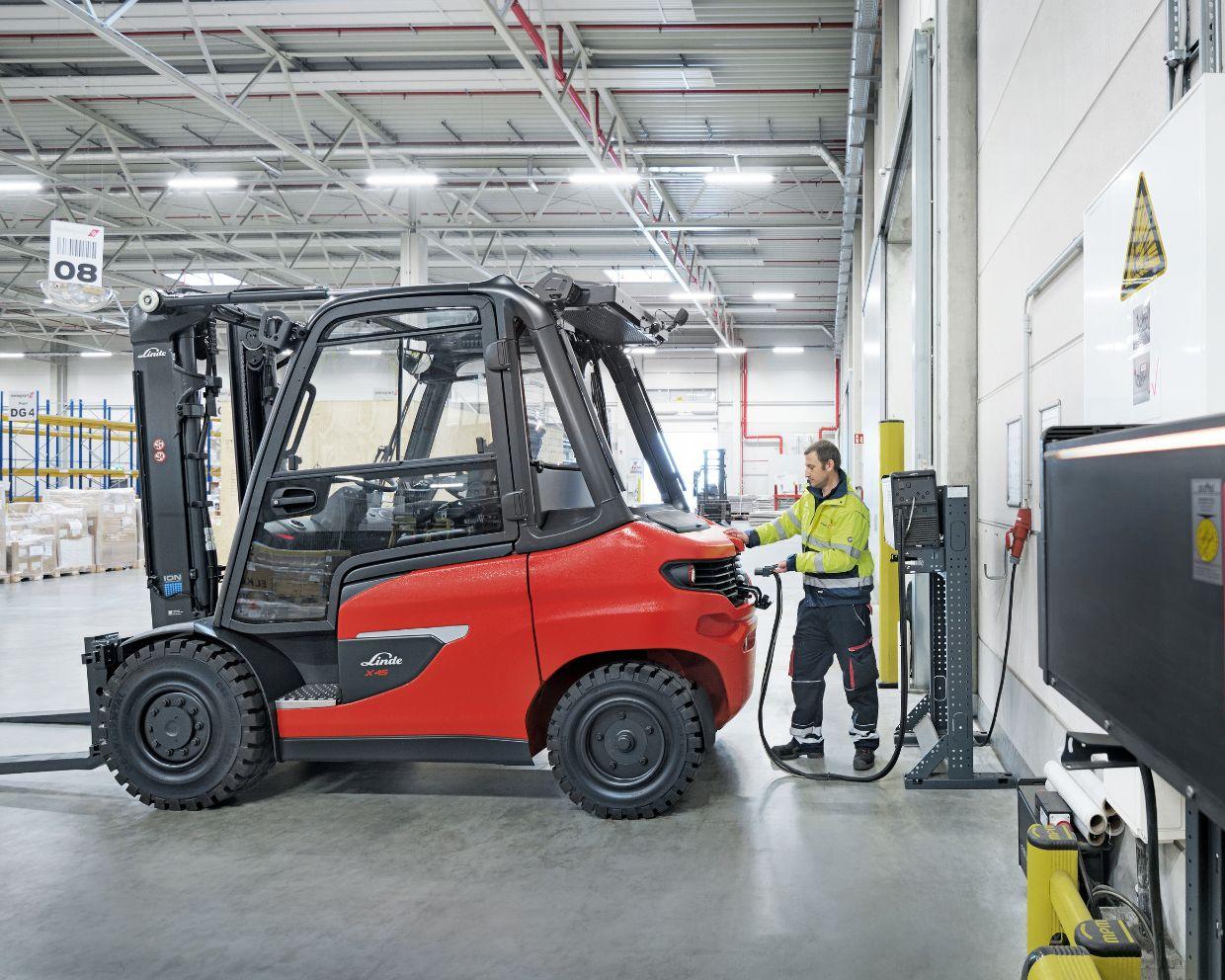
Properly designed forklift charging stations are essential for smooth warehouse operations, especially when using electric forklifts. A well-configured charging setup ensures reliability, efficiency, safety, and longevity of your fleet. At Linde Material Handling Australia, we offer advanced charging solutions including battery technology and charge-management systems, to help businesses maintain continuous operational readiness.
What Are Forklift Charging Stations and Why Are They Important?
A forklift charging station is a designated area or infrastructure where electric forklifts recharge their batteries. Depending on the battery type and operation style, charging stations can range from simple single-charger units to fully integrated systems managing an entire fleet’s charging cycle.
There are generally two common battery types for forklifts:
- Lead-acid batteries: Traditional technology that often requires extended charging periods, electrolyte maintenance, and proper ventilation due to gas emissions.
- Lithium-ION (Li-ION) batteries: A modern alternative that offers higher energy efficiency, quicker recharging, and reduced maintenance.
Proper charging stations matter because:
- They ensure consistent battery performance and lifespan.
- They improve safety by isolating charging from operational areas and controlling risks related to gases or improper handling.
- They help maintain continuous availability of forklifts which is critical in warehouses operating multiple shifts or with high throughput.
At Linde, solutions such as Li-ION battery systems and intelligent charge management give operators peace of mind while maximising uptime.
How Do You Choose the Right Location for Forklift Charging Stations?
Selecting the right location for electric forklift charge stations is a critical decision. Several factors should be considered to meet operational efficiency and safety standards:
- Ventilation: For lead-acid batteries, charging generates hydrogen gas, a flammable hazard. Standards require charging areas to be well-ventilated and free from ignition sources.
- Space requirements and layout: You need enough room for forklifts to manoeuvre, dock to chargers safely, and for operators to access battery compartments without obstruction.
- Accessibility: Charging zones should be easily accessible from work areas to minimise travel time, but separated from high-traffic zones to avoid operational interference or safety risks.
- Compliance with safety regulations: In Australia, charging (and refuelling) areas must comply with occupational health and safety standards, which include designated zones, isolation from ignition sources, and proper training for staff.
- Electrical infrastructure: Especially for fleets or high-capacity batteries such as li-ION, ensure that mains power, wiring, sockets, and fuses are specified to support the combined load of multiple chargers.
Practical tips: Locate chargers near shift start/stop points or break areas to encourage interim charging, but ensure adequate ventilation and safe separation from pedestrian or loading zones. Define a clear charging zone with signage and restrict access to authorised personnel only.
What Are the Best Practices for Setting Up Electric Forklift Charge Stations?
When setting up electric forklift charge stations, following best practices helps ensure safety, reliability, and efficient operation. Here’s a step-by-step guide inspired by Linde’s standards:
- Plan Infrastructure and Layout
- Confirm that the electrical supply (voltage, circuit, fuse rating) meets the chargers’ requirements. Heavy-duty li-ION chargers may demand high connected loads.
- Position chargers in a designated charging area with adequate ventilation and clearance.
- Install Chargers and Connectors Properly
- Use manufacturer-approved chargers and ensure correct polarity. Never reverse +/– connectors.
- Ensure forks are lowered, mast tilted forward, hand-brake engaged, and the forklift switched off before charging begins.
- Follow Battery-Specific Protocols
- For lead-acid batteries: Manage electrolyte levels, avoid topping up before charging, and only use demineralised water if required.
- For li-ION batteries: Take advantage of flexible charging. Quick opportunity charges during breaks are supported without harming battery life.
- Implement Safety Measures
- Define the charging area as a no-ignition zone (no smoking, open flames, or spark sources).
- Ensure operators and maintenance staff are trained and use appropriate personal protective equipment (PPE) where required.
- Take Advantage of Intelligent Charge Management Systems
- Use systems like Linde’s Connect:Charger to network multiple chargers, manage charging schedules, and avoid peaks in electricity consumption.
- Monitor energy consumption and adjust charge limits to prevent overloads and control energy costs.
How Should Charging Stations Be Configured for Multiple Forklifts?
When you operate a fleet of forklifts, setting up charging for multiple vehicles needs strategic planning:
- Use centralised charge-management systems (like Linde:Connect Charger) to coordinate simultaneous charging of many trucks. This helps avoid spikes in electricity demand and reduces energy costs.
- Schedule charging times. For example, stagger charging during breaks or shift changes rather than having all forklifts plug in at once.
- Prioritise critical vehicles (those needed for immediate operations) so they recharge first and remain available. Linde:Connect Charger allows prioritisation of charge speed and order.
- Monitor and log charging data to plan maintenance, foresee battery replacements, and optimise fleet availability.
How Can You Maintain Forklift Charging Stations for Optimal Performance?
To keep your electric forklift charge stations running smoothly over time:
- Inspect charging equipment regularly: Check connectors, cables, and sockets for damage, wear, or corrosion.
- For lead-acid batteries: Monitor electrolyte levels and specific gravity, top up with de-ionised water only when required, and ensure vent caps are functioning.
- For Li-ION batteries: Rely on built-in battery management for balancing and protection, and perform periodic system checks for temperature, voltage, and cell condition.
- Keep the charging area clean and well-ventilated: Even with Li-ION systems (which do not emit hydrogen), a tidy, well-organised space reduces risks and supports safety compliance.
- Train staff: In correct charging and maintenance procedures. Only authorised personnel should perform battery changes or servicing.
Routine maintenance and good housekeeping around charging stations help ensure reliability, prolong battery life, and avoid costly downtime.
What Are the Key Features to Look for in Electric Forklift Charge Stations?
When selecting electric forklift charge stations (or chargers) for your warehouse, consider:
- Charge management capability: Ability to network multiple chargers, monitor usage, schedule charging, and avoid power peaks. The Linde:Connect Charger offers exactly that.
- Compatibility with battery type: The charger should match the battery chemistry and voltage (lead-acid vs Li-ION). Linde’s battery and charger systems are designed to integrate seamlessly.
- Efficiency and charging speed: Li-ION systems support short interim charging or full cycles quickly, increasing forklift availability.
- Safety features: Protection against over-charging, overheating, deep discharge, faulty connections; and in the case of Li-ION, robust housing, multi-level cell/module/battery protection and compliance with safety standards.
- Scalability and flexibility: Chargers that allow fleet expansion or adaptable layouts (for instance, placing chargers near operations or break areas) rather than needing a dedicated battery room. Linde Li-ION charging infrastructure is lean and flexible.
How Do Linde Forklift Charging Stations Enhance Warehouse Operations?
When you choose Linde’s charging solutions, you benefit in several ways:
- Maximised uptime: Li-ION battery systems with efficient chargers and smart charge management ensure forklifts are ready when needed, even in multi-shift or high throughput environments.
- Cost savings: Improved energy efficiency (up to 30% more energy yield compared with traditional battery setups) reduces electricity consumption.
- Simplified infrastructure: Reduces need for dedicated battery rooms in many cases.
- Improved safety: Advanced battery management, robust battery housing, and controlled charging reduce risks associated with battery gas, acid handling or thermal events.
- Better environmental footprint: Emission-free forklift operation and sustainable battery recycling practices align with modern warehouse sustainability goals.
As a one-stop provider of material handling solutions, Linde supports businesses with end-to-end expertise from energy systems and chargers to fleet management and safety services. Click on the link below to enquire more about our services.