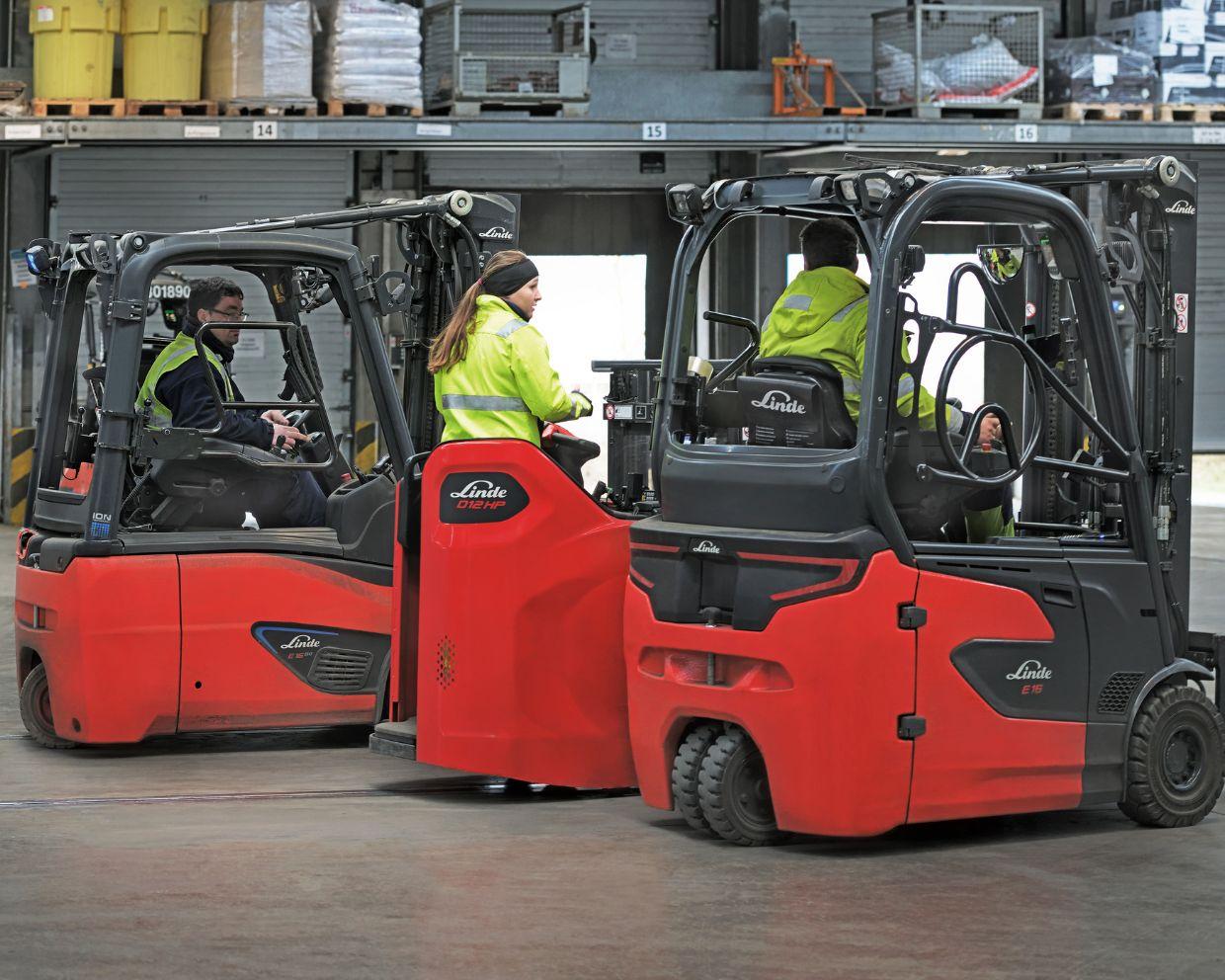
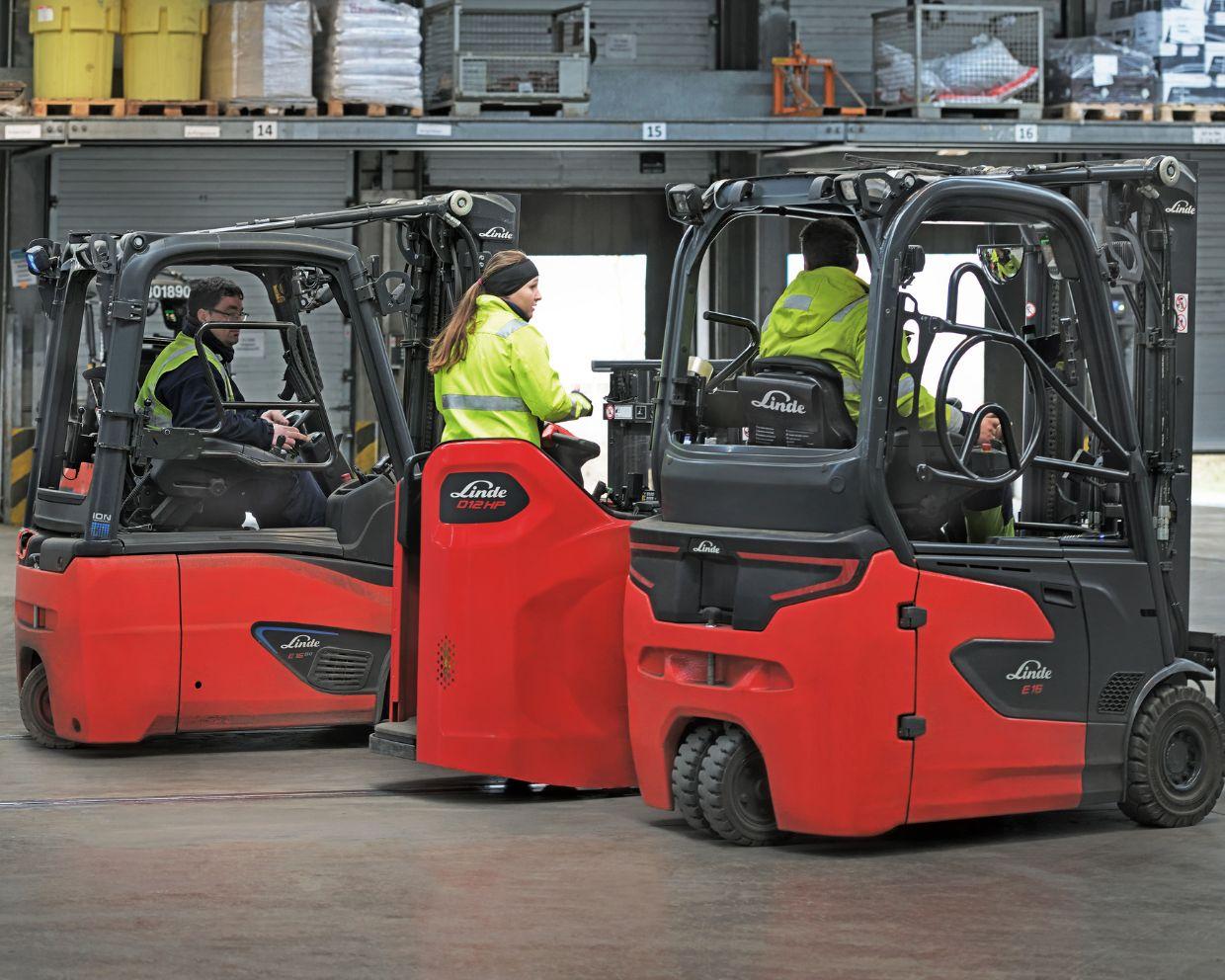
Choosing the right materials handling equipment is about more than comparing purchase prices or individual machine specifications. The equipment needs to work within your operation, from the loads you move and the distances you travel to your warehouse layout, operating hours and safety requirements.
A machine that looks suitable on paper may not be the right fit once you consider aisle widths, lift heights, duty cycles, pedestrian traffic or future changes to your business.
A strategic approach to materials handling starts with understanding the application. Businesses should consider:
- What needs to be moved
- Load weight and dimensions
- Required lift height
- Warehouse environment and layout
- Equipment type and configuration
- Usage and operating hours
- Energy requirements
- Safety and traffic management
- Current and future operational requirements
Taking these factors into account can help you select materials handling equipment that is fit for purpose, rather than simply choosing a machine based on its headline specifications.
What Should You Consider When Choosing Materials Handling Equipment?
The first step is to understand what the equipment needs to do, where it needs to operate and how often it will be used. The right material handling equipment should be selected around the application.
Start by assessing:
- Type of loads: What materials, products or pallets will be moved?
- Load weight and dimensions: How heavy, wide, long or unusually shaped are the loads?
- Lift height: How high will loads need to be stored or retrieved?
- Frequency of movement: How many movements are required during a shift?
- Travel distances: How far will equipment travel between collection and delivery points?
- Operating environment: Will the equipment operate indoors, outdoors or across both?
- Warehouse layout: What are the aisle widths, racking arrangements and turning areas?
- Available space: Are there physical restrictions around doors, loading docks or storage areas?
- Operating hours: How long and how frequently will equipment be required to operate?
This assessment creates a clearer picture of the materials handling requirements across your site. It can also help identify where different types of equipment may be needed for different tasks.
How Does Load Capacity Affect Equipment Selection?
Load capacity is one of the most important considerations when selecting forklift equipment, but it should not be viewed in isolation.
The equipment needs to accommodate the actual characteristics of the load and the way it will be handled. Consider:
- Load weight
- Load dimensions
- Load centre
- Required lift height
- Mast configuration
- Attachments and accessories
Rated capacity can vary depending on the equipment configuration, load centre, lift height and other application factors. This is why businesses should assess the complete handling requirement rather than selecting equipment based only on a nominal capacity.
If loads vary considerably, the heaviest or most challenging application may need to be considered when determining the appropriate equipment configuration.
How Does Warehouse Layout Affect Equipment Selection?
Your warehouse can have a significant influence on which materials handling equipment is appropriate.
A machine needs enough space to travel, turn, lift and position loads safely. Before selecting equipment, consider:
- Aisle width and racking configuration
- Turning space
- Ceiling and overhead clearance
- Floor conditions
- Loading and unloading areas
- Doorways and access points
- Pedestrian traffic
- Restricted or high-traffic areas
Equipment dimensions and manoeuvrability should complement the facility. For example, a warehouse with narrow aisles and high racking may require a different approach to one with wide aisles, lower storage and frequent outdoor loading.
Which Type of Materials Handling Equipment Is Right for Your Operation?
There is no single type of materials handling equipment that suits every application. Different equipment categories are designed around different handling tasks, environments and operating requirements.
Depending on the operation, businesses may consider:
- IC forklift trucks for lifting, loading and transporting a broad range of goods
- Electric forklifts where emissions, noise, indoor operation or energy requirements are important considerations
- Reach trucks for applications involving high-level racking and restricted warehouse space
- Pallet trucks for moving palletised loads over relatively short distances
- Pallet stackers and order pickers for specific storage and picking tasks
- Automated equipment where repetitive and predictable material movement may be suitable for automation
The objective is not to select the most advanced machine available. It is to select equipment that matches the work.
Linde's current range covers engine forklifts, electric forklifts, reach trucks, VNA trucks, pallet stackers, pallet trucks, tow tractors, order pickers and automated trucks, providing options across a range of materials handling applications
When Is an Electric Forklift Suitable?
An electric forklift can be a suitable option for many indoor applications, particularly where emissions, noise and manoeuvrability are important considerations.
Electric forklifts may be worth considering when your operation involves:
- Indoor warehouse or distribution environments
- Requirements around tailpipe emissions
- Noise-sensitive work areas
- Frequent manoeuvring in confined spaces
- Suitable battery charging or energy infrastructure
- Operating hours and duty cycles that align with the selected battery and charging strategy
However, electric forklifts are not automatically the right choice for every application. Operating hours, load requirements, environmental conditions, charging arrangements and duty cycle should all be assessed before selecting an energy source.
Linde offers electric forklift options alongside diesel, LPG, CNG and other energy systems, allowing businesses to consider the power source as part of the wider application.
When Is a Reach Truck Suitable?
A reach truck may be appropriate for warehouse operations where storage density, high racking and aisle space are important considerations.
Reach trucks are designed for applications where loads need to be placed into or retrieved from racking, particularly in warehouse environments with space constraints. Their design can support efficient movement within aisles while providing access to elevated storage positions.
When considering a reach truck, look at the complete warehouse configuration, including racking height, aisle width, load characteristics, floor conditions and required travel patterns.
When Might Pallet Trucks or Other Warehouse Equipment Be Suitable?
Pallet trucks and other warehouse trucks can provide a practical solution for specific material movement tasks without requiring a full-sized forklift.
For example, pallet trucks may be suitable for moving palletised loads around warehouses, loading areas and distribution environments where lifting to significant heights is not required.
Other warehouse equipment can support tasks such as pallet stacking, order picking and movement between defined areas. The right choice depends on the work being performed and the environment in which it takes place.
How Can Warehouse Automation Support Materials Handling?
Warehouse automation can support materials handling processes where tasks are repetitive, predictable and clearly defined. When integrated with suitable materials handling systems, automation can help coordinate the movement, storage and retrieval of goods across defined workflows.
Potential applications include:
- Repetitive movement between defined locations
- Transport between production and storage areas
- Storage and retrieval
- High-volume workflows
- Consistent movement of materials
Automation may help businesses address specific workflow requirements, but it should not be treated as a universal solution. The suitability of automated equipment depends on factors such as workflow, facility design, material flow, operating volumes and the consistency of the tasks being automated.
Automation solutions are flexible and scalable, with applications ranging from specific processes to more complex material flows.
Before investing in warehouse automation, businesses should understand the process they want to improve, and establish whether automation is appropriate for that particular workflow.
How Important Is Safety When Selecting Materials Handling Equipment?
Safety should be considered before equipment is selected, not after it arrives on site.
The equipment needs to be appropriate for the load, environment and tasks being performed. Consider factors such as:
- Equipment suitability
- Load stability
- Operator visibility
- Manoeuvrability
- Pedestrian interaction
- Traffic management
- Operating environment
- Operator training
- Pre-start checks
Workplace traffic management should consider the movement of pedestrians, vehicles and powered mobile plants. Safe Work Australia recommends considering measures such as elimination, substitution, isolation and engineering controls before relying on administrative measures such as training and supervision.
Pre-operational checks are also an important part of forklift safety. Operators should follow the manufacturer's instructions, identify faults and ensure unsafe equipment is not used.
Equipment and technology can support safer operations, but they do not replace appropriate training, procedures, supervision and site management. Businesses should always check the current work, health and safety (WHS) requirements that apply in their state or territory when developing materials handling procedures.
How Can Equipment Selection Support Warehouse Efficiency?
Selecting equipment that matches the operation can support better material flow and equipment utilisation. It can also help businesses avoid using equipment that is oversized, underutilised or poorly suited to the warehouse environment.
When reviewing warehouse efficiency, consider:
- Workflow and material flow
- Equipment manoeuvrability
- Travel requirements
- Equipment utilisation
- Warehouse layout
- Fleet size
- Operator requirements
- Maintenance and servicing needs
Warehouse optimisation is not necessarily about adding more equipment. In some operations, a better result may come from changing equipment types, adjusting the warehouse layout or improving how existing equipment is utilised.
Similarly, fleet optimisation should consider whether the number and type of machines actually match demand.
How Can Fleet Management Support Better Equipment Utilisation?
Forklift fleet management can provide a more structured way to review how equipment is being used across an operation. Businesses can assess:
- Which equipment is being used
- How frequently each machine is used
- Whether fleet capacity matches demand
- Maintenance and servicing requirements
- Where additional or replacement equipment may be required
This information can help businesses make more informed equipment decisions rather than relying on assumptions about fleet requirements.
How Should Businesses Consider the Cost of Materials Handling Equipment?
The purchase price is only one part of the cost of materials handling equipment.
Businesses should consider the broader operating requirements across the equipment's working life, including:
- Equipment acquisition
- Energy consumption
- Maintenance
- Servicing
- Downtime
- Utilisation
- Expected equipment lifespan
The most suitable energy source or equipment type will vary between applications. An option that works well for a high-use warehouse may not be appropriate for a lower-demand operation, while equipment designed for one environment may be unsuitable for another.
Looking at the overall value and suitability of the equipment can provide a more useful basis for decision-making than comparing purchase prices alone.
When Should You Consider Upgrading Your Materials Handling Equipment?
Equipment should be reviewed when your operation changes or existing machines are no longer meeting requirements effectively.
Potential indicators include:
- Changing load requirements
- Increasing maintenance needs
- Frequent breakdowns
- Changes to warehouse layout
- Insufficient capacity
- Poor equipment utilisation
- Changing technology requirements
An upgrade does not necessarily mean replacing an entire fleet. Depending on the application, businesses may benefit from introducing different equipment types, changing energy systems, adding technology or adjusting fleet size.
The important point is to consider both current and future requirements. Equipment selected today needs to remain relevant as your warehouse, workload and material flow evolve.
What Materials Handling Solutions Could Support Your Business?
The right approach to materials handling may involve more than selecting a forklift. Depending on the operation, businesses may need a combination of equipment, energy, automation, fleet management and safety solutions.
At Linde Material Handling, we take a broader approach to materials handling, combining equipment with solutions designed around different business requirements.
If you’re reviewing your equipment requirements or planning changes to your operation, you can explore Linde's materials handling solutions here.
What Are the Most Common Questions About Materials Handling Equipment?
What is materials handling equipment?
Materials handling equipment refers to machinery and equipment used to move, lift, store, position or retrieve materials and goods. Examples include forklift trucks, pallet trucks, reach trucks, pallet stackers and other warehouse equipment.
How do you choose the right materials handling equipment?
Start with the application. Consider the loads being moved, required capacity and lift height, operating environment, warehouse layout, frequency of use and safety requirements. Equipment should then be matched to both current and expected future needs.
What is an electric forklift?
An electric forklift is a forklift powered by an electric battery system rather than an internal combustion engine. Electric forklifts can be suitable for indoor applications where low noise and zero tailpipe emissions are desirable, provided the equipment and charging strategy match the operating requirements.
What is a reach truck used for?
A reach truck is typically used in warehouse applications involving palletised goods, high-level racking and relatively narrow aisles. Its design allows operators to handle loads within storage environments where space utilisation is an important consideration.
What is warehouse automation?
Warehouse automation uses technology and automated equipment to perform or support material movement, storage and retrieval processes. It can be particularly useful for repetitive, predictable workflows where the facility and operating requirements support automation.
How can businesses improve materials handling efficiency?
Businesses can start by using fit-for-purpose equipment and reviewing warehouse layout, travel distances and equipment utilisation. Fleet management can help identify how equipment is being used, while appropriate material handling technology and automation may support specific workflows where they are suitable.
The best results come from looking at the entire warehouse material handling process rather than treating individual machines as standalone investments. A well-matched combination of equipment, layout, technology, safety practices and fleet management can provide a stronger foundation for efficient operations.
Ready to review your materials handling requirements? Contact us today at the link below to discuss the right equipment and solutions for your operation.