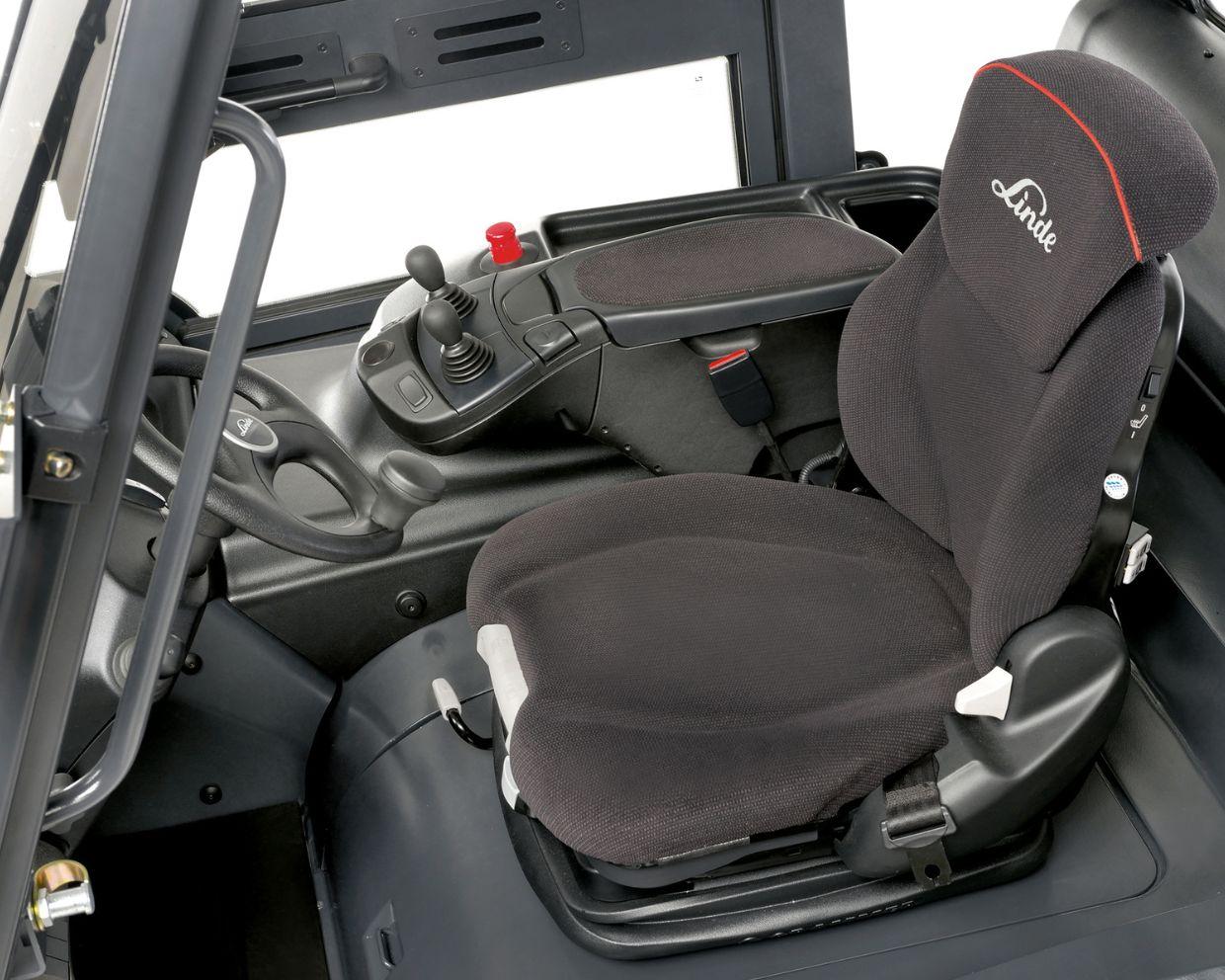
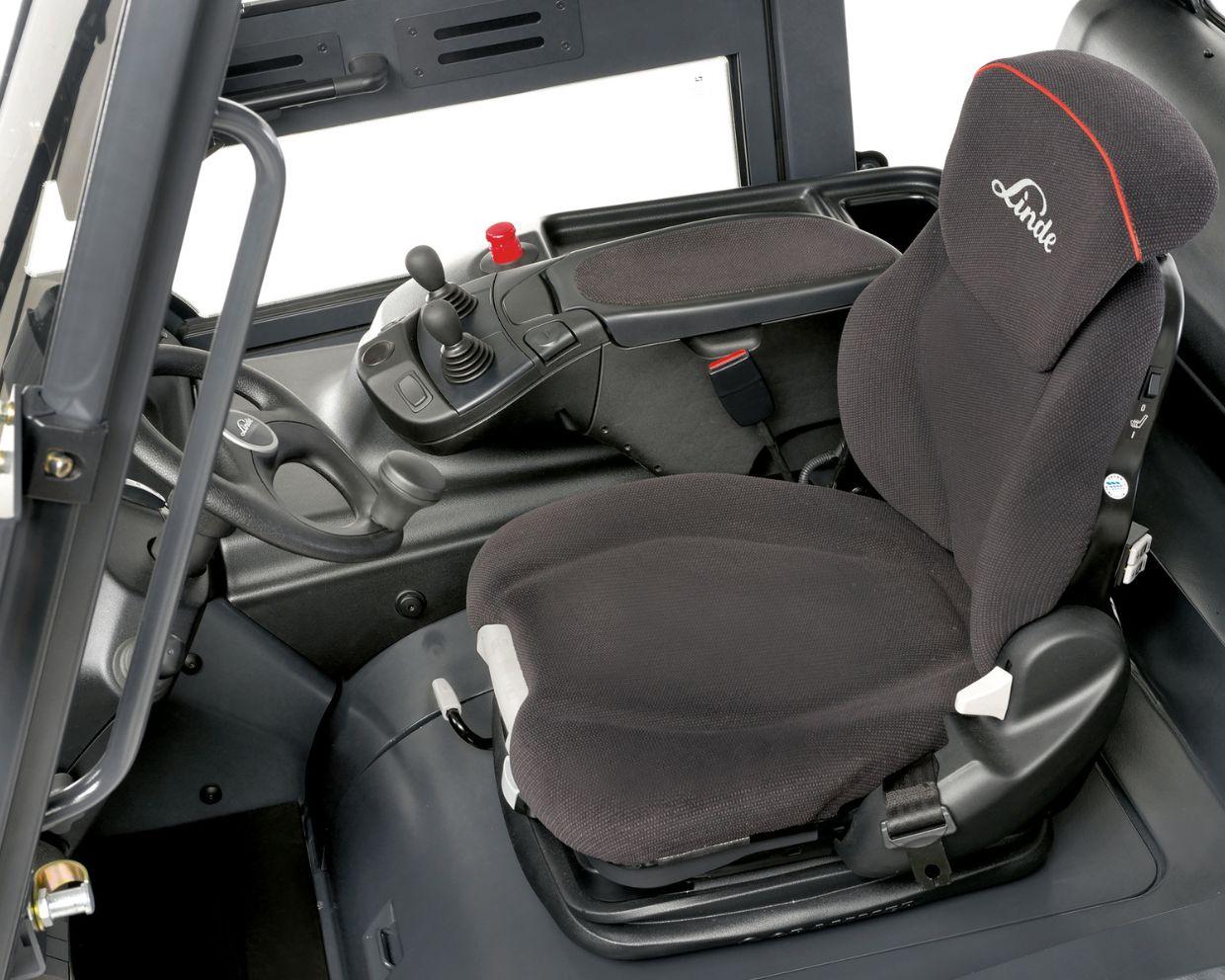
The design of the forklift seat plays a critical role in daily operations. For operators spending hours each shift seated, a well-designed seat is not a luxury; it is essential. A comfortable seat supports better posture, reduces fatigue, and helps operators stay alert and efficient. At Linde Material Handling Australia, our ergonomic and safety-driven seat designs reflect our commitment to operator wellbeing and long-term productivity.
What Makes a Forklift Seat Comfortable for Operators?
Comfort in a forklift seat depends on multiple factors. Here are some of the key elements that contribute to an ergonomically sound seat, and how Linde incorporates them:
- Cushioning and padding: Seats should have sufficient padding to support operators over long shifts. Linde forklift seats come with larger, thicker seat and back padding, reducing discomfort over extended use.
- Adjustability: Operators vary in size and build. Adjustable seats can be tailored to an individual’s body, including seat depth, backrest angle, cushion inclination and seat height. Linde’s Super Comfort seat, for example, offers adjustable depth and inclination for personalised comfort.
- Lumbar support: Proper lower-back support helps maintain a healthy spine alignment and reduces risk of back pain. Linde can provide seats that feature mechanical and pneumatic lumbar support options.
- Seat suspension and vibration damping: Warehouses and worksites can have uneven surfaces. A suspension system (air or mechanical) absorbs shocks and vibrations, preventing them from transmitting to the operator’s body. Linde integrates air-suspended seats and a vibration-decoupled cabin design to protect operators from jolts.
- Ergonomic design principles: Linde’s ergonomic design extends beyond the seat itself: to the driver cab, controls, visibility and workstation layout. Controls are positioned within easy reach, and the cabin is spacious to allow comfortable legroom and movement.
How Does Forklift Seat Design Affect Operator Productivity?
Comfortable seating and good ergonomics directly influence how efficiently an operator can work. Consider the following:
- Operators who remain comfortable and maintain good posture are less likely to suffer fatigue. Reduced fatigue means they stay alert longer and make fewer mistakes.
- When seating allows natural posture and ease of control, operators can handle loads more precisely and move goods more quickly. That results in smoother workflows and fewer errors.
- Over a full shift, even small discomforts can accumulate. A seat that reduces pressure points, absorbs vibrations, and adapts to the operator’s body can help avoid physical strain so operators remain productive from start to finish.
- In warehouse operations loading, unloading, stacking, and transporting pallets, ergonomic seats help maintain consistent performance. When operators are comfortable, less time is lost to breaks, mistakes or slowdown due to discomfort.
Why Is Ergonomics Important for Electric Forklift Operators?
Electric forklifts bring their own operational advantages, including lower noise and smoother handling, and are often used in warehouses or distribution centres where operators spend many hours seated. For electric forklift operators:
- Vibration reduction and shock absorption are important. Even indoors uneven flooring or loading docks can still cause jolts. Linde’s air-suspended seats and decoupled operator cabins help dampen shocks and protect operator health.
- Electric forklifts often require frequent control input from lifting, lowering, steering and manoeuvring. Ergonomically placed controls and adjustable seating help ensure operators can maintain good posture while accessing controls easily.
- Over long shifts in refrigerated warehouses, cold stores or indoor facilities, operator comfort contributes to concentration. The right seat helps manage fatigue and improves safety, reducing risks of accidents or errors.
How Can Adjustable Forklift Seats Improve Workplace Safety and Comfort?
Adjustable forklift seats deliver several key safety and comfort benefits:
- Personalised seating position: Operators of different heights and builds can adjust seat depth, height, backrest angle and lumbar support, enabling proper posture, reducing strain and increasing comfort. Linde’s Super Comfort seat allows for these customisations.
- Reduced musculoskeletal strain: Proper alignment of spine, legs and arms reduces the likelihood of back, hip or leg strain which is important for long shifts and repeated movements.
- Improved control access: With adjustable seating and armrests, operators can reach controls comfortably, reducing awkward stretching or shifting that can lead to accidents or inefficiency. Linde’s ergonomic armrest and control console is designed for intuitive access.
- Safer operation: In heavy-duty or tight-space manoeuvres where drivers may need to turn or twist to look, seats with rotating workstations (offered by Linde on certain trucks) reduce spinal strain and improve visibility, lowering risk of injury.
What Features Should You Look for in a High-Quality Forklift Seat?
When selecting a high-quality forklift seat, consider the following features — all of which are part of Linde’s seat design philosophy:
- Durable materials and upholstery: Seats should withstand dirt, frequent mounting and dismounting, and daily wear. Linde uses abrasion-resistant covers and offers seat covers for added durability.
- Ergonomic support: Good lumbar support, padded backrests and seat cushioning to distribute pressure evenly.
- Full suspension or vibration-reducing systems: Air-sprung seats or mechanical suspension to absorb shocks and reduce vibration exposure.
- Adjustability: Ability to adjust seat depth, tilt, backrest angle, armrest and even cab position to fit different operators.
- Ease of cleaning and maintenance: Upholstery and seat covers that resist dirt and are easy to clean which are important for warehouses and dusty environments.
- Compatibility with control layout and cab design: Seats should integrate well with armrests, control consoles, steering and visibility, contributing to ergonomic overall workstation design.
How Do Linde Forklift Seats Enhance Overall Fleet Efficiency?
By investing in well-designed seats across a fleet, companies can reap multiple benefits:
- Improved operator comfort and satisfaction: Comfortable operators are more focused, alert and less prone to fatigue which translates to better performance and fewer mistakes.
- Reduced downtime and fewer health-related absenteeism: Ergonomic seats help prevent long-term musculoskeletal issues, lowering fatigue-related breaks or injuries, which keeps fleet operations smoother.
- Consistently high productivity across shifts: Even during long shifts or multiple shifts per day, operators are more likely to maintain high performance if their cab environment, especially their seats, supports comfort and posture.
- Better safety outcomes and fewer errors: Seats that reduce fatigue and encourage proper posture help operators respond faster, make fewer mistakes, and contribute to safer load handling.
- Long-term return on investment: Though ergonomic seats may cost more initially, the benefits such as improved productivity, reduced downtime, operator wellbeing and safety provide significant value over time.
At Linde, we design every forklift with the operator’s health and comfort in mind. Our wide range of seat options, from standard to super-comfort models, ensures businesses can match their fleet seating to their workforce, work environment, and operational demands.
To learn more about our forklift seats or our ergonomically designed forklifts, please contact us using the link below.