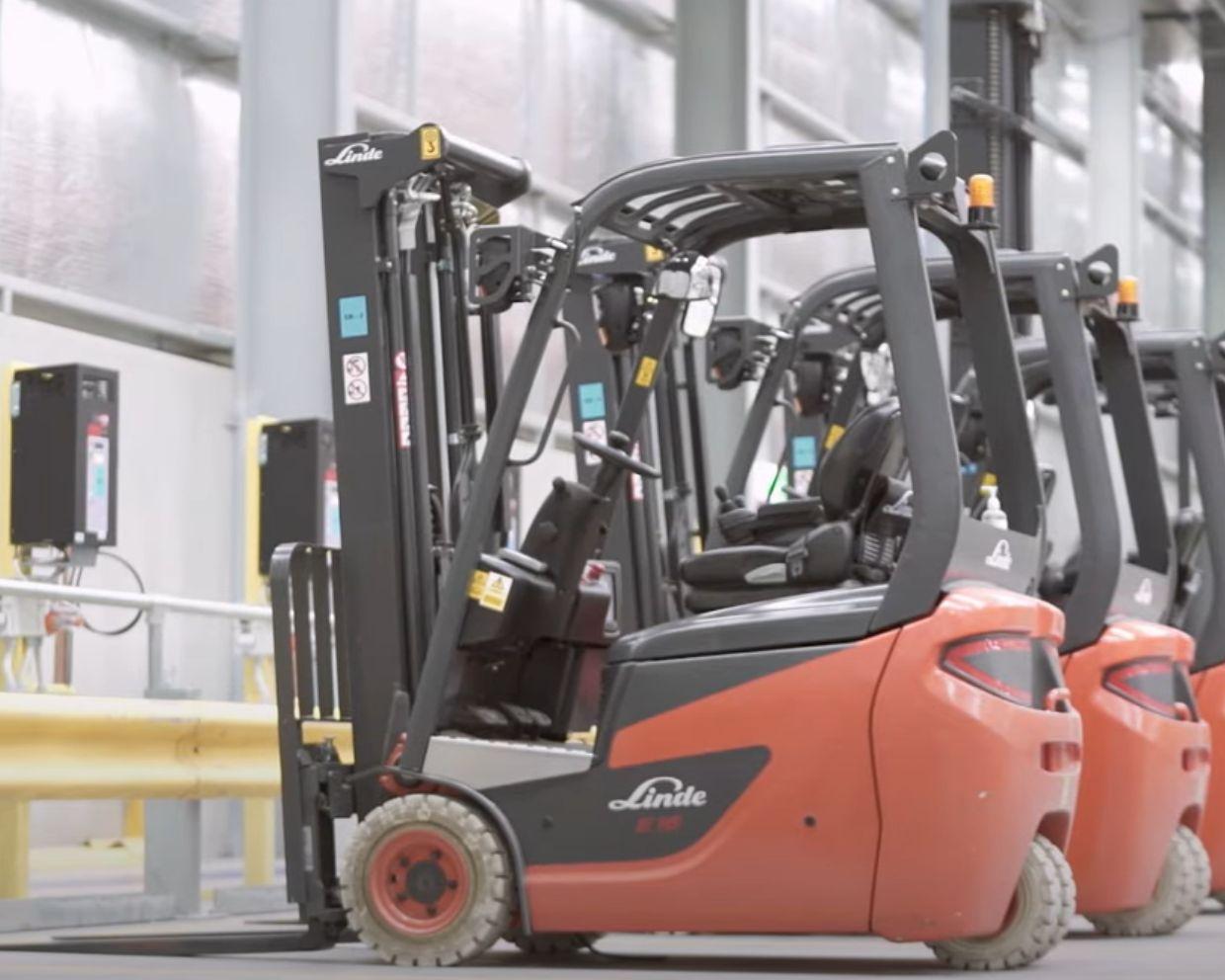
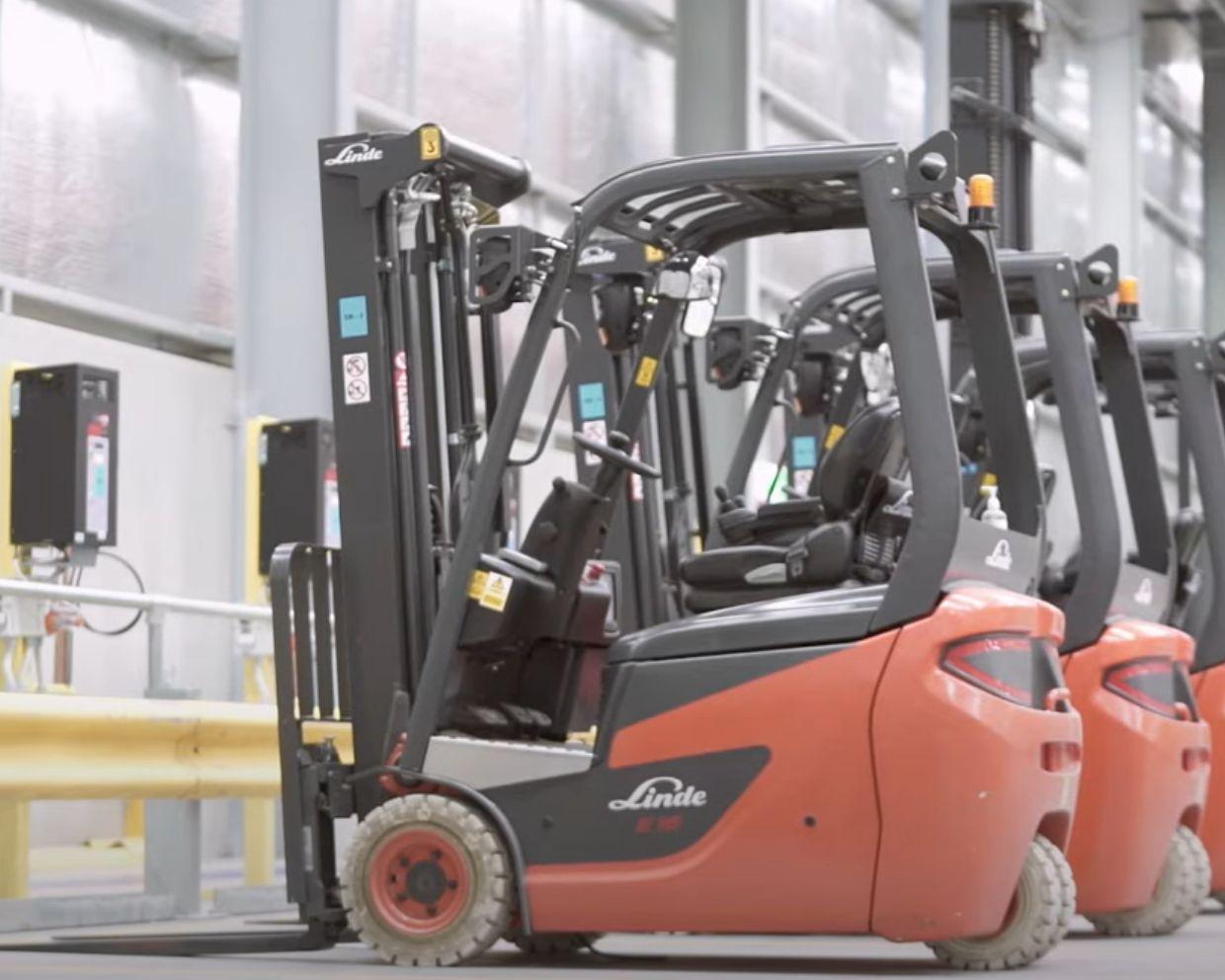
In any busy material handling operation, charging a forklift battery is essential. When it comes to your electric forklift battery, poor charging practices can compromise battery life, forklift performance, and safety in your warehouse or yard.
This article covers everything from safety precautions to charging procedures, charging methods, and operational tips all tailored to Australian standards.
Why Is Correct Forklift Battery Charging Important?
Charging a forklift battery correctly matters for several key reasons:
- Risk of undercharging or overcharging: Undercharging a lead‑acid battery can lead to sulphation, reduced capacity and shorter cycle life. Overcharging can generate excess heat, gas, electrolyte loss and even safety hazards. For lead‑acid systems the correct charge profile is vital.
- Impact on battery life and forklift performance: Lead‑acid forklift batteries typically last in the range of 1,000 to 1,500 charge/discharge cycles when maintained well. Poor routine charging reduces that life significantly, causing capacity to drop, run‑time to shrink and more frequent downtime.
- Cost and downtime consequences: A depleted or poorly charged battery will bring a forklift to a halt or force change‑out mid‑shift. That drives up operational cost, shortens battery replacement intervals, and affects productivity. A battery service that detects defects early extends the service life of your battery, minimises downtime and prevents expensive repairs. if you’re in need of support.
- Performance in multi‑shift or high‑density operations: If you’re running forklifts across single or multiple shifts, correct charging routines matter to keep trucks available and safe.
What Safety Precautions Should Be Taken When Charging a Forklift Battery?
Charging forklift batteries involves chemicals, gas evolution (especially for lead‑acid), heavy equipment and electrical loads. Safe practices are non‑negotiable. Key precautions include:
- Personal Protective Equipment (PPE): Operators should wear acid‑resistant gloves, aprons or overalls, and face shields when dealing with battery charging or electrolytes.
- Safe charging location and ventilation: Charging should happen in a dedicated area isolated from ignition sources. Gases such as hydrogen can be generated during charging. Proper ventilation is required and the cover over the battery should be held open while the battery is in charge to allow any generated gases to escape.
- Handling chemicals and battery acid: If servicing a lead‑acid battery, the electrolyte is sulphuric acid. Spill kits, neutralising materials and eyewash stations should be available.
- No smoking, open flames or sparks: This is essential, as explosive gases may accumulate during charging.
- Cleaning and maintenance of chargers and connectors: Ensuring charger equipment is undamaged, connectors are clean and proper ratings are used helps avoid overheating or poor contact. At Linde Australia, our service technicians can provide charger checks that improve the service life of your forklift battery, guaranteeing optimum battery charging.
- Compliance with Australian safety standards: Charging and changing batteries should follow instructions from the manufacturer and comply with the relevant Australian standards such as the AS 2359 series.
When Charging a Battery on a Forklift, Where Should You Start?
Before you plug in or begin the charging process, follow a pre‑charging checklist to safeguard safety and performance:
Pre‑charging checklist:
- Park the forklift on level ground and engage the park brake.
- Turn off the truck, remove the key, ensure controls are neutral.
- Open the battery covers or vent caps to release any built‑up gas.
- Inspect the battery for visible damage i.e., cracked casing, bulging cells, electrolyte leakage. Also inspect the charger and cables for damage.
- Ensure correct PPE is worn, plus ensure emergency equipment such as a spill kit and eyewash station are nearby.
- Verify that the charger settings match the battery type, capacity and voltage.
- Make sure the charging location is properly ventilated and free from ignition sources.
- If required, confirm that the forklift battery has been cooled down after operation, especially after heavy duty applications, before beginning to charge.
By starting here, you’re set to proceed safely and effectively.
What Are the Different Methods of Charging a Forklift Battery?
There are three common charging strategies for forklift batteries, each suited to different operations. Note: although lithium‑ION solutions are becoming prevalent, this article focuses primarily on conventional lead‑acid battery charging while mentioning opportunities for other types.
Conventional Charging
- Typically done overnight (8–10 hours) when trucks are out of use or between shifts.
- Ideal for single‑shift operations where you can charge once per day.
- Benefits: gives the battery full completion of charge cycle (bulk, absorption, float) which optimises lifespan. For lead‑acid, the bulk stage can take several hours, followed by an extended absorption or topping phase depending on battery size, state of charge, charger output and operating conditions.
- Best for extending battery life and reducing stress.
Fast Charging (not standard practice)
- Charging in 2–4 hours or less using high current for multi‑shift operations.
- Useful where trucks must return to service quickly.
- Requires careful sizing of your battery and charger to handle higher current without overheating or damage.
- It is important to equalise periodically to avoid sulphation on lead‑acid batteries.
Opportunity Charging
- Shorter bursts of charge during breaks or downtime to keep the truck available.
- Ideal for continuous operations, e.g., warehousing 24/7.
- Requires monitoring of charge cycles, battery temperature and proper charger.
- Note: For lead‑acid batteries, frequent short charges without full cycle may reduce life unless managed correctly. For lithium‑ION batteries, opportunity or partial charging is more tolerant.
How Do You Charge a Forklift Battery Correctly?
Here’s a step‑by‑step charging procedure for a lead‑acid forklift battery in Australia (single‑shift or multi‑shift):
- Check electrolyte levels: Before charging (or immediately after full charge), inspect the electrolyte/water levels in each cell and top up with distilled water if needed (only when the battery is fully charged and cool).
- Park and secure forklift: Park, engage park brake, switch off truck, remove key.
- Open battery cover: Allow gas release and avoid pressure build‑up.
- Connect battery to charger: Ensure the voltage and amp settings are correct, the polarity is correct, the connections are secure, and any interlocks or safety devices are engaged.
- Start charging according to the method chosen (conventional, fast, opportunity): Monitor charging indicators on charger and battery.
- Monitor battery temperature: Especially during fast or opportunity charging, check that temperatures remain within manufacturer limits. If the battery gets excessively hot, stop charging and allow it to cool.
- Complete charge cycle: For lead‑acid, the topping/absorption phase is critical to full capacity and to prevent sulphation.
- Disconnect and cool: Once charging is complete, disconnect charger, replace covers, and allow battery to cool before using forklift.
- Return forklift to service: After battery is cooled and safe to use.
- Log details if you maintain schedule: Record date/time, charge duration, battery temp, electrolyte check, and any anomalies.
For an operation running a single shift (say 8 hours) you might schedule conventional overnight charging. For multi‑shift or 24‑hour operations you may employ opportunity or fast charging, but still ensure at least one full charge cycle per day or week depending on battery type.
How Can You Maintain Your Battery During Charging?
Maintenance is key to prolonging battery life and performance. Best practices include:
- Keep a logbook: Record charge cycles, hours, date/time, battery voltage, temperature, electrolyte levels, and anomalies.
- Inspect for sulphation, corrosion and leaks: Early signs of sulphation in lead‑acid batteries will shrink capacity and run‑time.
- Avoid deep discharge: Try not to run a lead‑acid forklift battery below 20% state‑of‑charge, as deep discharge increases wear and reduces life.
- Avoid overcharging: Excess charging can cause gassing, electrolyte loss, and heat damage.
- Check water levels in lead‑acid batteries: Regular top‑up with distilled water is required after full charge when the battery is cool.
- Clean terminals and connectors: Ensure good contact, avoid corrosion build‑up which increases resistance and heat. Use a neutralising solution and dry cloth.
- Equalisation charge (for lead‑acid): Periodic equalisation (a longer charge at slightly higher voltage) helps break up acid stratification in flooded lead‑acid batteries.
- Ensure charger condition and correct settings: A poorly maintained or mismatched charger can under‑charge or damage the battery.
- Temperature control: Store and charge batteries in moderate ambient conditions; extreme heat can shorten battery life and degrade performance.
What Are Common Mistakes to Avoid When Charging a Forklift Battery?
Here are pitfalls that many fleet operators fall into:
- Charging a partially or deeply discharged battery incorrectly (e.g., skipping absorption phase).
- Using a damaged or unclean charger, or incorrect charger setting.
- Overlooking ventilation or ignoring the need for PPE around battery charging stations.
- Ignoring battery temperature rise, especially during fast or opportunity charging; this can drastically shorten life.
- Skipping the logbook or maintenance records. When you lose the data, you lose early warnings.
- Failing to perform a full charge cycle when using opportunity charging strategies. Consistent short bursts may save time but hurt battery longevity if not properly managed.
What Are the Benefits of Proper Forklift Battery Charging?
When you charge your forklift battery the right way, you unlock multiple benefits:
- Longer battery life and reduced replacement costs: Proper charging reduces wear and avoids premature battery replacement.
- Consistent forklift performance and productivity: The battery delivers expected run‑time, fewer mid‑shift drops or unplanned change‑outs.
- Reduced downtime and operational disruptions: With fewer battery problems, your fleet stays moving.
- Safer working environment for operators: With correct charging practices you avoid acid spills, gas buildup, overheating and other hazards.
- Better total cost of ownership: Although proper charging may require investment in time, training, correct chargers and maintenance, the savings in the medium term are significant.
Frequently Asked Questions About Forklift Battery Charging
How often should I charge my forklift battery?
For a single‑shift operation, you should charge after each shift (typically overnight). For multi‑shift or 24/7 operations, you may use opportunity charging during breaks, but still ensure a full charge regularly and monitor cycle counts.
Can I charge a partially discharged battery?
Yes, but for flooded lead‑acid batteries you should ensure that any electrolyte top‑up is done after full charge and cool‑down. For best life, avoid letting the battery sit deeply discharged for long periods.
What is equalisation and why is it necessary?
Equalisation is a controlled over‑charge (at slightly higher voltage) done weekly or monthly in lead‑acid batteries to correct acid stratification and sulphation. Without it, capacity and cycle life suffer.
How long should I let a battery cool after charging?
Ideally you allow the battery to cool until its temperature has returned near ambient before putting back into heavy use. Charging generates heat; using the battery immediately while hot may reduce performance or lifespan.
Can improper charging affect warranty?
Yes. If the battery or charger manufacturer determines that improper charging practices caused damage (e.g., over‑current, insufficient absorption time, deep discharge), warranty claims may be voided. Using certified charging systems and following correct procedures helps maintain warranty eligibility.
How to Keep Your Forklift Battery Healthy and Efficient
Proper battery charging is about safety, method, timing and maintenance. Keep it safe with the right PPE and location. Choose the correct charging method for your operation (conventional, fast or opportunity). Stick to a disciplined procedure when charging. Maintain the battery and charger regularly. Avoid common mistakes like deep discharges or skipping absorption phases. The result is longer battery life, reliable forklift performance, fewer disruptions, and a safer workplace.
If you’d like guidance tailored to your fleet or operation, contact Linde Australia for expert support on equipment, training and battery charging services.
For personalised advice or to book a battery health check or charger inspection, reach out using the link below.