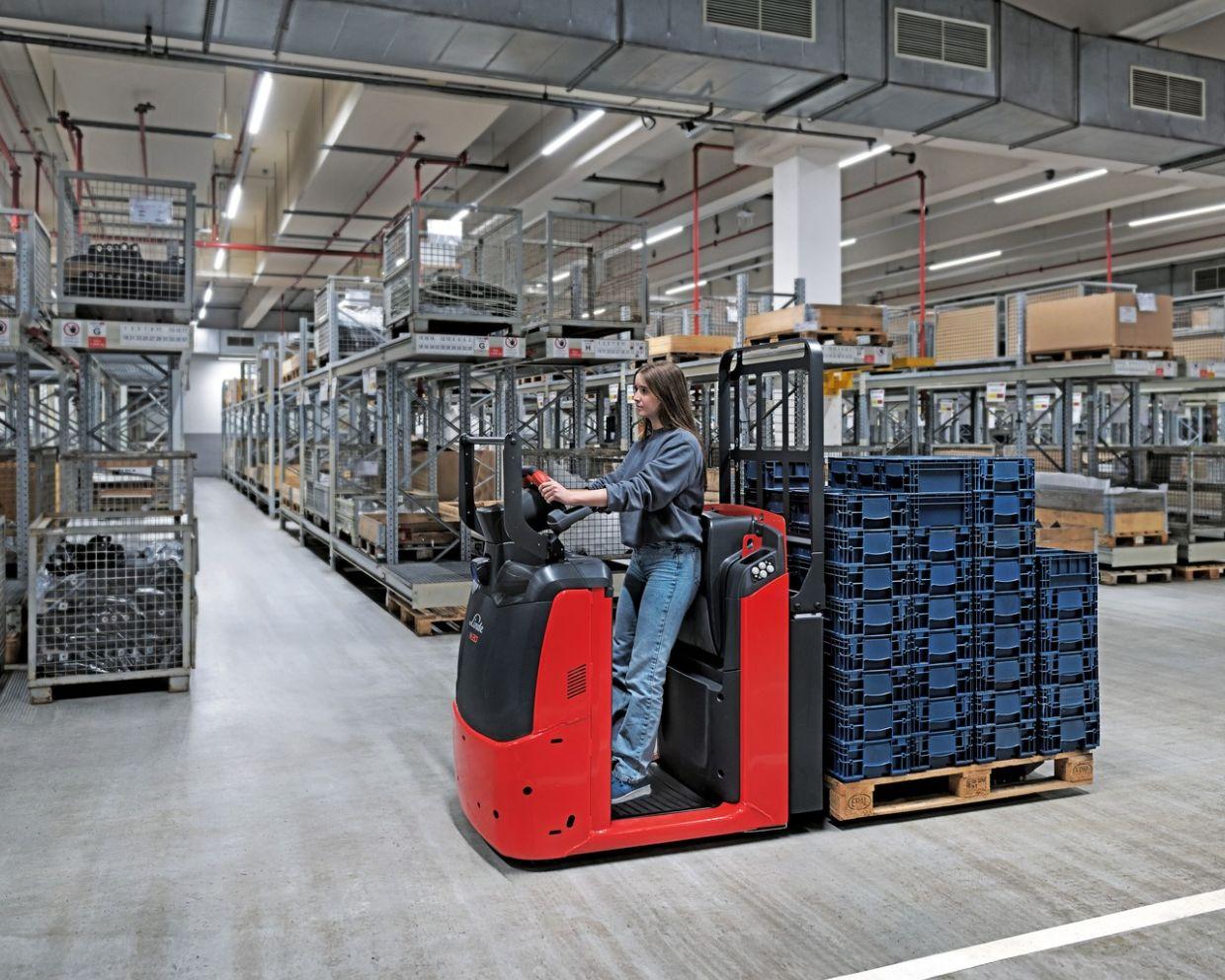
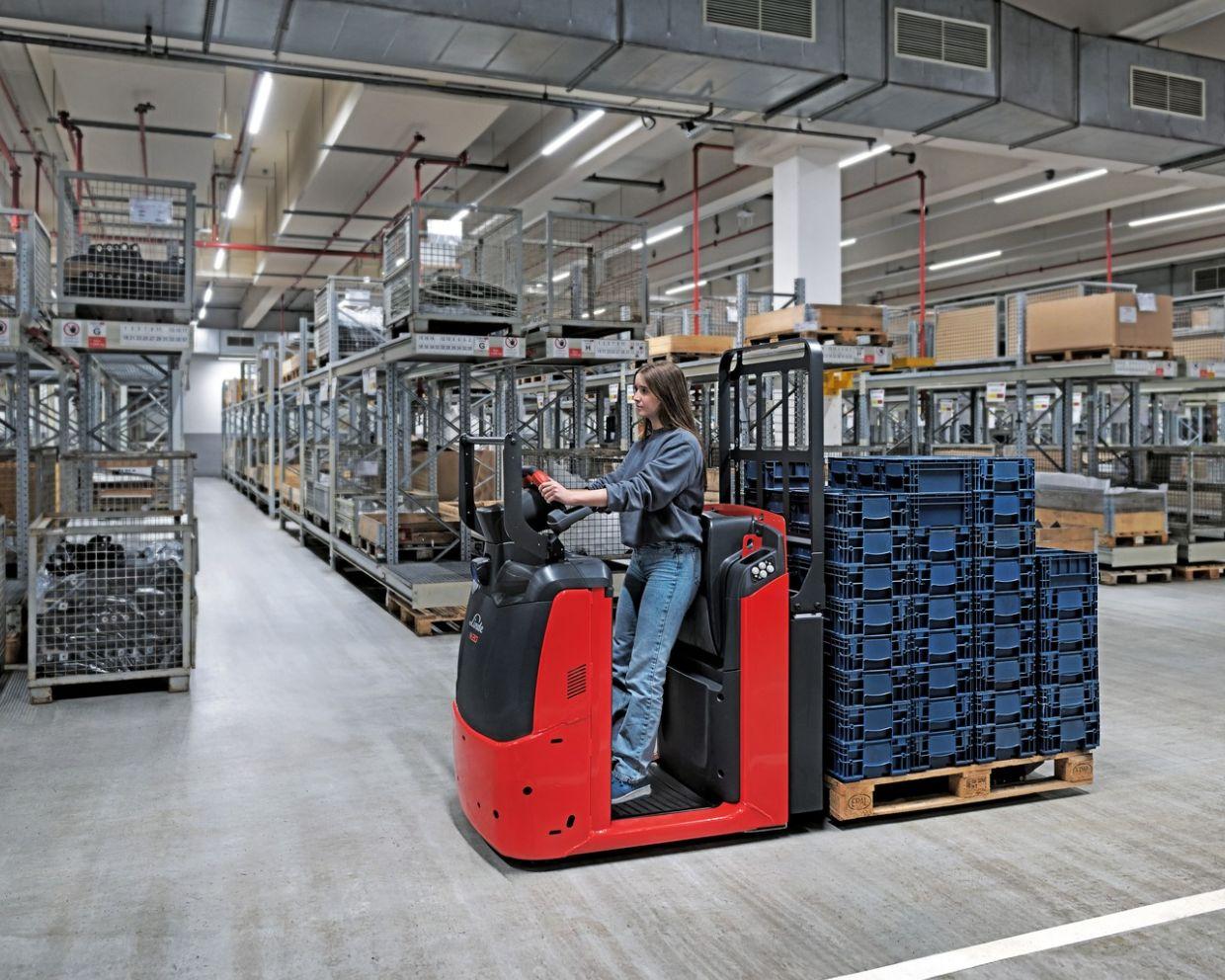
Working at height is a normal part of warehouse picking. The risk is well managed when operators have the right licence, training and equipment. An order picking forklift is a specialised forklift that lets the operator rise with the platform to pick individual items or cartons from racking, rather than moving full pallets. You may also hear it called an order picker forklift. It's the same type of truck.
Because the operator is lifted with the load, the rules differ from those for a standard forklift. This article covers the licence operators need, the training that goes with it, how high Linde order pickers go, the safety features on the trucks and the daily habits that keep each shift safe.
What Makes an Order Picker Truck Different From a Standard Forklift?
On a standard forklift, the operator stays on the ground while the forks lift the load. On an order picker truck, the operator rises with the platform and picks by hand from the racking. That is why height, licensing and safe working practices matter so much.
Which LO Licence Do You Need to Operate an Order Picker?
Operators need a high risk work licence in the LO class (order-picking forklift truck). The LO licence is separate from the LF forklift class, which does not cover order picking forklift trucks.
An LO forklift licence lets someone operate an order picker. An LF licence on its own is not enough. If a person drives both types of truck, they need both. Employers should confirm the right order picker licence before an operator starts.
What Order Picker Training Do Operators Need Beyond the Licence?
A licence shows an operator is competent in the LO class. It doesn't cover the specific truck or the site, so operators also need to be familiarised with both. This should cover:
- Truck controls and platform features: Where the controls are, how the platform lifts and lowers, and how the safety features work
- Site rules: Aisles, pedestrians and rack heights
- Emergency procedures: How to raise the alarm and what to do if something goes wrong at height
Repeat the familiarisation when the site layout changes or a new truck model arrives.
How High Do Order Pickers Go?
It depends on the type. Linde's range starts with low-level trucks that lift the operator to 1.2m and goes up to higher models for tall racking. The table shows some examples.
| Type | Working height | Linde example |
|---|---|---|
Low-level | Platform lifts the operator up to 1.2 m | |
Low-level | Ground level, with an optional platform for first and second level picking | |
Medium-level | First and second levels, with occasional work at lift heights up to 6.35 m |
Low-Level Order Pickers
A low level order picker suits ground-level picking and the first and second levels. The V08 has a platform that lifts the operator up to 1.2 m, enough to reach the second rack level. The N20-N25 C is built for ground-level work. An optional platform allows occasional picking at the first and second levels, up to a 2.8 m picking height.
The N20-N25 C also has a low entry height of only 13 cm. That makes stepping on and off easier, which matters when operators do it all shift.
Medium and High-Level Order Pickers
The V10 covers the first and second levels, with occasional working up to 6.35m. For tall racking, you will want a high level order picker. The right one depends on your racking, aisle width and how often operators pick at height. Our choosing guide can help you decide on the picker to use.
Which Order Picker Safety Features Help Operators at Height?
Linde order pickers include features designed to support operators working at height. Order picker safety starts with a truck built around the person on the platform. Features vary by model and options chosen, so check what your truck has. The main ones are:
- Low entry height, which makes getting on and off the platform easier
- A spring-loaded operator platform
- Smooth OptiLift lifting on the V08
- BlueSpot (optional): An LED light that shines a blue spot on the ground ahead of where the truck is travelling, so people nearby know it’s coming, without noise
- Linde System Control on the V10 (optional): Adjusts travel speed automatically based on lift height and steering angle
- Automatic braking and operator presence detection, so the truck knows whether the operator is on the platform
What Should Operators Check and Do During Each Shift?
Always follow the operator's manual and your site procedures. As a general guide:
Before starting, check the:
- Platform and railing or gate
- Brakes and steering
- Horn and warning lights
- Lift and lower controls
- Battery
- Any fall-protection equipment the site requires
While working:
- Stay within the rated capacity
- Follow the manual for travel and platform use
- Keep aisles clear
- Watch for pedestrians
How Can Linde Support Safe Order Picking?
Linde’s order picker range covers low, medium and high-level trucks, available to rent or purchase. We take a consultative approach where we start with a layout analysis, and work from there. This ensures whatever truck we recommend will suit your racking and how your team picks.
Tell us your rack heights, aisle widths and picking method and we’ll help you find the right fit. Talk to us at the link below.
Frequently Asked Questions
How long is an LO licence valid?
High risk work licences in Australia are generally valid for five years before renewal. Your state or territory regulator sets the renewal requirements. Licence holders should also carry their licence when operating.
Who is responsible for safe order picker operation: The employer or the operator?
Responsibility is shared. Employers confirm the operator holds the right licence, provide training on the truck and the site, and supervise the work. Operators follow their training and the operator's manual, use the truck as intended, and report hazards or faults.
Do order picker operators need refresher training after getting their licence?
The licence confirms competency in the class and is renewed through the regulator. It doesn't replace familiarisation when things change. Employers decide what additional training is needed, based on factors such as a new truck model, a changed racking layout or updated site procedures.
What should an operator do if they notice a fault with the truck?
Stop work, follow the operator's manual and your site procedures. Report the fault to your supervisor. The truck stays out of use until a qualified service technician has checked it. You can book a forklift service with Linde for any brand forklift here.