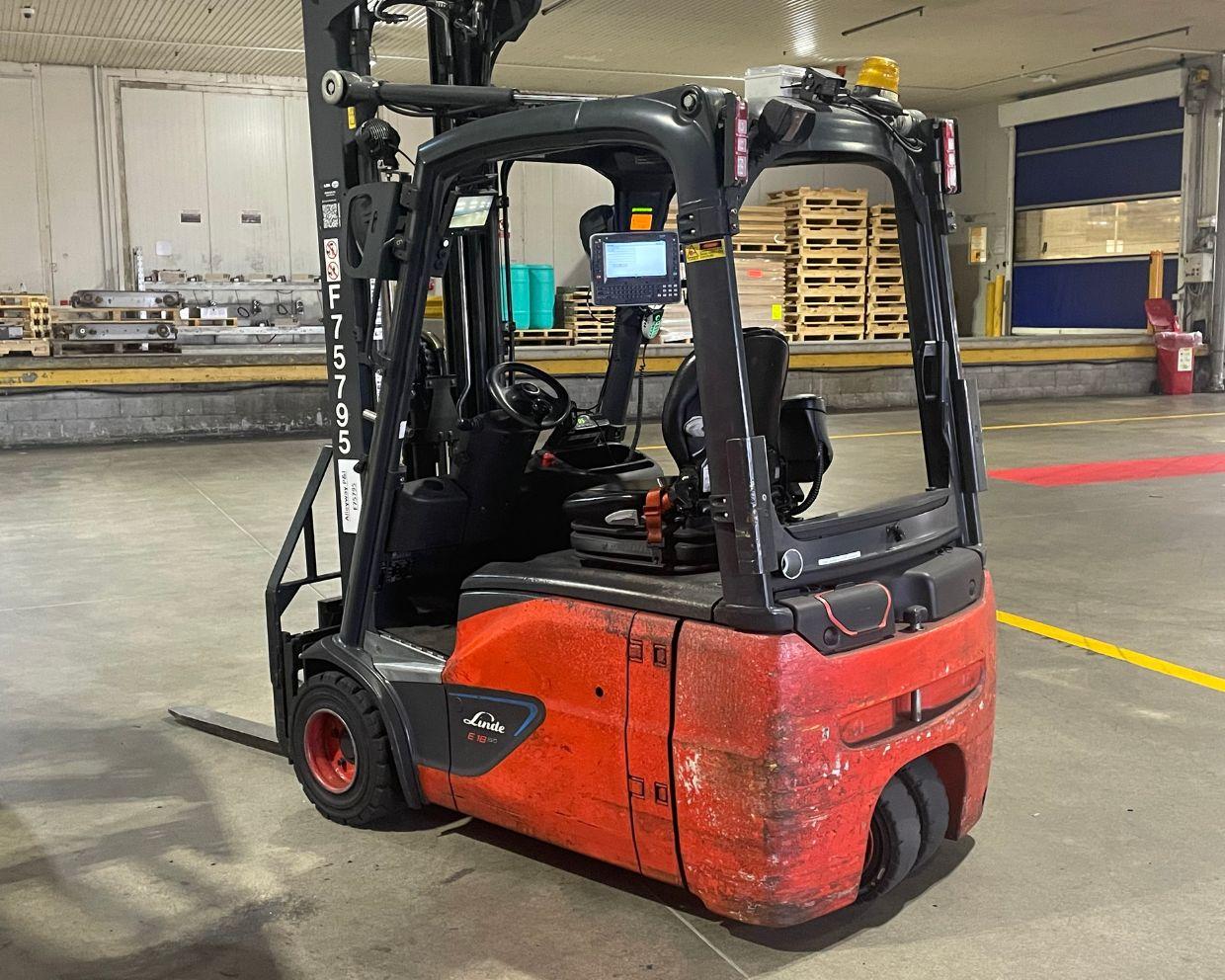
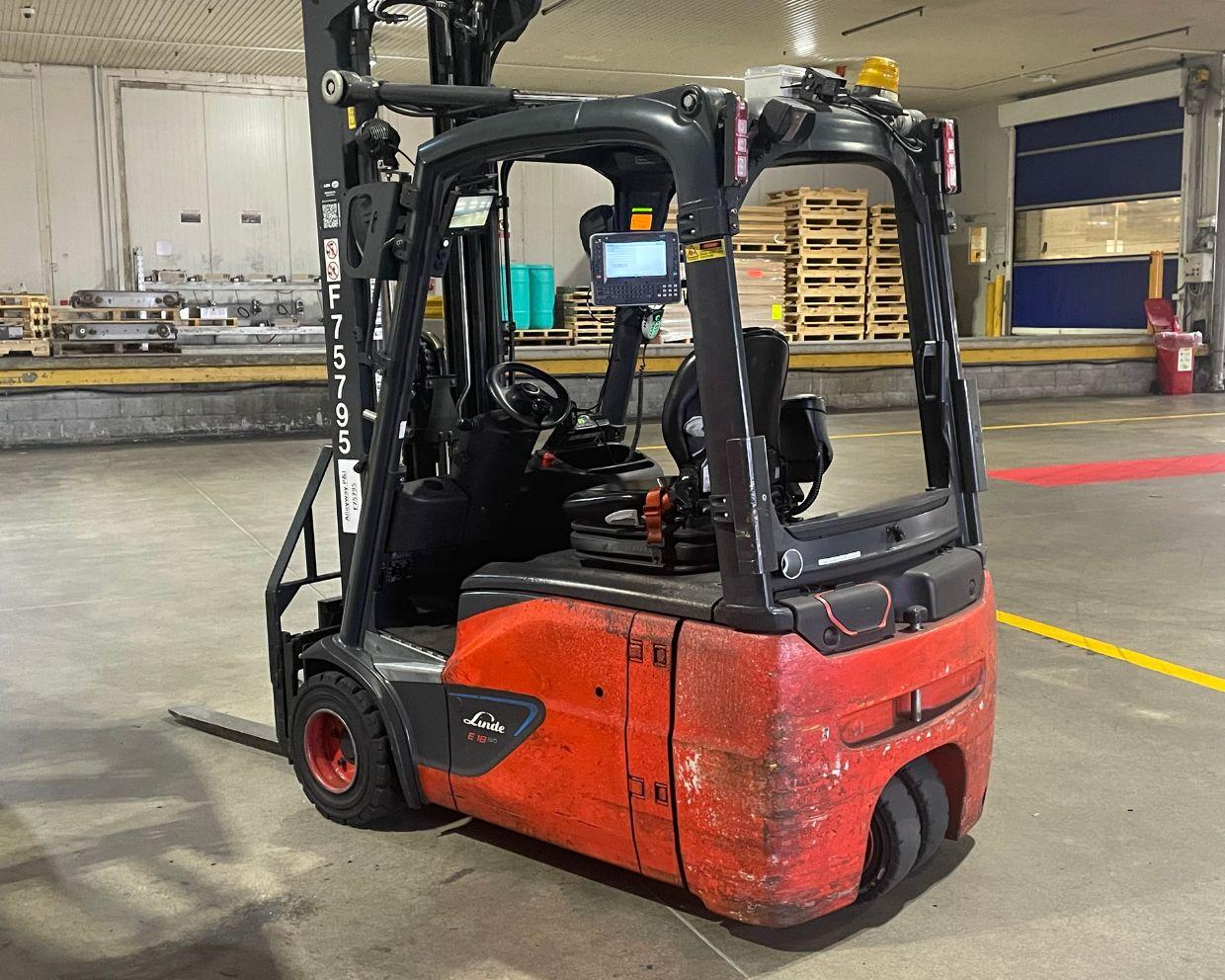
A Linde Material Handling E18 lithium-ion electric counterbalance forklift has now exceeded 30,000 operating hours in a demanding industrial environment, providing a real-world demonstration of the long-term durability of lithium-ion technology.
A decade of consistent performance
Lithium-ion batteries have increasingly replaced traditional lead-acid systems across material handling operations. Opportunity charging has simplified daily workflows, reducing reliance on battery change-outs and complex charging infrastructure - particularly in high-utilisation environments.
While the operational advantages of lithium-ion technology are well understood, long-term performance under continuous, high-intensity use has remained a key consideration for many businesses.
The Linde E18 from the 386 Series, offers valuable insight.
Delivered to New Zealand in 2017, the 1.8-tonne forklift was one of the region’s pioneering factory-integrated lithium-ion units. Nearly ten years on - and with more than 32,000 operating hours recorded – it continues to perform reliably in a three-shift, 24-hour operation at a large dairy processing site.
According to Allan Spackman, Technical Support Trainer for Advanced Systems at Linde Material Handling Australia, the utilisation alone makes this application noteworthy.
“In demanding environments, you might typically see around 2,000 to 2,500 hours per year,” he explains. “This truck is averaging closer to 3,600 hours annually, operating continuously across three shifts.”
Exceeding lifecycle expectations
Reaching 30,000 operating hours is a significant milestone for any forklift. At this point, many machines are approaching end-of-life. However, the lithium-ion battery in this E18 continues to deliver reliable performance.
Initial lifecycle modelling suggested that after ten years of operation, approximately 30 per cent of the battery’s usable life would remain. In practice, performance has exceeded those expectations.
“When we assessed the battery’s condition and charge cycles, it had completed around 1,618 full cycles out of a projected 4,000-cycle lifespan” Allan explains. “That indicates substantial remaining capacity.”
As the battery approaches the upper end of its cycle life, a gradual reduction in capacity is expected rather than a sudden decline.
“At around 4,000 cycles, you would typically see approximately 80 per cent of the original capacity retained,” Allan notes.
Based on current performance, the battery is expected to continue supporting operations for several years.
Engineered to suit the application
This longevity is the result of correct specification from the outset. Rather than selecting a lithium-ion battery equivalent to a traditional lead-acid configuration, the E18 was equipped with a higher-capacity battery suited to intensive use.
“A comparable lead-acid configuration might use a 620 amp-hour battery,” Allan says. “This truck was specified with a 936 amp-hour lithium-ion battery to better support the duty cycle.”
An 18kW onboard charger allows the battery to reach full charge in approximately 145 minutes, although in practice, full charging is rarely required. Operators rely on frequent, short opportunity-charging intervals throughout the shift.
“Even a brief five-minute charge can provide around twenty minutes of additional runtime,” Allan explains. “That flexibility ensures the truck is available whenever it’s needed.”
Operational data shows battery cell temperatures consistently maintained between 20 and 30 degrees Celsius, indicating stable thermal performance.
Reliability that speaks for itself
Despite its high utilisation, the forklift has remained largely maintenance-free.
“The fleet manager only noticed it had passed 30,000 hours because it appeared in a report,” Allan says.
In operations where uptime directly impacts productivity, that level of reliability is significant.
“Unexpected downtime creates far greater cost than the upfront investment in the right equipment,” he adds.
Turning insights into future performance
Beyond the milestone itself, the data from this truck continues to inform lithium-ion system modelling and future customer recommendations – particularly for high-duty applications.
For operators, the experience remains straightforward.
“They simply turn the key and get on with the job,” Allan says. “The technology does the work in the background.”
If you're looking for a reliable forklift that's going to continue to perform year after year, contact us.