Updated 13 November 2026
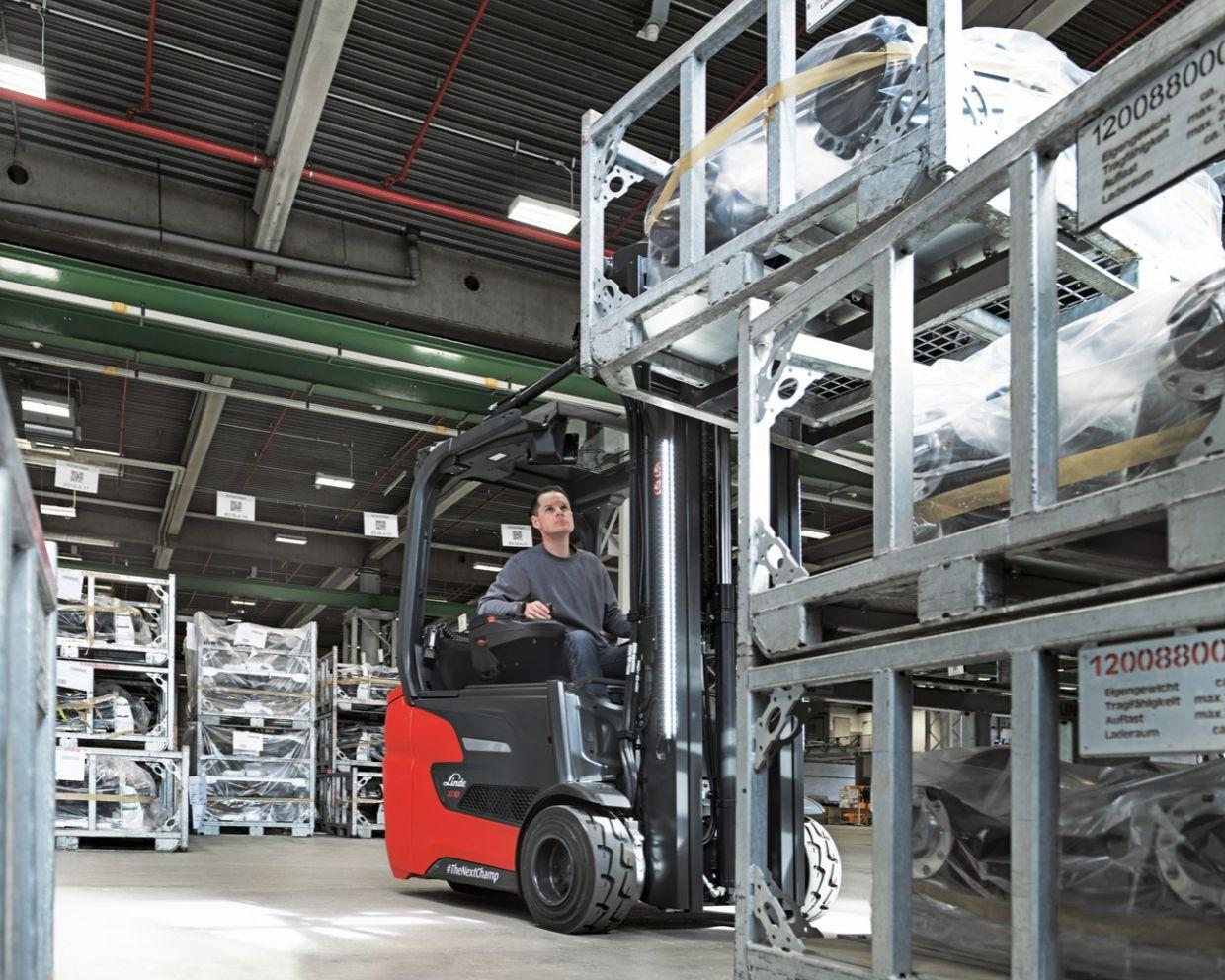
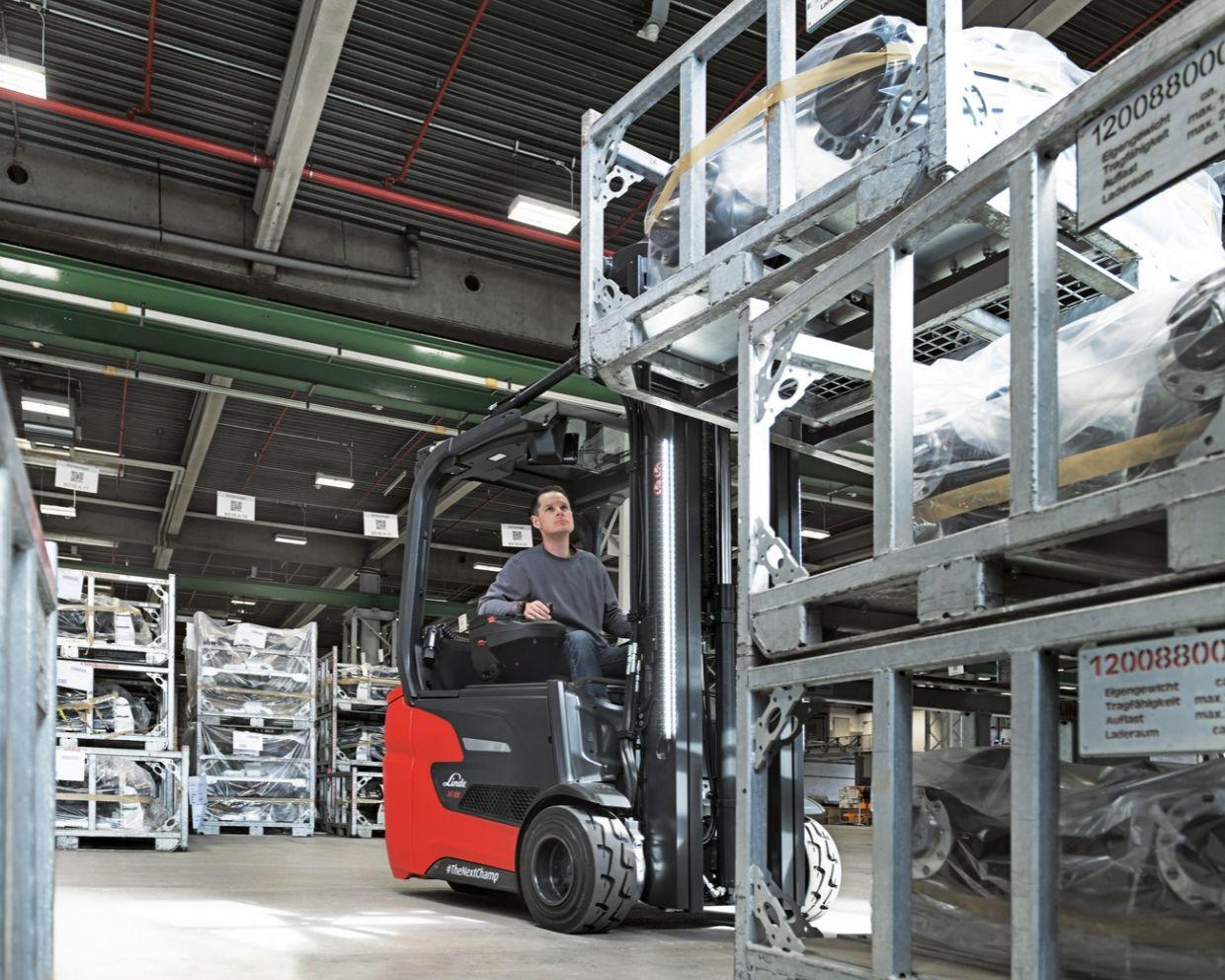
An electric forklift now leads on efficiency, safety and sustainability in many Australian warehouses. Good habits get the most from one: charging, battery care, servicing and safe work. This guide covers battery care, maintenance, safety and when forklift hire makes sense. Linde supplies and services electric forklifts nationwide.
Why Choose an Electric Forklift for Your Operations?
An electric forklift suits indoor, noise-sensitive and high-use operations best. The benefits of electric forklifts include no exhaust, quieter operation and generally lower running costs.
The electric vs diesel forklift comparison:
| Factor | Electric | Diesel/LPG |
|---|---|---|
Indoor use | No exhaust emissions at the truck | Exhaust needs ventilation |
Noise | Quieter | Louder |
Running costs | Electricity, fewer moving parts | Fuel, more engine servicing |
Energy supply | Charging, battery management | Refuelling or gas cylinder changes |
Best for | Warehouses, distribution centres, noise-sensitive sites | Heavy-duty and mixed indoor-outdoor use |
Browse the Linde electric forklift range here.
What Are the Key Best Practices for Using an Electric Forklift?
Charge to suit the battery type, avoid deep discharge, handle batteries safely and observe load limits. Lead-acid batteries suit full charges, while lithium-ion batteries suit short top-ups that keep the charge between 20 and 80 per cent.
Running a battery close to flat strains its cells, so recharge before it gets that low. Know the rated capacity on the truck’s data plate and never overload it, because load limits protect both the forklift and the operator.
How Can You Maximise Battery Life in Electric Forklifts?
Forklift battery maintenance starts with correct charging and avoiding flat discharge.
Lead-Acid Battery Care
- Keep electrolyte at the correct level
- Keep the top and terminals clean
- Store at moderate temperatures
- Run equalising charges when due
Charging Practices
Opportunity charging means topping up in short bursts during breaks. Lead-acid batteries suit full charges, and Linde recommends starting full cycles only. Lithium-ion batteries suit opportunity charging, ideally between 20 and 80 per cent charge. Deep discharge shortens life for both, so match the charger to the battery.
How Long Does a Forklift Battery Last?
Battery life depends on battery type, charging habits, depth of discharge, temperature and maintenance. Linde’s lithium-ion batteries last more than 2,500 full cycles, depending on composition.
Signs a battery is nearing replacement:
- Shorter run time
- Slow charging
- Weaker performance under load
- Swelling, leaks or corrosion
Are Lithium-Ion Forklift Batteries Worth Considering?
A lithium-ion forklift battery suits multi-shift, high-utilisation operations but costs more upfront.
| Factor | Lead-acid | Lithium-ion |
|---|---|---|
Charging | Typically full charge cycles | Supports opportunity charging |
Routine upkeep | Watering, cleaning, equalising | No watering, minimal upkeep |
Upfront cost | Typically full charge cycles | Higher |
Best for | Single-shift, predictable use | Multi-shift, high utilisation |
Linde lithium-ion batteries are maintenance-free and need no separate charging room. Each Linde category offers a lithium-ion option. Learn more about Linde's lithium-ion batteries here.
What Maintenance Practices Keep Electric Forklifts Performing at Their Best?
Electric forklift maintenance covers daily operator checks, regular inspections and scheduled servicing.
Daily Pre-Start Checks
Operators should complete a forklift pre-start checklist every shift and report faults before use:
- Tyres
- Brakes
- Steering
- Horn and lights
- Seatbelt
- Forks
- Mast and chains
- Hydraulic leaks
- Battery connectors and cables
Regular Inspections and Scheduled Servicing
Scheduled inspections catch wear before it becomes a breakdown. Check tyres, brakes, hydraulics, safety systems and charging stations, and service at the manufacturer's intervals. Linde offers scheduled maintenance, repairs and 24/7 breakdown support. Request a forklift service online.
How Do You Keep Electric Forklift Operations Safe?
Electric forklift safety starts with a ventilated charging area, licensed operators and separated pedestrians. For forklift battery charging safety:
- Charge lead-acid batteries in a ventilated area, as hydrogen can form an explosive mixture
- Keep ignition sources away and wear PPE
- Use rated lifting equipment and trained staff for battery changes
Is Forklift Truck Hire a Good Option for Your Business?
Forklift truck hire suits businesses that need an electric forklift now without buying outright, with cash flow protected and servicing covered by Linde.
Short term forklift hire covers peaks and projects, with daily, weekly and monthly options and delivery within 48 hours in most cases. A rent to own forklift arrangement channels your payments towards ownership, subject to finance approval.
How Does Linde Ensure Maximum Efficiency in Electric Forklifts?
- High-efficiency motors
- Long battery life, with battery management that guards against deep discharge
- Ergonomic cabins
- Multi-level safety systems on lithium-ion batteries
Ready to improve efficiency with Linde electric forklifts? Check out our range in the link below.
Frequently Asked Questions About Electric Forklifts
Can you partially charge a forklift battery?
It depends on the type. Lithium-ion batteries suit opportunity charging, while lead-acid batteries usually do better on full charges.
How often should an electric forklift be serviced?
Follow the manufacturer's intervals, adjusted for usage and shifts. Linde can tailor a maintenance plan to your fleet, and you can request a service online.
Is a lithium-ion forklift battery better than lead-acid?
It depends on shifts, utilisation, upfront cost and charging setup. Lithium-ion suits multi-shift work, while lead-acid suits predictable single-shift use at a lower purchase price.
What safety precautions apply when charging forklift batteries?
Use a ventilated area, wear PPE, keep ignition sources away, use suitable lifting equipment for battery changes and let only trained operators handle batteries.
What should a forklift pre-start checklist include?
Check tyres, brakes, steering, horn and lights, seatbelt, forks, mast and chains, hydraulic leaks, and battery connectors and cables.
Is an electric forklift cheaper to run than diesel?
Often, with lower energy and servicing costs, but it depends on use, electricity prices and battery type.
Do I need a licence to operate an electric forklift?
Yes. You need a high risk work licence with the forklift truck (LF) class. Safe Work Australia lists the licence classes.